
Australia’s best places to retire – Day 3: the top 10 begins, and the most underrated retirement city in the country is finally getting the recognition it deserves



The top 10 begins today.
If you have been following our countdown – we revealed places 20 to 16 on Monday and 15 to 11 on Tuesday – you already know that this is not a list built on the usual platitudes. We scored every town against seven weighted dimensions: healthcare, affordability, climate, community, transport, lifestyle and aged care future planning. The towns that are still in the count earned their place.
Today we reveal places 10 to 6. This is where the list starts to get genuinely competitive. Every town from here to number one scored strongly across multiple dimensions, and separating them required careful judgment. You may disagree with some of our placements. The comments section is yours.
Here are places 10 to 6.
PLACE 10: Bendigo, Victoria
If Ballarat is Victoria’s most famous inland retirement city, Bendigo is its quieter, slightly more underestimated sibling – and on several dimensions it actually outperforms its more celebrated rival.
Bendigo Health is consistently rated as one of the strongest regional hospital networks in Victoria, with excellent specialist coverage that goes well beyond what most cities of 120,000 people can offer. The cultural infrastructure is extraordinary – the Bendigo Art Gallery runs exhibitions that attract visitors from Melbourne, the theatre scene is strong, and the historic streetscape of the central city is genuinely beautiful. The food scene has improved markedly over the past decade.
Housing affordability, while rising, remains meaningfully below Melbourne levels. The community has warmth and stability – Bendigo has been attracting retirees long enough that the social networks, community organisations and services designed for older residents are deeply embedded. And for golfers, the array of courses accessible from Bendigo is among the best of any regional city in Australia.
The winter caveat applies here as it does to Ballarat: Bendigo gets cold. Not as cold as Ballarat, but cold enough that those coming from warmer climates should factor it seriously into their planning.
Best for: Victorian healthcare, cultural richness, affordability, community infrastructure, golf. Consider: Cold winters; summer can be hot with occasional extreme heat days.
PLACE 9: Toowoomba, Queensland
For anyone who has assumed that a Queensland retirement necessarily means heat, humidity and the coastal lifestyle lottery, Toowoomba is the corrective.
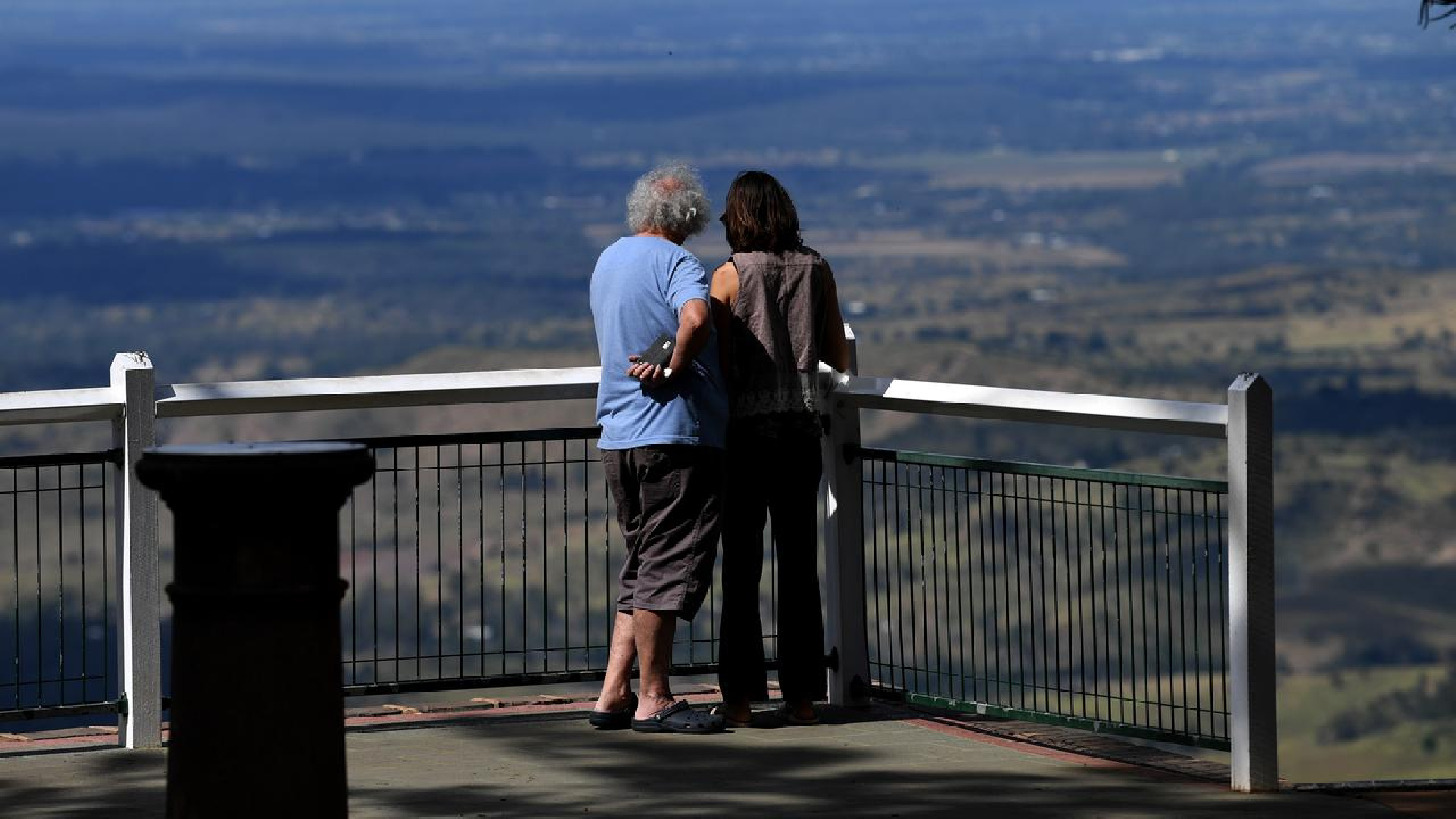
Sitting 700 metres above sea level on the edge of the Great Dividing Range, Toowoomba has a climate that is genuinely unlike anywhere else in Queensland. The summers are warm but manageable – significantly cooler than Brisbane, dramatically cooler than Cairns or Townsville. The winters are cool and sometimes cold but never harsh. And the famous Carnival of Flowers each September turns the city into one of the most spectacular horticultural shows in Australia.
The healthcare infrastructure is strong for a regional city, with Toowoomba Hospital providing solid acute care and a reasonable spread of specialist services. Housing affordability remains excellent – meaningfully below the Gold Coast and Sunshine Coast, and with the kind of properties that give retirees genuine space and garden for a price that coastal alternatives cannot match.
The city is self-contained in a way that matters – Toowoomba has everything you need without requiring a long drive to access it. And for those who want the beach occasionally, the Sunshine Coast and Gold Coast are both reachable in under two hours.
Best for: Queensland climate (without the extremes), affordability, self-contained services. Consider: Inland character – less beach lifestyle than coastal Queensland alternatives.
PLACE 8: Launceston, Tasmania
Every year, more mainlanders make the move to Launceston. And every year, the people who already live there wonder why it took everyone so long to notice.
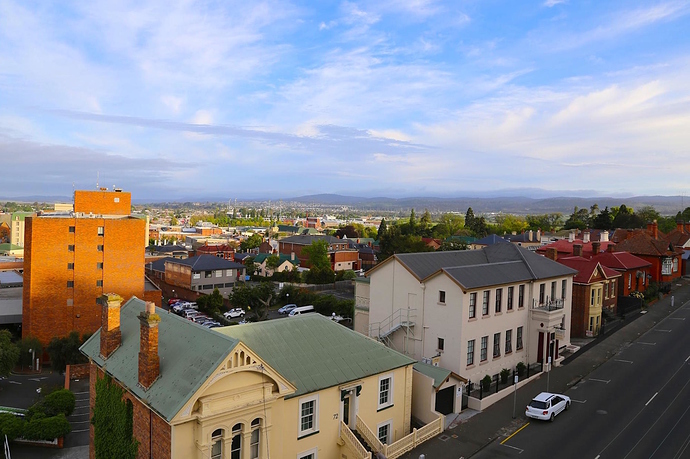
Launceston offers affordability, excellent medical facilities including Launceston General Hospital, a vibrant arts and cultural scene, and the kind of slower pace that allows retirees to maintain an active social life without big-city stress. The Tamar Valley wine region is on the doorstep, the food scene has become genuinely world-class, and the natural environment – the Cataract Gorge in the centre of the city, the endless forests and rivers of the hinterland – is extraordinary.
For those coming from Sydney or Melbourne, the financial equation of the Launceston move is often revelatory. Sell a Sydney apartment and buy a Launceston heritage home with a garden, a garage and money left over. That equation is increasingly what is driving Tasmania’s retiree migration – and Launceston is the primary beneficiary.
The cold winter disclaimer is consistent and accurate. Launceston’s winters are genuine – cold, sometimes frosty, requiring proper heating and warm clothing. But for those who grew up with four seasons and have spent years in subtropical or tropical Australia missing them, Launceston delivers seasons of extraordinary distinctiveness and beauty.
Best for: Affordability, food and wine culture, natural beauty, Tasmanian healthcare. Consider: Cold winters; mainland travel requires a flight.
PLACE 7: Victor Harbor, South Australia
Victor Harbor is the retirement destination that South Australians have always known about and that the rest of the country is only now beginning to discover – and the discovery, when it comes, is usually accompanied by the question: why didn’t anyone tell me about this sooner?
Located about an hour from Adelaide, Victor Harbor combines coastal living with affordability – a rare combination in Australia. It has invested heavily in senior-friendly services and infrastructure, and provides access to Adelaide’s city-level healthcare without city-level housing costs.
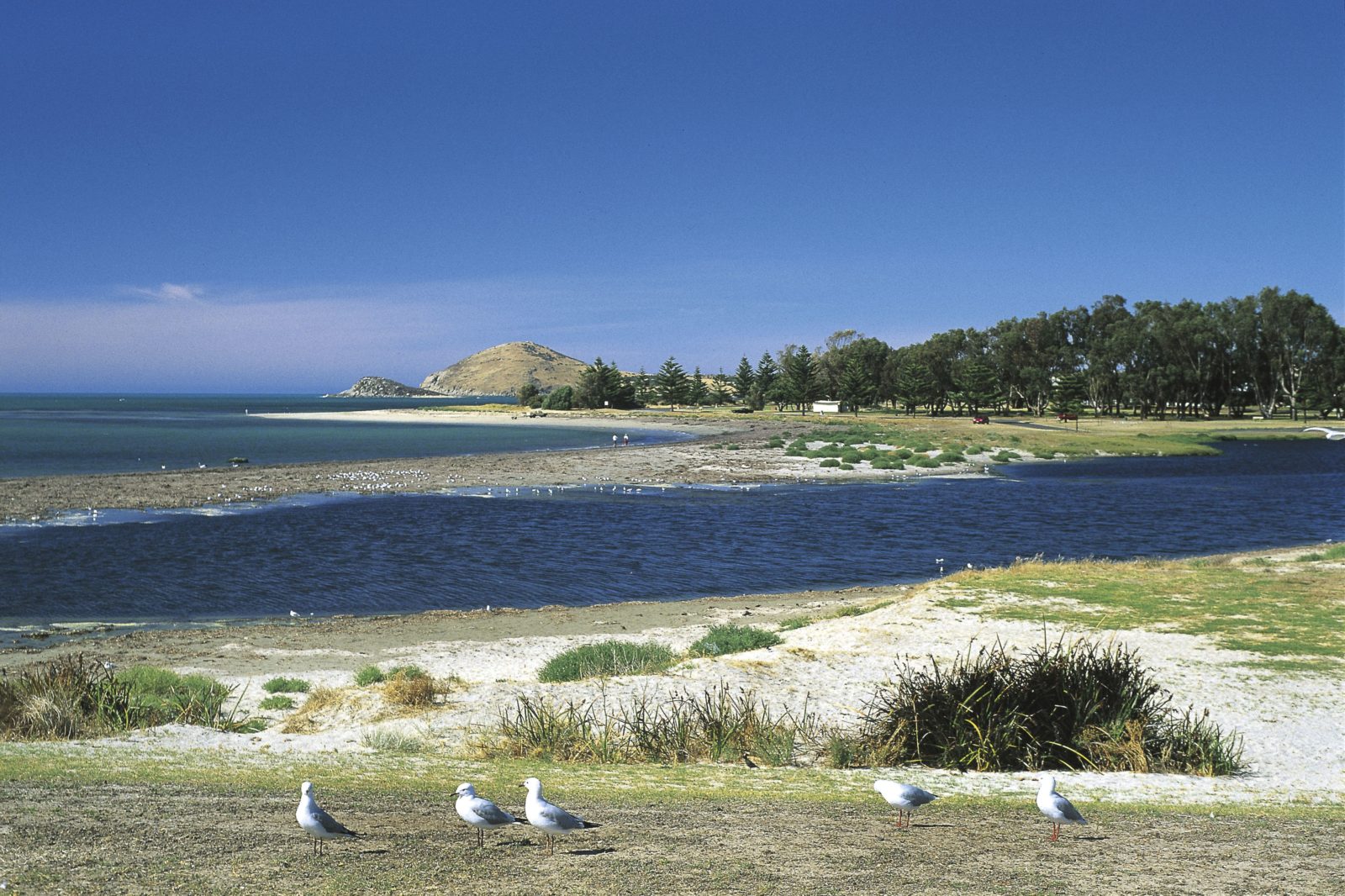
The Fleurieu Peninsula setting is simply beautiful – the Southern Ocean coast, the Encounter Bay, the horse-drawn tram across the causeway to Granite Island, the penguins that come ashore at dusk. Victor Harbor is the kind of town that makes you wonder why you waited so long. The community is warm, the services are well-developed, and the drive to Adelaide – for the Royal Adelaide Hospital, for major specialists, for family connections – is manageable.
The only meaningful limitation is the same one that applies to any smaller town: for highly complex or highly specific specialist needs, the Adelaide connection is not just helpful but necessary. Anyone managing a serious ongoing health condition should map the Victor Harbor-to-Adelaide route before committing.
Best for: SA coastal affordability, Adelaide proximity, community, Fleurieu lifestyle. Consider: Major specialist access requires the Adelaide drive; summer can be hot.
PLACE 6: Albury-Wodonga, New South Wales and Victoria
Here is our most underrated retirement city – and we mean that designation seriously.
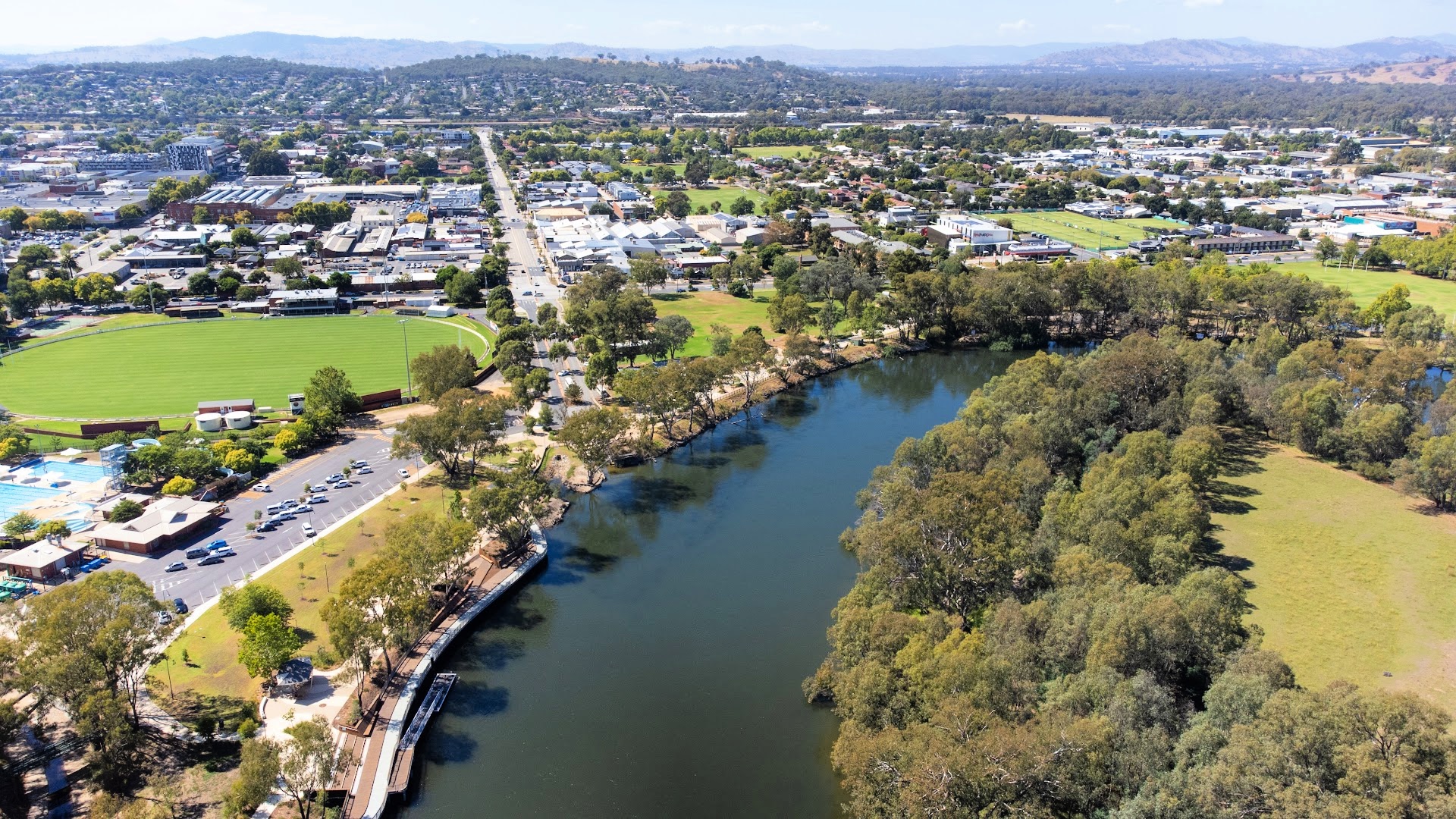
Ask most Australians to name the best places to retire and Albury-Wodonga does not appear on the list. It is not glamorous. It does not have a famous beach or a famous wine region attached to its name. It sits in the middle of the country, on a river, straddling a state border, and it gets on with things quietly and effectively.
And that, precisely, is why it belongs at number six.
Albury offers something many retirees value deeply: practicality. Straddling the NSW–Victoria border, it provides access to services across two states, strong healthcare facilities, and a cost of living well below major capitals. The $558 million Albury Wodonga Regional Hospital project is one of the largest regional health projects currently underway in NSW and Victoria, delivering more beds, more car parking and state-of-the-art healthcare facilities on a single consolidated site.
Think about what that means. This is not a town with declining healthcare infrastructure – it is a town with actively improving, purpose-built, state-of-the-art healthcare infrastructure. Combined with the dual-state access to services and concessions, Murray River lifestyle, strong affordability and genuine community warmth, Albury-Wodonga offers a retirement proposition that its more famous competitors cannot match on the practical dimensions that matter most as you age.
The river lifestyle – the Murray, the Hume Weir, the surrounding national parks – gives it genuine beauty alongside the practicality. And for families with connections on either side of the state border, the location is often surprisingly convenient.
Best for: Healthcare trajectory, affordability, dual-state access, Murray River lifestyle, practicality. Consider: Summers are hot; not a coastal lifestyle town – know what you are choosing.
How we built the ranking
We assessed towns and cities across Australia against seven dimensions, each weighted to reflect how much they matter to people aged 60 and over.
Healthcare access was weighted most heavily, at 25 per cent of the total score. We looked at GP availability, hospital infrastructure, specialist access, allied health coverage and aged care facilities. A beautiful town with poor healthcare is not a retirement destination – it is a risk.
Affordability came second at 20 per cent – not just house prices, but the full cost of living: council rates, groceries, utilities and rental costs for those who don’t own.
Community and social infrastructure came in at 15 per cent. Loneliness is one of the leading health risks for older Australians, and a town’s social fabric – its clubs, groups, volunteer networks and community organisations – is as important as its medical infrastructure for healthy ageing.
Climate was weighted at 15 per cent, with particular attention to extreme heat days, humidity, flood and bushfire risk, and the general liveability of the outdoor environment across all four seasons.
Transport and connectivity accounted for 10 per cent – can you still live there if you can no longer drive? Is the NBN reliable enough for telehealth? How far is the nearest major hospital if you need specialist care?
Lifestyle amenity – cafés, restaurants, nature access, cultural facilities, sporting infrastructure – accounted for 10 per cent.
Finally, aged care and future planning – the quality and availability of aged care facilities for when you need them further down the track – contributed 5 per cent.
We cross-referenced published data from the Australian Institute of Health and Welfare, the Aged Care Quality and Safety Commission Star Ratings, CoreLogic, the Bureau of Meteorology, Medicare provider location data, and multiple retirement industry reports including Citro’s 2025 Top 50 Retirement Locations guide and Deloitte’s retirement research. We also drew on the extensive accumulated knowledge of the Starts at 60 community – the hundreds of thousands of Australians over 60 who read this publication and whose real-world experience of retirement living informed our qualitative assessments.
No methodology is perfect. A retirement destination is deeply personal – your ideal town will not be someone else’s. But we believe this framework is the most comprehensive, honest and practical retirement town ranking published in Australia. And we are about to prove it.
Tomorrow: the Top 5. The countdown reaches its conclusion with places 5 to 1 — including the Victorian city that keeps outperforming its reputation, the NSW town that topped our affordability dimension, the most liveable coastal city on the Sunshine Coast, and the one town that led our ranking across more dimensions than any other. Don’t miss it.





 Proudly Australian owned and operated
Comments 2
Join the conversation. Comments are reviewed before they appear.
Thank you for these ratings, they are very handy. We moved from NSW to Mannum in SA 4 years ago and I do believe there is much here for retirees. The only problem is housing is difficult to find even though it is reasonably priced. We have access to Adelaide and Victor Harbour. Medical facilities are very good with hospitals and specialists at Murray Bridge. I hope you will look at this area. We are late 70's and are very happy here
As a lifelong Qld resident, who lived and worked from Rockhampton to Coolangatta for my first 50 years, I can confidently say that my Toowoomba home for last 25 years is definitely the pick. We do lack a proper rail service to the coast but it might get here one day! I had extended stays on the Sunshine Coast (12 years) and Brisbane (20 years) but the humidity on the coast is a definite drawback. It's won't be a surprise to learn that the early State Governors would relocate to Toowoomba for the summer and that is why the famous Lamington cake was created by Lord Lamington's chef during one summer stay.
Join the conversation
Tell us who you are to post a comment. We'll remember you next time.