
Understanding maritime law in the Strait of Hormuz


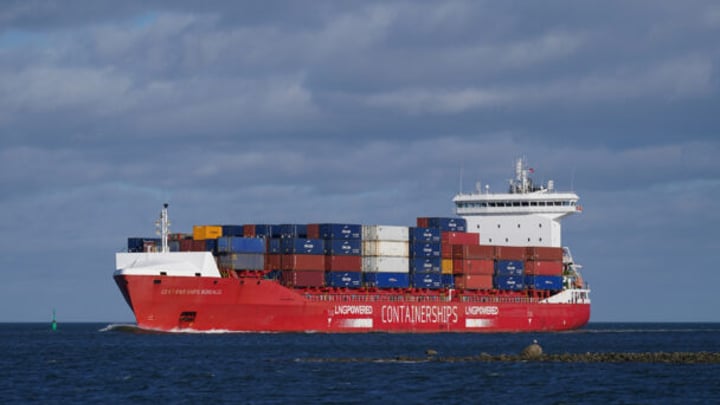
The status of the Strait of Hormuz under international law has come into sharp focus as tensions involving Iran, Israel and the United States disrupt one of the world’s most critical shipping routes.
The narrow waterway, bordered by Iran and Oman, connects the Persian Gulf to the Gulf of Oman and serves as a vital conduit for global oil and gas supplies, as well as other exports such as fertiliser. At its narrowest point, the strait is just 21 nautical miles wide, making it both strategically significant and highly vulnerable to disruption.
Amid ongoing hostilities, Iran has restricted the movement of ships through the strait, prompting questions about whether such actions are lawful – and whether foreign military convoys can legally operate there to protect commercial shipping.
Legal status in peacetime
Under international law, the Strait of Hormuz is classified as an international strait because it is used for navigation between two areas of the high seas.
According to UNSW Faculty of Law Professor Natalie Klein, although the waters fall within the sovereignty of Iran and Oman, all states retain the right of transit passage. Ships must move through the strait “continuously and expeditiously”, and coastal states are not permitted to impede that passage under normal conditions.
Laws of war at sea
Once armed conflict begins, the legal framework shifts to the law of armed conflict, including the law of naval warfare. These rules, rooted in early 20th-century agreements such as the Hague Conventions and more recently reflected in the 1994 San Remo Manual, distinguish between “belligerent” states engaged in hostilities and “neutral” states that are not.
In the current conflict, Iran, Israel and the United States could be considered belligerents. Neutral states, however, retain certain navigational rights.
According to the San Remo Manual, ships flagged to neutral countries – including warships – may continue to pass through an international strait controlled by a belligerent. As a precaution, neutral warships are encouraged to give notice of their passage.
Belligerents are prohibited from targeting neutral vessels, which are not considered legitimate military objectives.
Even so, the protections for neutral commerce are limited in practice. The Strait of Hormuz, as part of Iran’s territorial sea, is now effectively an area of naval warfare, and many commercial operators have already begun avoiding the route.
Can Iran close the strait?
The San Remo Manual draws a distinction between straits controlled by neutral states and those controlled by belligerents.
While neutral states must keep international straits open to transit passage for all shipping, belligerent states are not subject to the same obligation. This creates legal ambiguity over Iran’s ability to restrict or potentially close the Strait of Hormuz during wartime.
Risks of military convoys
The use of naval convoys to protect merchant shipping – a tactic employed in previous Gulf tensions – raises further legal and practical risks.
Convoys typically involve warships escorting commercial vessels to deter attacks. However, under the law of naval warfare, merchant ships travelling with belligerent warships may themselves become military objectives.
This means that commercial vessels escorted by US naval forces could be lawfully targeted by Iran.
By contrast, convoys involving only neutral states – where both the escorting warships and merchant vessels are neutrally flagged – retain legal protection and are not considered military objectives.
Even in those cases, belligerent forces retain the right to stop and search vessels to ensure they are not carrying contraband. Neutral states may need to provide detailed cargo information to reduce the risk of interception.
Questions over neutrality
The legal position of individual countries may also shift depending on their involvement in the conflict.
Australia, for example, could have its neutral status questioned following its offer to assist the United Arab Emirates in collective self-defence against Iranian attacks.
If such actions render Australia a “party to the conflict”, it would no longer be considered neutral under international law. Its warships – and any commercial vessels under their escort – could then be subject to lawful attack.
Global implications
The evolving legal and military situation in the Strait of Hormuz underscores the fragility of a key artery for global trade.
While international law provides a framework governing navigation and conduct during conflict, the distinction between neutral and belligerent actors – and the risks associated with military protection – continue to complicate efforts to maintain safe passage through the strait.





 Proudly Australian owned and operated
Comments 0
Join the conversation. Comments are reviewed before they appear.
Be the first to comment.
Join the conversation
Tell us who you are to post a comment. We'll remember you next time.