
Why Every Golfer Over 60 Should Have Barnbougle on Their List


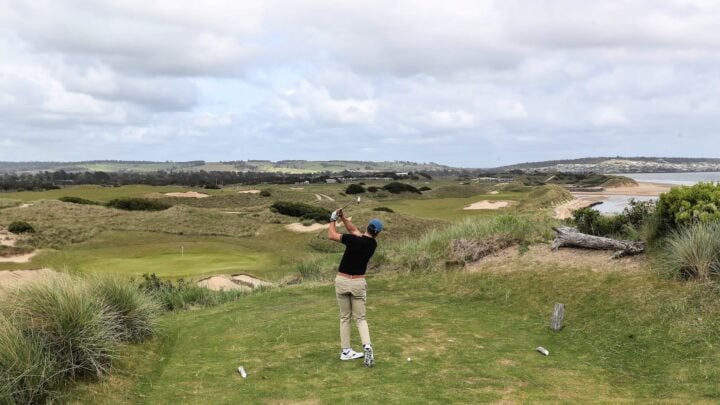
There’s a particular kind of golfer, and I say this with enormous affection because I count myself among them, who has spent decades playing perfectly pleasant suburban courses and telling themselves that’s simply what golf is. Then someone mentions Barnbougle, and if you’ve never been, you nod politely and file it away as “that place in Tasmania everyone raves about,” filed somewhere between “must try” and “probably overrated.”
It is not overrated. I want to get that out of the way immediately, because golf holidays are having a genuine moment right now – global golf tourism is a market worth tens of billions of dollars and growing at a rate that would make most industries blush, and Australian participation numbers have just passed four million adult players, the highest ever recorded – and in the middle of all that enthusiasm, Barnbougle remains the one Australian destination that genuinely earns every bit of its reputation.
Where these courses actually sit in the rankings
Let’s deal with the numbers, because they’re worth knowing before you tee off. Barnbougle Dunes currently sits in the top four courses in the entire country, a position it has held with remarkable consistency since opening – level with Royal Melbourne (West), Kingston Heath and Cape Wickham at the very top of Australian golf, and comfortably inside the World Top 100. It was, notably, the first new Australian course to enter the world’s top rankings since they began being compiled at all, which tells you something about how quickly the golfing world sat up and paid attention.
Its sister course, Lost Farm, isn’t far behind – regularly ranked in the top five to seven courses in Australia and inside the World Top 100 in its own right, having climbed the rankings steadily since opening in 2010. And the newest addition to the property, the shorter Bougle Run, has already cracked Australia’s top 40 to 60 depending on the ranking body, which is a genuinely rare feat for a course still in relative infancy.
The men who built them
Part of what makes Barnbougle such a compelling story is who designed it, and why. Barnbougle Dunes was the work of Tom Doak, one of the most celebrated golf course architects working today, paired with Melbourne golfing identity and former European Tour professional Mike Clayton. The pair took a stretch of coastline that had, until 2004, been nothing more than a potato farm on Tasmania’s north-east coast, and turned it into what’s now considered Australia’s finest seaside test – a true links course in the old Scottish tradition, built to play firm and fast, and to reward the kind of creative, along-the-ground shot-making that modern target golf has largely forgotten.
Lost Farm, its sister course across the river, came from an entirely different design pedigree: Bill Coore and Ben Crenshaw, the American duo behind some of the most acclaimed modern golf architecture in the world, working across even steeper, more dramatic dunes than the Dunes itself. Where Doak and Clayton built a course of exacting, sometimes brutal precision, Coore and Crenshaw built something a touch more generous – wider fairways, more forgiving lines, but no less spectacular, with a run of closing holes along the coast that regularly gets named among the best finishing stretches in world golf.
It’s worth pausing on the name itself, too. “Barnbougle” comes from an old Scottish term meaning “dangerous sandbank” – which feels less like branding and more like a fair warning, given what the wind coming off Anderson Bay can do to even a well-struck shot.
The itinerary that actually gets you there properly
This six-day, five-night journey doesn’t just drop you at Barnbougle and hope for the best. It builds you into it properly, beginning with two nights at Country Club Tasmania just outside Launceston, including a round on the resort’s own refurbished 18-hole course to knock off the travel cobwebs, a stop at Cataract Gorge, and a tour (and taste) at the James Boag Brewery.
From there, it’s on to Barnbougle itself for three nights at Lost Farm Lodge, with your afternoon arrival round played on the short, punchy Bougle Run before the main event: a full round on Barnbougle Dunes with the resident golf pro alongside you for guidance on reading the unique links terrain, followed the next day by Lost Farm itself. In between, there’s a wine tasting at the award-winning Josef Chromy Winery, a distillery visit at Bridport, and dinners at both the Lost Farm Restaurant and the Dunes Clubhouse, which between them do a very fine job of reminding you that this is Tasmania, and the food and wine were never going to be an afterthought. The journey wraps with a final scenic run down through Binalong Bay and the Bay of Fires, and a stop at the beloved Pyengana Dairy, before flying home from Launceston.
The honest bit
I’d be doing you a disservice if I didn’t mention this plainly: there are no motorised buggies at Barnbougle, on any of the three courses, and you’re looking at 6 to 8 kilometres of walking per round across genuinely undulating dune terrain. This is not a gentle stroll-and-putt affair. It’s a proper physical test, and the tour itself is upfront that a solid level of fitness and mobility is required. If that description excites rather than deters you, you’re exactly the golfer this trip was built for.
Ready to find out for yourself? Contact the team at Travel at 60, who can check current availability and arrange your flights, accommodation and everything else needed to get you standing on that first tee at Barnbougle Dunes.





 Proudly Australian owned and operated
Comments 0
Join the conversation. Comments are reviewed before they appear.
Be the first to comment.
Join the conversation
Tell us who you are to post a comment. We'll remember you next time.