
Why does time feel like it is moving so fast?


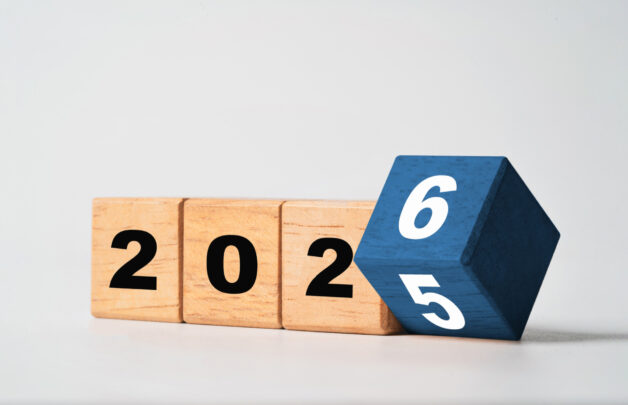
If you’re sitting there, looking at the calendar and gobsmacked how another year has flown by and that, with 2026 on our doorstep, it feels like the 70s or 80s were just yesterday, you’re not alone.
One minute it was Easter eggs and hot cross buns, the next minute Michael Buble and Mariah Carey are undergoing their annual festive defrost and the Christmas tree is somehow already up. So what happened to 2025?
According to science, the problem isn’t your calendar. It’s your brain.
Researchers who study a concept known as “time perception” say the phrase itself is slightly misleading. Unlike colour, sound or taste, time isn’t something we can directly sense. There’s no wavelength, frequency or chemical signature to detect, and crucially, no such thing as a “time particle”.
Instead, our brains do something clever and slightly chaotic: they infer time rather than perceive it.
How brains tell time (badly)
Rather than ticking along like a clock, the brain estimates time by tracking change. The more that happens, the longer a period of time may feel. This is why a flickering image seems to last longer than a static one, even if both appear for exactly the same duration.
It’s also why people involved in frightening or intense events often report that time slows down. In one well-known study, participants fell backwards into a net from more than 30 metres in the air. Afterwards, they estimated the duration of their fall as more than a third longer than when they judged someone else’s fall.
The brain, flooded with adrenaline and attention, stores a dense collection of memories. Later, when it tries to work out how long the event lasted, it looks at all that detail and concludes that it must have taken ages.
Why 2025 felt like it went in a flash
To understand what happened to the latter half of 2025, scientists drew a distinction between prospective time (how fast time feels right now) and retrospective time (how long it feels when you look back).
Prospectively, time crawls when we’re bored and flies when we’re distracted. This is why waiting at the dentist feels endless, while a few hours scrolling on your phone mysteriously vanishes. As the saying goes, time flies when you’re having fun – or at least when you’re not paying attention to the clock.
Here’s an exercise. Try staring at a clock for five minutes and you’ll feel every second. Boredom, it turns out, is an excellent way to slow time down.
Retrospectively, though, the opposite happens. Routine days feel long while you’re living them, but short when you look back. This is the logic behind the phrase “the days are long, but the years are short”, a sensation that becomes stronger as we age.
When we’re young, life is full of firsts – first school, first job, first relationship, first holiday. These novel experiences create rich, vivid memories. Later, as days become filled with familiar routines – school drop-offs, work, dinner, repeat – fewer standout memories are formed.
Looking back, the brain sees less change and concludes that not much time can have passed. Cue the annual December shock.
Can time be slowed down?
Technically, yes — but you won’t enjoy it. To slow time as you experience it, you simply need to get bored. Stand at red lights. Count to ten thousand. Watch paint dry or the kettle boil.
Slowing time in hindsight is harder, but more rewarding. The key is memory. Write things down. Keep a diary. Revisit photos and moments. The more you rehash memories, the more alive they stay.
Better still, create new ones. Novelty is memory’s best friend. Try something different. Go exploring. Do something slightly unhinged but unforgettable.
It won’t stop December arriving – but when it does, it might finally feel like a whole year got there too.





 Proudly Australian owned and operated
Comments 0
Join the conversation. Comments are reviewed before they appear.
Be the first to comment.
Join the conversation
Tell us who you are to post a comment. We'll remember you next time.