
Why Community Transport Is a Lifeline for Older Australians


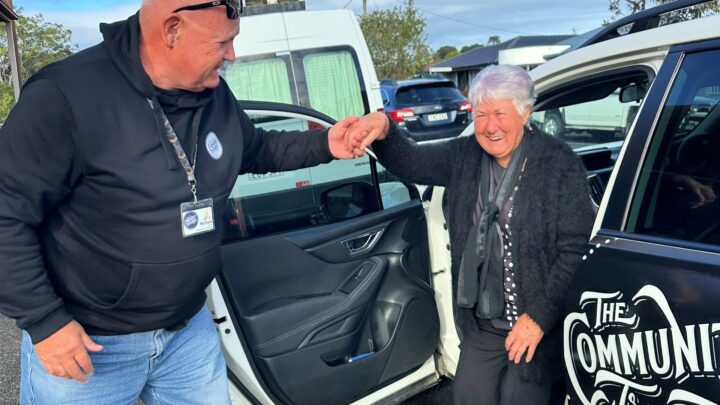
For many older Australians, losing the ability to drive doesn’t simply mean giving up the car keys. It can mean losing access to medical appointments, grocery shopping, social activities and the freedom to remain living in the home and community they love.
As aged care reforms continue to evolve and uncertainty remains over the future of the Commonwealth Home Support Programme beyond July 2027, community transport providers say they are being asked to make long-term decisions without knowing what role they will play in the future system.
For organisations operating large vehicle fleets and delivering services across regional Australia, that uncertainty is creating significant challenges. Yet those working in the sector argue community transport is too often overlooked, despite being the service that allows the rest of the aged care and healthcare system to function.
For 76-year-old Eileen, who lives in Eungai on the NSW Mid North Coast, community transport has become essential to everyday life.
She and her late husband first looked into the service years ago while planning ahead for later life. Although he was still driving at the time, they wanted to understand what support might be available as they grew older.
After her husband’s death five years ago, those early enquiries became a necessity.
“There are no buses where I live, and the train at the bottom of the road only runs once a day,” Eileen said.
“The volunteers who help me are absolutely fantastic. I honestly don’t know what I’d do without them.”
Without the service, she says she would have little choice but to stay at home.
“I would be housebound,” she said.
“There’s only a small corner shop nearby, and that’s really the extent of it. I have no family around me here, and the town is very small. Without community transport, I would simply be stuck and that’s not an exaggeration.”
While medical appointments are an important part of the service, Eileen says the benefits extend well beyond healthcare.
“It covers everything I need to get through the week, my doctors’ appointments, my grocery shopping, all of it,” she said.
“But it’s so much more than just the practicalities. Getting out of the house means I get to meet people, have a chat, feel like I’m part of things. That social interaction is one of the best parts of the day.”
For Eileen, the prospect of losing community transport would have life-changing consequences.
“I wouldn’t survive without it and I mean that sincerely,” she said.
“My family live far away, so I can’t rely on them for everyday needs. If community transport weren’t available, I’d have no choice but to move away from the home and the community I love.”
Marion Campbell, Chief Operating Officer of The Community Transport Company, says stories like Eileen’s demonstrate why transport should be recognised as essential infrastructure rather than simply another support service.
“Community transport is about far more than a ride. It’s about trust, connection and dignity,” Campbell said.
“When people can no longer drive, they’re often relying on someone else at one of the most vulnerable times in their life. Our drivers become more than drivers – they’re a familiar face, a helping hand and, for many people, an important social connection.”
Campbell said reliable transport helps older Australians maintain independence by keeping them connected not only to healthcare, but also to family, friends and their wider community.
“Without transport, it’s not just medical appointments that are missed,” she said.
“People stop visiting their husband or wife in residential aged care, they don’t see grandchildren, they miss birthdays, community groups, a trip to the hairdresser or the weekly social bus outing that gives them something to look forward to.”
The organisation is also calling for greater certainty around future funding arrangements as aged care reforms continue.
According to Campbell, community transport providers are being asked to make major decisions about vehicles, staffing and service delivery without knowing what funding will look like after July 2027.
“You simply can’t run an asset-intensive service without certainty,” she said.
She also believes greater collaboration across the aged care sector is needed to ensure older Australians receive the most appropriate and cost-effective support.
“In many cases, older people are being charged unnecessary hourly support rates and transport costs when community transport can provide a safer, more appropriate and far more cost-effective alternative,” Campbell said.
“Every dollar spent inefficiently is a dollar that can’t be used to support another older Australian.”
The challenges are particularly acute in regional and rural Australia, where alternatives such as public transport, taxis and rideshare services are often limited or unavailable.
“In regional and rural communities, those alternatives are often limited or don’t exist at all,” Campbell said.
“When someone can no longer drive, community transport may be their only option.”
Without reliable transport, she warned, older Australians are more likely to miss medical appointments, delay treatment, become socially isolated and lose their independence earlier than they otherwise would.
“We can invest billions of dollars in hospitals, aged care and healthcare, but if people can’t physically get to those services, that investment can’t deliver the outcomes it was intended to achieve,” she said.
“Access to healthcare starts with access to transport.”
For Eileen, the issue is simple.
“This service is fundamental not just for me, but for everyone in communities like mine,” she said.
“It’s for all of us, and it is so, so important. I hope the people making decisions about its future truly understand that.”





 Proudly Australian owned and operated
Comments 3
Join the conversation. Comments are reviewed before they appear.
I am looking at the same issue, getting older, no car, what if any support is out there.
I have no car, and the only option is taxis and they don't like short fares, I wish we had a community transport option.
I feel l it is a necessary service as when l had cancer l relied on this service every day for four weeks to get to and from the cancer clinic.Such a wonderful service and having wonder drivers.Very reliable.Older people rely on services like them.
Join the conversation
Tell us who you are to post a comment. We'll remember you next time.