
We’re Spending $250 Million on Rugby League in the Pacific. Meanwhile, in Brisbane’s Shopfront Doorways People are Sleeping Rough


By Brian Crisp, Starts at 60 editor
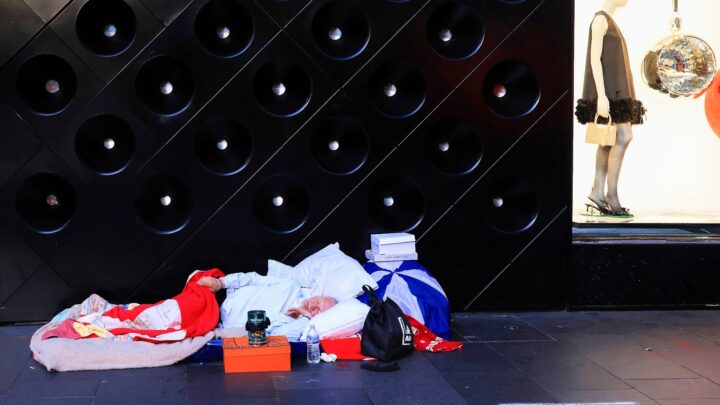
I was walking through Brisbane on State of Origin day, the same streets where the Prime Minister stood to announce Australia’s newest act of sporting diplomacy, and I found myself stepping around a man asleep in a shop doorway. A few blocks on, another. A swag in a park. A shopping trolley with someone’s entire life packed into it, parked against a wall for the night.
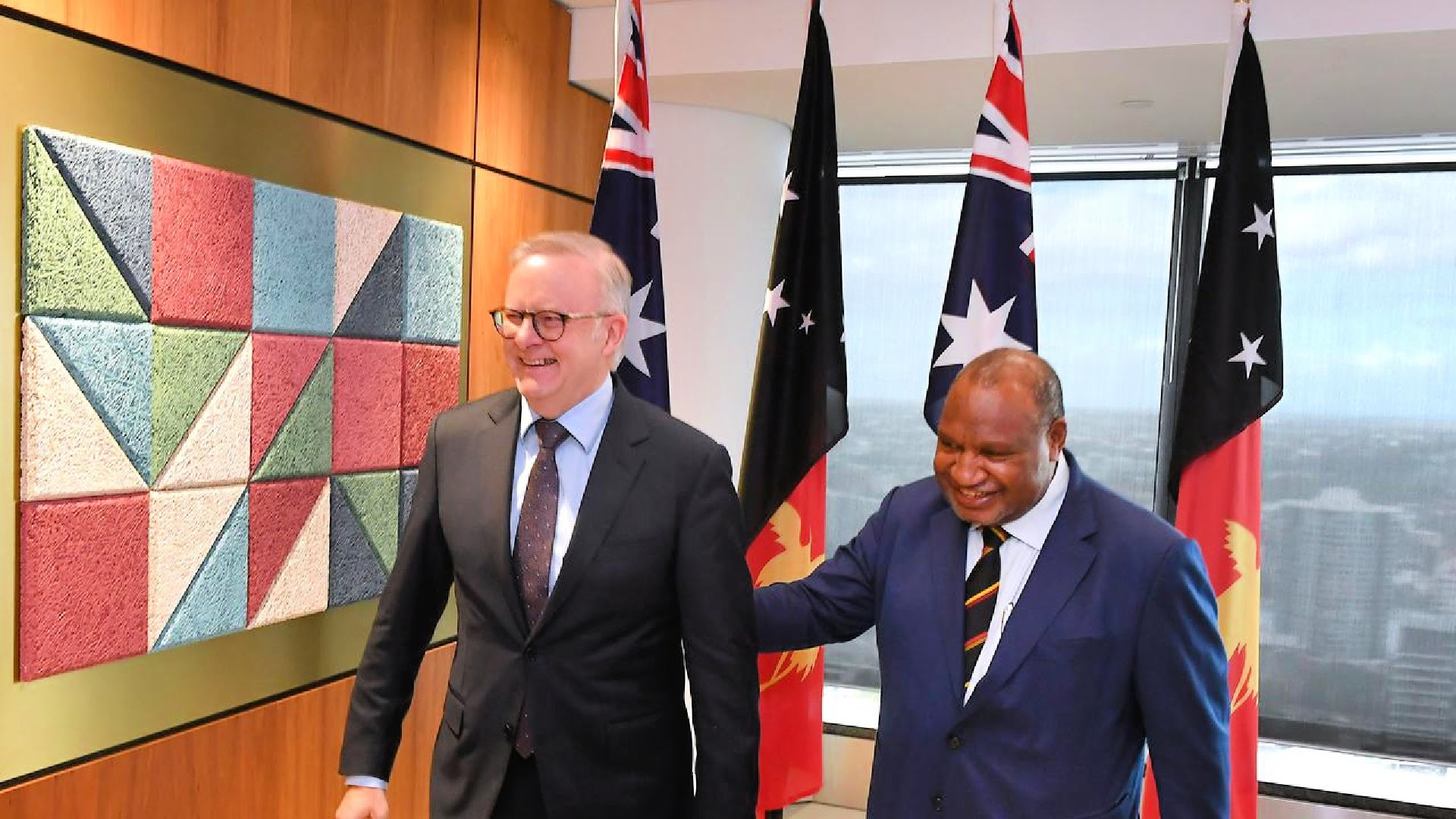
On the same day, in the same city, Anthony Albanese joined the leaders of Papua New Guinea, Samoa and Tonga to sign off on the Pacific Rugby League Partnership – $250 million over 10 years, part of a broader $600 million investment in rugby league across our region, including bankrolling a Papua New Guinea team into the NRL. Mr Albanese called it a partnership “built on the Pacific’s deep, shared passion for rugby league.” He said “our Pacific family draws closer together.”
I love rugby league. I understand exactly what this is – soft power, strategic positioning in a part of the world where China is circling, and a genuinely good-news story for Pacific communities who adore this game. None of that is in dispute. But here is what I can’t get past: we are doing this in the same week official figures confirmed Australia is falling badly short of its own promise to house its own people, while food charities tell us they have never been busier, and homelessness services are turning people away because there simply isn’t anywhere to put them.
Let’s look at what “falling short” actually means in hard numbers.
The National Housing Accord promised 1.2 million new homes by mid-2029 – 240,000 a year, every year. In the first full year, Australia delivered 174,732. That’s a shortfall of more than 65,000 homes in year one alone, a 27.5 per cent miss on a target the government itself set. Independent analyst Cameron Kusher didn’t mince words, calling it “a terrible outcome”. The math only gets worse from here: to catch up, we now need to build over 256,000 homes a year for every remaining year of the Accord – a rate this country has never once achieved in a full decade beforehand. The government’s own Housing Supply and Affordability Council now expects the target to be met around September 2030 – more than a year late, and that’s the optimistic case.
While that promise slips further away, here’s what’s actually happening to people on the ground. Mission Australia’s analysis of the latest Report on Government Services found more than 56,000 people who needed crisis or long-term homelessness accommodation this past year simply couldn’t get it – turned away, not because they didn’t qualify, but because there was nowhere to put them. More than a quarter of a million households – 254,571 – are sitting on social housing waitlists, 122,457 of them classified as being in “greatest need”. Mission Australia’s Deputy CEO Ben Carblis put a number on the precariousness underneath all of this: “up to 3.2 million people are at risk of losing their home from just one life shock like a rent increase, job loss or eviction.”
And it isn’t just about a roof. The Salvation Army’s Red Shield Report, released this year, found that after covering housing costs, the households they support are left with just $280 a week to live on – under $40 a day, for everything: food, medication, transport, electricity. Seventy-six per cent told them they’d had to choose, at some point in the past year, between paying the rent and buying food. Nearly four in ten private renters had faced a rent increase in the past twelve months, and more than a quarter were already behind on payments. Every single hour, more than 3,200 people across this country seek help from Mission Australia alone. That is not a statistic. That is a queue, forming again, every single hour, of every single day, made up of Australians who cannot keep a roof over their own heads in their own country.
I am not naive about how government spending works. I know $250 million over a decade for the Pacific isn’t going to build a single extra home here, and redirecting it wouldn’t solve the housing crisis on its own – this isn’t really about the dollar figure being fungible, dollar for dollar, between a foreign policy program and a domestic one. That’s not my argument.
My argument is about optics, priorities, and what it says about a government’s sense of proportion. You do not get to stand in Brisbane and announce a decade-long, quarter-of-a-billion-dollar sporting partnership with our Pacific neighbours – a genuinely nice initiative, in isolation – in the very same week your own housing figures confirm you are missing your own targets by a mile, while charities are telling you, on the record, that they are more stretched than they have ever been. You do not get to talk about “family” drawing closer together on one side of the world while the family next door is sleeping in a car, a phenomenon now common enough that charities are running television advertisements about it.
If the government has $250 million to commit to a decade-long international sporting initiative, then it has $250 million it could, at minimum, be asked to justify not spending here first. Every dollar spent offshore while a Salvation Army caseworker is telling a mother she has $40 a day to feed her kids is a dollar this government has chosen not to spend on her. That is a choice. It was made this week, publicly, with a smile and a football in hand, on the same streets where people are sleeping rough tonight.
I’m not asking Australia to abandon the Pacific. I’m asking why we can announce a fully-funded decade-long commitment to a foreign nation’s sporting infrastructure before we can find a way to hit our own housing targets for the people who already live here, pay taxes here, and are sleeping in doorways a short walk from where the announcement was made.
Something needs to be done. And the something isn’t more press conferences on a footy field.
Brian Crisp is Starts at 60’s editor. The views expressed are his own. Starts at 60 welcomes responses from readers at [email protected]





 Proudly Australian owned and operated
Comments 10
Join the conversation. Comments are reviewed before they appear.
Lets all go and move in with Albonesee.
No thanks Jack I would rather move in with a thief than a compulsive liar at least you where you stand.
My husband and I have discussed this same issue ourselves. Our government must take care of its own people before giving away millions and millions of dollars to other countries. It is not just the housing crisis, it’s the cost of living, our hospital systems, lack of funding for schools and education and many other services.
The sooner the average Australian taxpayer wakes up to the fact that the current government doesn’t give a flying kangaroo about them the better.
We have to stop these people from other countries from immigrating here unless they have a job to go to. Like it used to be. Even `Poms` had to have a job to go to, so they could come here. The Tax payer is paying for so many who will never contribute to this country. Taking away housing from our seniors, and young families. All who have been born and breed here.
Great point, I have had surgery and watching television more than usual, it’s hard constant requests for funding from charities both for Australians and support for other countries. Where does the Australian government foreign aid go when gifted to other countries. Also foreign aid programs from Australia to China. What is that about.
I agree with your comments wholeheartedly. I always thought Labour governments looked after those in need, but not government. Our Prime Minister is not showing true leadership on this important issue of housing. He has forgotten his roots now that he is the leader of our Country.
The Government should DEFINITELY be taking care of their own citizens before anyone else.
The Government should most definitely be looking after their own citizens before anyone else. Homeless children are much much more important that ANY game.
It's absolutely disgusting. The government continues to spend money hand over fist on other countries and submarines that we're never going to get and yet can't find the money to create decent welfare systems, affordable housing and improve aged care and on top of that intends to absolutely shred the NDIS.
Before the government decides to take every last cent that they can from people who have been working all their lives to contribute to our country and give it away to others, maybe they should look at taking paycuts themselves and finding out what it's like to live in the real world!
Join the conversation
Tell us who you are to post a comment. We'll remember you next time.