
‘If these walls could talk: Visiting two of Sydney’s most haunted sites’


I had two tips. One was to go to the old Quarantine Station, the other was to go to what was once known as Callan Park, an institution for those with severe mental disabilities. Checking the map it was noticeable that they were in opposite directions. Perhaps I would do both, perhaps not.
I rolled out, pedalling towards Halliday Park where there’s a bike path that follows the shore. What I hadn’t factored in was the architecture. The variety and grandiose nature of the structures took me by surprise and evocated wonder as I rolled beside Wymston Parade whose name stirred the curiosity in me. A prominent Sydney physician, Dr George Fortescue, had bought an estate on the Parramatta River in 1851. He named the area ‘Chiswick’ after the village on the Thames River and his home ‘Wymston’ after the Fortescue family estate in Devonshire.
However, I was on my way to the Quarantine Station and that involved ascending a tough little pinch and then climbing some stairs through a park to get to St Albans Street so I could access it. Situated in Henry Lawson Park these days, the remnants of this animal shelter have, almost miraculously it seems to me, been preserved.
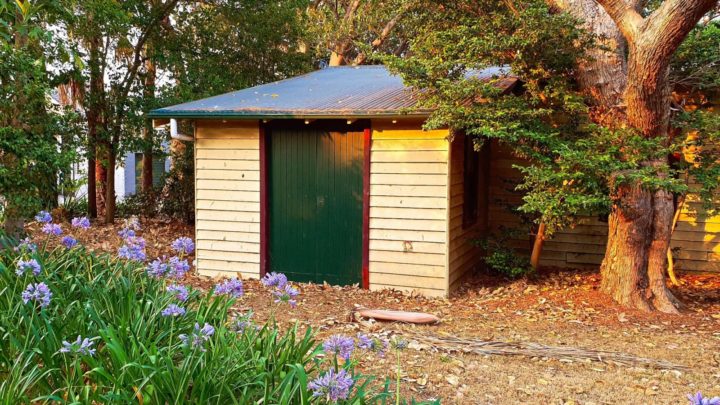
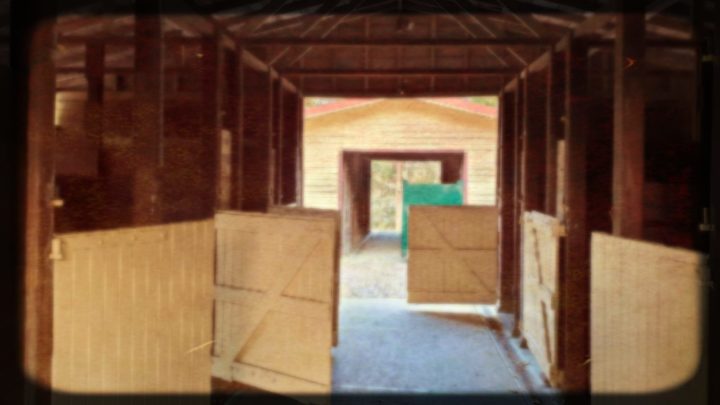
Stables in the middle of a public park in Sydney are certainly something of a rarity and, to see them in pristine condition and ready to go, minus a bale of hay, was something of a surprise. It all came about because, what we know as Taronga Park Zoo had outgrown its original facilities at Moore Park and, when they took over the Quarantine Station site at Bradleys Head in 1912, quarantine had to go somewhere else. Sheep, cattle, dogs, pigs, horses and cats were all housed here up until 1980, when the objections of locals about the odour were finally satisfied. I chose not to seek out where the rumoured interned giraffe might be.
When it closed in 1980 it was due to intense lobbying by Drummoyne Council that the area was made a park. Coincidentally, the fine historical two-storey 19th-century house of the original land grant was sadly destroyed by fire just two years later.
I figured I felt up for the prolonged journey to Callan Park, these days some of it an outpost of Sydney University’s College of the Arts, that future in serious doubt due to dwindling numbers and, I can’t help but wonder, are developers greasing the palms of some officials in order to get their hands on the land? Cynical me.
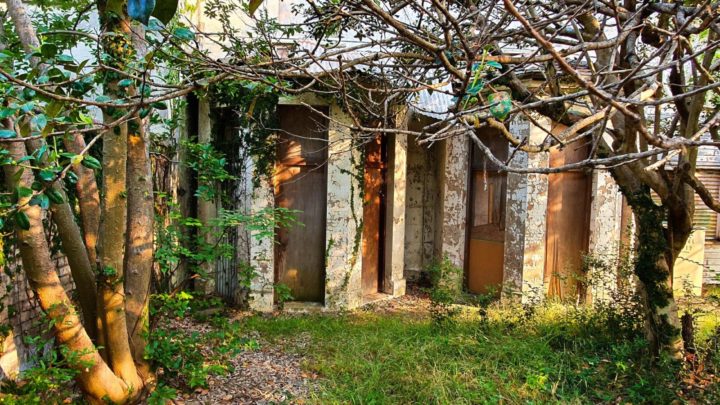
The original tenders of the land, the Wangal, were decimated by a smallpox epidemic in the late 18th century. By 1900, there were only 50 left. Not much later the Callan Park Hospital for the Insane came into being to cope with the excess from the nearby Tarban Creek Lunatic Asylum. All this overseen by the forward-thinking Dr Frederic Norton Manning. Sadly, his progressive waves were swamped by another wave, this time from a rapidly increasing number of inmates, most notably from World War I, and the facility was overwhelmed. It was around this time that tales of the place being haunted started circulating and they haven’t stopped since.
I have to admit that it was a bit spooky looking at the dilapidated areas and not have an eerie thought or two cross your mind. The skeletal remains of some buildings weren’t encouraging. It closed in 1976.
I reached the area but had underestimated the vastness of its 150 hectares. Indeed, I’d already unknowingly skirted its lower extremities on my previous ride. This time I was on high, going past crumbling buildings with plant growth popping up in unusual places. There was a time when inmates would tend to the gardens; those times had clearly passed, though the lawns were all mown and, as I approached the splendidly preserved sandstone buildings that are still in use, a different atmosphere prevailed. Though cabbage palms oversaw the buildings it was the pandanas that got my attention. So used am I to seeing them clinging to rocks by the seaside it came as a bit of a shock to see a mature tree near the headquarters.
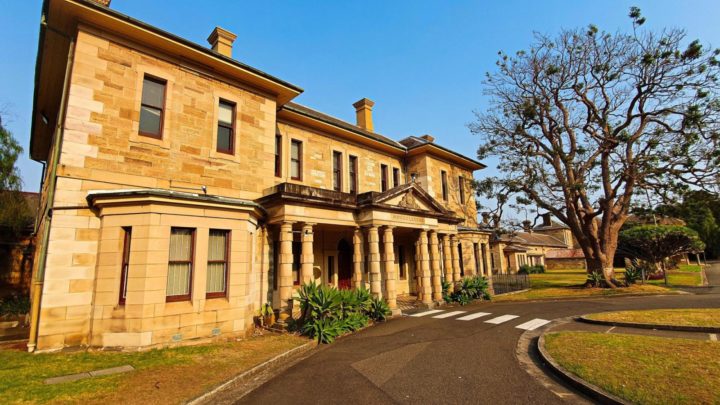
Refurbished and re-opened in 1996, you can but hope someone will find a use for this special clutch of architecture. The Roman numerals on the smooth sandstone façade indicated 1888 and it took no imagination to know that this area would be heritage listed. Perhaps there is hope for preservation after all.
Entry to the main plaza was closed, the old clock tower unavailable for photography, so I cautiously descended on the paths that were denied to me by Google Maps before reaching the Bay Run and its continuous human comings and goings in the mould of an ant colony. It was a mellow trip ‘home’, satisfaction fulfilled.





 Proudly Australian owned and operated