



Arriving at Heathrow from JFK recently, I discovered that my prescription progressive sunglasses were missing. They were simply gone without a trace and, despite follow-up with ‘Lost Articles’, beyond retrieval. I felt both guilty and reckless as I had no back-up.
It was tempting as an act of penitence for losing track of an expensive item, to replace them with something from the tourist kiosk or even go cold turkey for the duration of my trip. My most important travel accessory – quality sunglasses – were nowhere. This loss was more than a fashion thing, it was a vision thing.
Adequate protection from harsh and deteriorating effects of the sun’s ultra violet (UV) rays, a form of radiation, is critical for healthy vision. The effect of UV rays is cumulative, so it’s important to protect your eyes throughout your life.
Older eyes are particularly susceptible as exposure to the sun contributes to cataracts, which cloud the lens of the eye resulting in blurred vision. It’s estimated that 20 per cent of cases are the result of extended exposure to UV rays.
Macular degeneration, resulting from UV exposure that damages the retina and in turn destroys central vision, is a primary cause of vision loss after age 60. That UV exposure can speed up a nasty process you may be unaware of, so grab those sunglasses!
Read more: How to travel with friends: 5 tips for a really great time
Glaucoma is a serious eye disease that affects the optic nerve and can cause irreparable vision loss. Not surprisingly, it too is associated with aging. Sun glare can exacerbate the disorder, so quality sunglasses with polarised lenses are a must on sunny days and when you’re around water or in sand or snow conditions.
The thin, sensitive skin around the eye is very wrinkle-prone, so you’ll want to protect that delicate area from the sun’s harmful rays – even on cloudy days when UV rays still abound.
You’ll find quality sunglasses at all price points, so don’t be drawn in by expensive non-prescription glasses being the best. Instead, look for:
If you, like me, wear prescription glasses for distance and/or reading, having progressive correction sunglasses is one of those instances where a luxury becomes a necessity. Don’t leave home without a copy of your eyeglass prescription tucked away in your carry-on!
Read more: 3 places in Sweden that will make your heart soar
It’s always a good idea to carry a second pair as well, or carry a ‘cover pair’ of sunglasses. A clever cover for your regular prescription glasses will give you the UV protection you need – and polarisation – for a fraction of the cost of specialised prescription glasses.
Again, choices abound. You can buy sunglass ‘readers’ at standard magnifications up to three times magnification. Stylish and very price conscious, these are the best bet if you don’t need a prescribed correction.
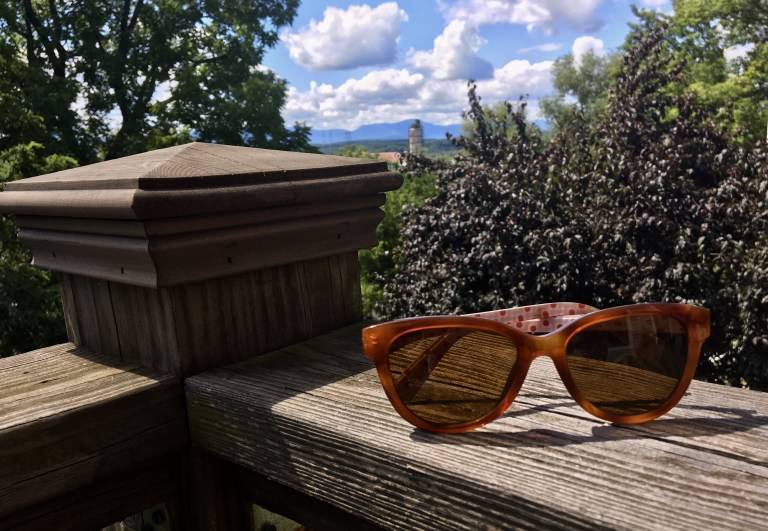
See you down the road; I’ll be the one hiding behind the polarised sunglasses!
Jane Trombley is founder of 3 Score & More, a blog launched to inspire travel and discovery among curious women 60+. As part of the ‘three score and more’ demographic, she is no stranger to life’s reset button. After careers in advertising, communication, and a very rewarding stint in adventure travel, she is following her heart and encouraging others to do the same. Jane is based in the Hudson Valley, New York, USA.





 Proudly Australian owned and operated