
The right insurance to enable dignified travel in your 80s


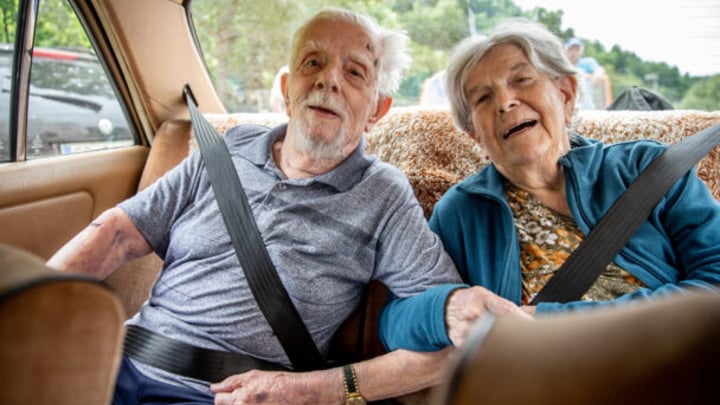
Welcome to the final part in a three-part special series looking at the considerations and concerns for travellers in three separate age brackets.
As more Australians remain keen travellers well into their 80s, the question is not whether older people should travel, but how they can do so safely, realistically, enjoyably for them and while maintaining their dignity. Travel insurance has become central to that calculation, particularly as age, health needs and destination choices narrow the margin for error.
Travel specialists say the most important starting point for travellers in their 80s is an honest assessment of health and physical capacity, followed by a willingness to adjust travel ambitions accordingly. Long-haul flights, complex itineraries and destinations with limited medical access can significantly increase both risk and cost.
“You really need to reassess your health and look at what your day-to-day health is like,” said travel insurance expert and Travel at 60 Head of Operations, Cola Maurirere.
“If you are very reliant on the medical system, it’s probably not the right destination for you, and you should potentially be considering something closer to home.”
According to the data, travellers in their 80s have been recognising this for some time, with booking patterns pre-emptively reflecting this advice and influencing travel patterns. Domestic cruising and short-haul regional travel have become increasingly popular among travellers in their 80s, particularly those keen to avoid long flights and unfamiliar medical systems. Australia’s coastal cruise itineraries, for example, allow travellers to remain within reach of Australian healthcare while still enjoying extended holidays.
However, Maurirere warned that even domestic travel is not risk-free. Cruise-specific insurance is essential, regardless of whether a trip is overseas or within Australia. Medical evacuations from ships, particularly those without helicopter access, can be complex and expensive.
“If you have a heart attack or a stroke and need to be taken off the ship, you’re responsible for those repatriation costs,” the specialist said. “They can be ridiculously expensive.”
“It is needed for domestic cruising as well. And one of the things I look at for when I’m looking at domestic cruising, and I tell them it’s required, um, you need it if you, if you have a heart attack or a stroke or anything or anything that requires you to be taken off the ship, you’re responsible for the, um, those repatriation costs, and they can be ridiculously expensive when you’re getting off the ship.”
Maurirere said it’s a requirement for large cruise ships to have a helipad to facilitate these emergency medical evacuations, however the same cannot be said for smaller ships.
“It just depends on the ship. A lot of them, if they can’t get a helicopter, the ship will sail as close as it can to somewhere where they can get a helicopter. So that could potentially be a port that they weren’t planning on going into. It could be the Coast Guard coming in and doing it.
“If it’s quite severe, I’ve seen a lot of documentation and YouTube of people getting airlifted off ships in the baskets, so they can go as far as they’re required to for the person.”
For travellers in their 80s, pre-existing medical conditions are often the biggest factor affecting insurance eligibility and cost. Insurers stress that full disclosure is non-negotiable. Failure to declare conditions can result in claims being declined at the very moment travellers need help most.
For Southern Cross Travel Insurance Chief Customer Officer, Jess Strange, it’s important travellers over the age of 80 don’t presume their age will cause a travel insurance premium to automatically rise, as this is wrong. The company says the same process applies to all potential customers, whether “they’re 18 years old or 100 years old”.
“Sometimes you can get older travellers who are super healthy and there’s nothing wrong with them, but what is really important, especially for those over 80, is to make sure to have regular checkups with your doctor, get medical advice before travelling, and to disclose any pre-existing medical conditions that they’re concerned about, just to make sure they’re protected while they’re away.
“The last thing you want is have something happen to you while you’re overseas in a foreign country and find you don’t have the support and protection to get you home or to help with your medical needs.”
Strange said Southern Cross Travel Insurance sees daily examples of incidents involving older Australians all around the world, all of whom end up extremely grateful for their insurance policy.
“We had an 80 year old traveller who tripped and fell doing their washing while on holiday in Spain. They fractured their patella, and we paid for the surgery and treatment, which came in at $108,000. Not an insignificant amount while you’re on holiday just from a simple everyday task.
“We had an 82 year old traveller who went to Greece and they had an injury and an illness, so we had to have registered nurses fly over to Greece and accompany them back home to Australia. That was over $130,000.”
Strange said regardless of somebody’s age, medical costs can be “eye-wateringly high” with medical systems in foreign countries operating under local governments or hospital systems.
“Always take travel insurance, no matter what age you are,” Strange added.
“Every day we see huge bills come in for people who don’t think that something will happen to them, and they think that it will just be a lost iPhone. A wee slip or trip and then it can cost tens or sometimes hundreds of thousands of dollars.”
Doctors also play a growing role in travel planning for older Australians. Travellers are increasingly encouraged to consult their GP or specialist before booking, particularly if travelling outside Australia.
“I always recommend talking to your doctor and making sure they’re aware of where you’re travelling,” Maurirere said. “They might have other things you need to be aware of that you haven’t thought about, such as vaccinations”.
Another practical step often overlooked is sharing insurance details with family or companions at home. In emergencies, access to policy numbers, insurers’ emergency hotlines and itineraries can significantly speed up medical and evacuation decisions.
“That information needs to be shared,” Maurirere said. “If something happens, it makes a huge difference if family know who your insurer is and who to call.”
Cost too remains a concern for many older travellers, but advisers caution against choosing insurance purely on price. Claim handling speed, access to medical hotlines and insurers’ willingness to liaise directly with hospitals are critical factors, particularly for travellers in their 80s.
“The cheapest product is not always the best product,” Maurirere said. “It’s about how quickly they move and how much support they give when something actually happens.”
For Australians travelling in their 80s, the message is clear-eyed rather than discouraging. Travel remains possible, rewarding and enriching – but only when plans are grounded in realistic expectations, appropriate destinations and comprehensive insurance that supports health, independence and dignity at every stage of the journey.
Look back at the first part of this series, travelling in your 60s, and the second part focusing on travelling in your 70s.





 Proudly Australian owned and operated
Comments 0
Join the conversation. Comments are reviewed before they appear.
Be the first to comment.
Join the conversation
Tell us who you are to post a comment. We'll remember you next time.