


Peter ‘Spida’ Everitt and his wife Sheree (who you might know from The Great Australian Doorstep TV show) run fully escorted motorhome convoy tours in Australia, New Zealand, USA, Canada and Alaska. Here, Spida takes us to Coober Pedy.
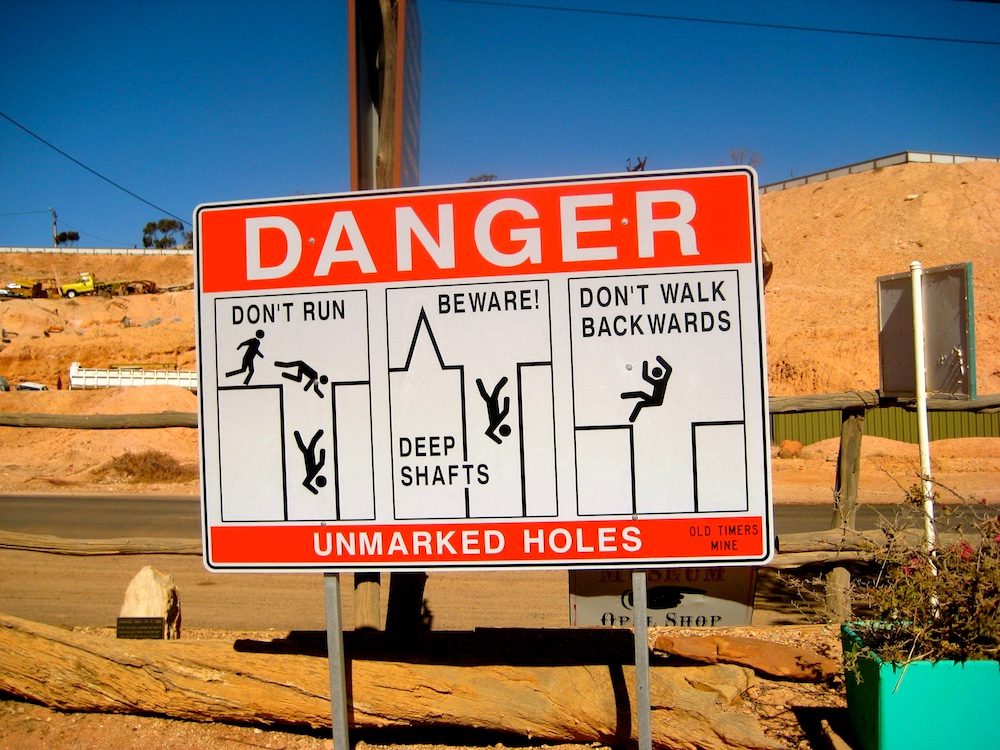
It’s the opal capital of the world – South Australia’s world-famous outback town, Coober Pedy. It’s rich not only in the amazing colours of the landscape, but also in history, tourism and plenty of unique characters… not to mention, opals.
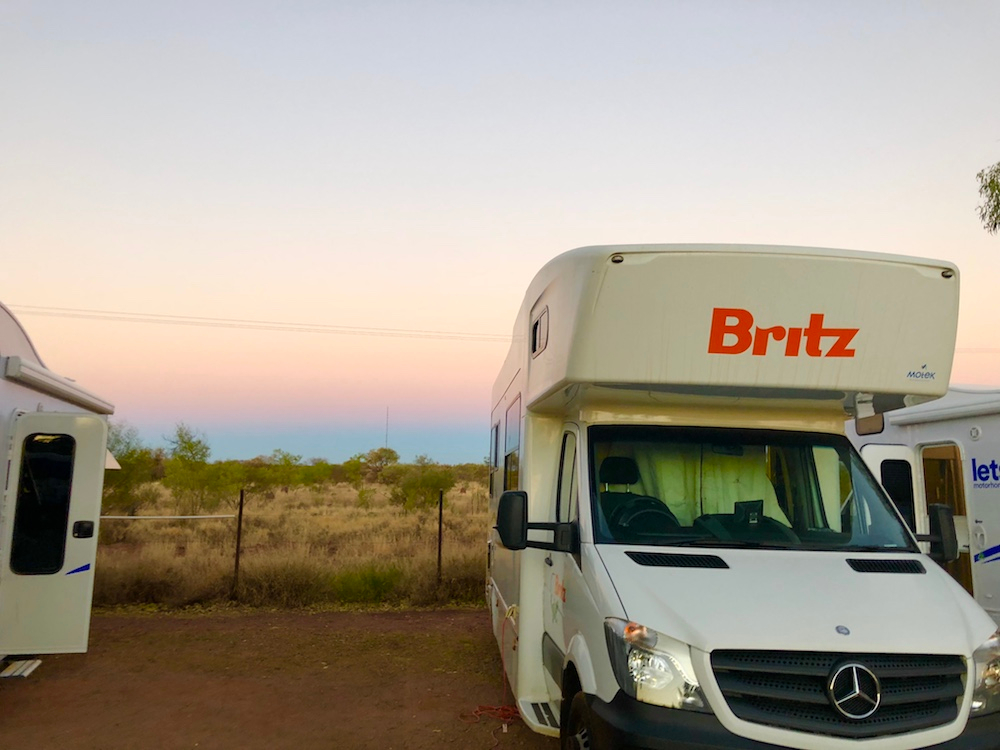
You can reach Coober Pedy via the one-and-only bitumen road or – if you’re prepared and have a full set-up – by one of several dirt desert tracks. We chose to take a Britz campervan from Adelaide.
As you drive in to the town, it’s beautiful clear blue skies above and the red dusty dirt of the outback below. To the left are mountainous piles of dug-up rock, left by those who came in search of their fortune. To the right is – you guessed it – more mountainous piles of dug up earth and rock! In some places they stretch as far as the eye can see.
Coober Pedy was originally built on the feverish addiction of opal mining back in 1915, but nowadays it’s tourism as well as opals that keep the heart of this town pumping. Located 846 kilometres north of the South Australian capital, Adelaide, Coober Pedy has to be experienced personally to be believed. When you arrive via the Stuart Highway and drive into the centre of town, it’s one of those places you know you will never find anywhere else on earth.
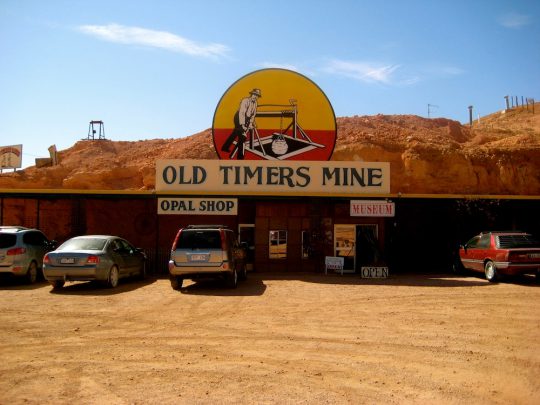
Towards the end of town you start passing the opal mines, and then you start to see the local ‘dugouts’ – they appear to be nothing more than a front door on the side of a mound of dirt, but are in fact someone’s home.
The locals live in these fully underground homes in order to escape the high temperatures often experienced in the outback. Inside, these homes are incredible: more often than not they are very luxurious, with power, water, TV signal, telephone… everything a normal house has, except windows. They do, however, have a lot of natural light thanks to sky lights. Being underground they have the even temperature of 23 degrees all year round, with no need for heating or air conditioning, thus making them very cheap – not only to build, but also to maintain. There is something unique about doing a home extension with a shovel, wheelbarrow and a stick of dynamite!
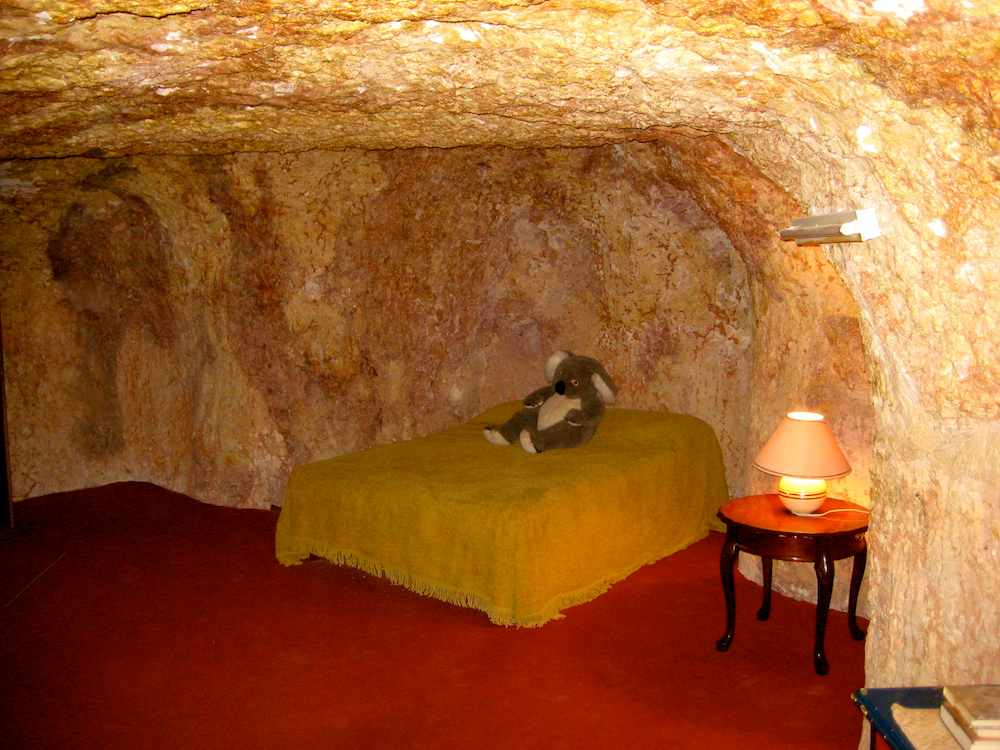
Our first stop is at a local opal shop, Umoona Opals, with a lovely gentleman by the name of Yani. Jumping out of the comfort (and air-conditioning) of the car onto a red, hot, dusty carpark, the sweat starts to bead down my forehead and run down my back within seconds. You get a real feel for the intense weather the outback can – and does – deliver, day after day.
Read more: How a belt can make your camping trip much more organised
Coober Pedy is full of the stories of winners and sinners of the area throughout the decades. It’s full of characters, packed with history and colour, and everyone (and I mean everyone) has an exciting story or nine to tell you. Yani at Umoona Opals is no different. He is one gentleman you will not forget in a hurry. After taking us on a tour of his amazing underground setup, Sheree insists she needs a pair of opal earrings(!). With opals discovered and extracted by Yani personally, he then crafts them into a stunning pair of one-of-a-kind earrings for Sheree.
Just 33 kilometres out of town, down another dusty dirt road, are The Breakaways – low-lying hills that were named after the fact that they have ‘broken away’ from the main Stuart Ranges. These impressive rock formations are said to have developed over centuries and were once a part of a very large inland sea. You’ll see locally named rock formations such as ’Big White Camel,’ ‘Two Dogs’ and ‘Papa,’ as well as the lookouts, ‘Salt and Pepper’ and ‘Castle’. The drive out to The Breakaways is well worth it. Going in a 4WD is essential – they do tours from the Big4 Stuart Range Outback Resort.
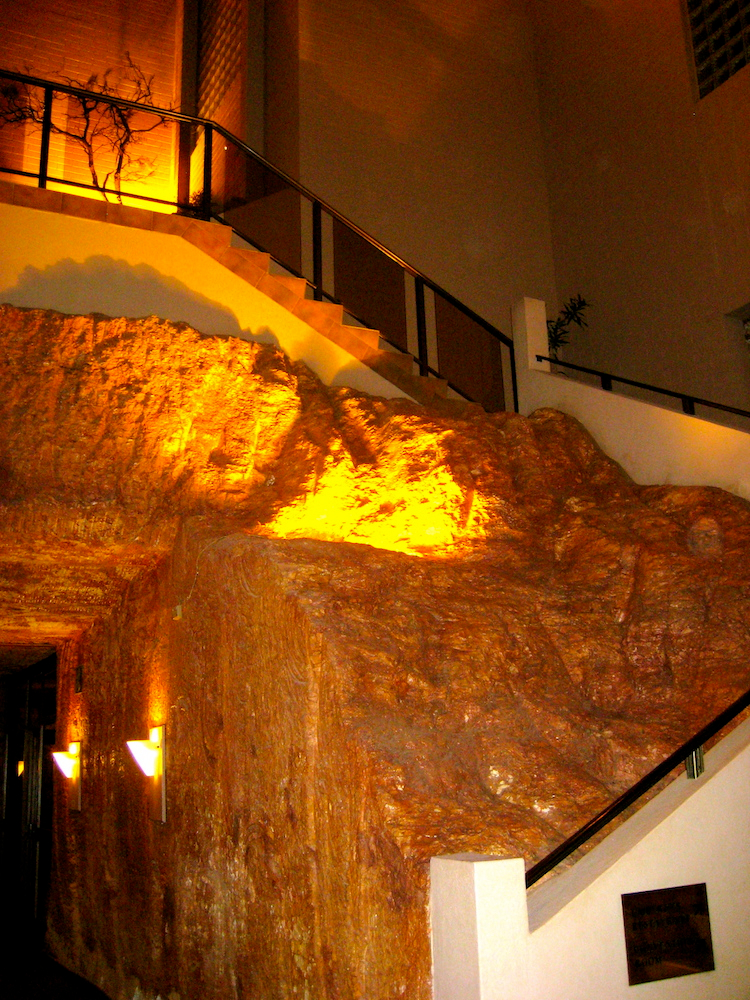
As you drive you’ll come across another important part of Australia’s history – the famous Dingo Fence (or Dog Fence, as it’s known today). This is the world’s longest fence, spanning 5,614 kilometres – starting in Jimbour in the Darling Downs near Dalby in Queensland, and ending west of the Eyre Peninsula on the Nullarbor Plain, just above the Great Australian Bight in South Australia. It was built back in the 1880s to keep dingos away from the sheep and without it we wouldn’t be having our lovely lamb roasts every Sunday.
A trip to Crocodile Harry’s is a fun way to spend a couple of hours talking to local characters. Originally a crocodile hunter in the Northern Territory, Harry came to Coober Pedy – like everyone else – in the hope of striking it rich with a find of unique opals. But he soon needed another income and built his whole dugout on unwanted goods – what others see as junk, Harry sees as stuff with character. Why his dugout is so special is the thousands of messages left there by people from all over the word – messages of thanks, poems, phone numbers, life mottos, addresses, jokes and jibes – each one written on a piece of personal underwear left behind by the travellers themselves!
There’s even a signed bra from Tina Turner, which was given to Harry while the legendary signer was in town filming Mad Max Beyond Thunderdome. Coober Pedy is not only famous for its opals – some of Hollywood’s biggest blockbusters have been filmed here, including Mad Max Beyond Thunderdome, Ground Zero, The Fire in the Stone, Stark, The Adventures of Priscilla, Queen of the Desert, Siam Sunset, The Drover’s Boy, Red Planet and Kangaroo Jack, to name just a few. These movies are regularly shown at the town’s unique drive-in movie theatre, operated entirely by volunteers.
Read more: Why you should bring a lint roller on camping trips
Another great way to enjoy Coober Pedy – and just one of many intriguing attractions here – is to play a round of golf at the Coober Pedy Opal Fields Golf Club. The 18-hole grassless course is a sister course to one of the world’s most prestigious courses, St Andrews Links in Scotland! It isn’t for the faint-hearted and is best played in the earlier hours of the day to escape the blistering heat. On a course with no trees or grass you’d expect a few pars, but placing a bit of short artificial turf under your ball for a fairway shot – and longer artificial turf to double as the rough – makes the course more challenging. With the lack of grass the greens are black. One tip is to ensure you take a hat, plenty of water, sun block… and plenty of patience.
Coober Pedy is, to me, a must-see for anyone who wants to experience the real Australia, and is a compulsory part of an outback itinerary. Just don’t take white clothing!
Coober Pedy facts
• Nearly 80% of Coober Pedy’s population live in underground homes called dugouts, to escape the harsh outback weather.
• There are more than 4,000 people living in Coober Pedy, from more than 40 countries.
• The town produces most of the world’s opals and is the largest opal mining area in the world.
• Its opal fields, discovered in 1913 by 14-year-old Willie Hutchison, cover an area of 4,954 square kilometres and consist of 70 individual fields.
• The name “Coober Pedy” comes from the local Aboriginal term kupa-piti, which means “white man’s hole”.
Motorhome Convoy Tours are available in Australia, New Zealand, USA, Canada and Alaska. The Great Australian Doorstep is on Channel 7Two on Saturday afternoons, or tune in to the radio show every weekend across the TripleM and FlowFM networks – 68 stations, Australia-wide.





 Proudly Australian owned and operated