
Consider covering up your tattoos when in Japan


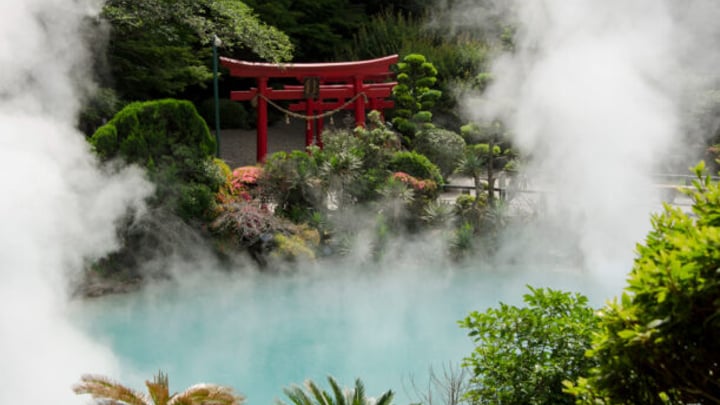
Australians continue to flock to Japan in record numbers, and if you’re planning your adventure to the ‘Land of the Rising Sun’, there’s one (of many) important cultural custom of which you may not be aware.
Travellers are being reminded that visible tattoos can carry cultural sensitivities in parts of the country, particularly in traditional bathing spaces such as onsens – a daily staple in everyday Japanese life.
What you may not realise is that in Japan, tattoos have long been associated with organised crime groups, a historical stigma that persists despite changing social attitudes. As a result, many public baths and hot springs ask guests to cover tattoos or may restrict access altogether to preserve a calm, non-intimidating environment for all visitors.
With Australians among the most tattooed populations in the world – an estimated 25-30% have at least one – this cultural difference can come as a surprise to first-time visitors. Yet Japan’s onsen bathing culture remains one of the country’s most distinctive, traditional and sought-after experiences, celebrated for its restorative qualities and deep connection to wellness.
One hospitality group navigating this cultural intersection is Hoshino Resorts, one of Japan’s leading operators of luxury hotels and ryokan. As international tourism thrives in Japan’s current economic climate, the company has taken a considered approach to accommodating tattooed guests while maintaining the atmosphere expected in shared bathing spaces.
In its Hotel Regulations, Hoshino Resorts states: “The Hotel welcomes guests with tattoos and respects their cultural expression. However, due to the association of certain tattoos with criminal groups in Japan, there may be instances where we limit tattooed guests’ access to the public bath if their tattoos could be perceived as intimidating.
With more than 60 properties across Japan and overseas, Hoshino Resorts offers a variety of onsen experiences that may appeal to Australian travellers seeking both cultural immersion and comfort. Four properties in particular stand out.
Hoshinoya Karuizawa is the flagship of the brand and sits in a secluded valley at the foot of Mount Asama, around 90 minutes from Tokyo by train. Designed as a village of standalone pavilions connected by forest paths, the resort exudes quiet immersion in nature. Guests bathe in the historic Hoshino Onsen, including the open-air Tombo-no-yu, surrounded by mountain scenery. Bordering a national wild bird sanctuary, the resort also appeals to eco-minded travellers, with strong ties to local conservation efforts.
In contrast and closer to the capital, Hoshinoya Tokyo offers an urban interpretation of the traditional ryokan in the heart of Otemachi. Behind its understated facade, tatami-lined floors function as intimate retreat spaces, complete with communal lounges. A natural hot spring drawn from beneath the city crowns the building, with rooftop indoor and open-air baths providing a rare moment of serenity while overlooking Tokyo’s skyline.
To the west, Kai Kaga invites you into a 400-year-old ryokan lineage in the historic Yamashiro Onsen area of Ishikawa Prefecture. The property showcases regional craftsmanship, from Kutani-ware ceramics to Kaga Yuzen textiles. Guests can take part in cultural discovery programs highlighting local traditions such as kintsugi, which is the art of repairing pottery with gold. The mineral-rich baths, famed for their skin-beautifying properties, are complemented by regional cuisine and seasonal design elements.
Perhaps the newest, having opened just last year, Kai Akiu offers a quieter alternative near the city of Sendai – accessible in 90 minutes by bullet train from Tokyo. Set in the historic Akiu Onsen region, the ryokan draws inspiration from samurai history and the legacy of feudal lord Date Masamune. With spacious indoor and outdoor baths and a focus on northern Japanese flavours, the property provides a restorative escape while remaining easily accessible from an urban centre.
As interest in Japanese wellness travel grows, so too does demand for more inclusive onsen experiences. These Hoshino properties demonstrate how traditional customs and modern hospitality can coexist, offering tattooed Australian travellers thoughtful pathways to enjoy one of Japan’s most treasured cultural rituals, respectfully.





 Proudly Australian owned and operated
Comments 0
Join the conversation. Comments are reviewed before they appear.
Be the first to comment.
Join the conversation
Tell us who you are to post a comment. We'll remember you next time.