


Paris was surprisingly busy with traffic because it was Sunday and we wasted more time bypassing a minor accident and other traffic snarls before finally reaching the flat verdant countryside, interspersed here and there with sparkling yellow fields of canola.
The miles drifted by in smooth comfort and we managed a food stop with ease, sampling some delicious local cooked ham before stepping out again into the freezing cold of spring. Don’t believe me? Minutes later we had a flurry of snow on the windscreen.
I turned off the motorway, aiming for Flavigny, an historic village but, en route, just eight kilometres short, we stumbled on something even better. A ruin of a town lay before us: Semur-en-Auxois. Across the river were two crumbling towers that would have been condemned in Australia. A frightening vertical crack had split the brickwork apart and the demise of the towers seemed imminent, yet they stood – albeit with warning signs attached.
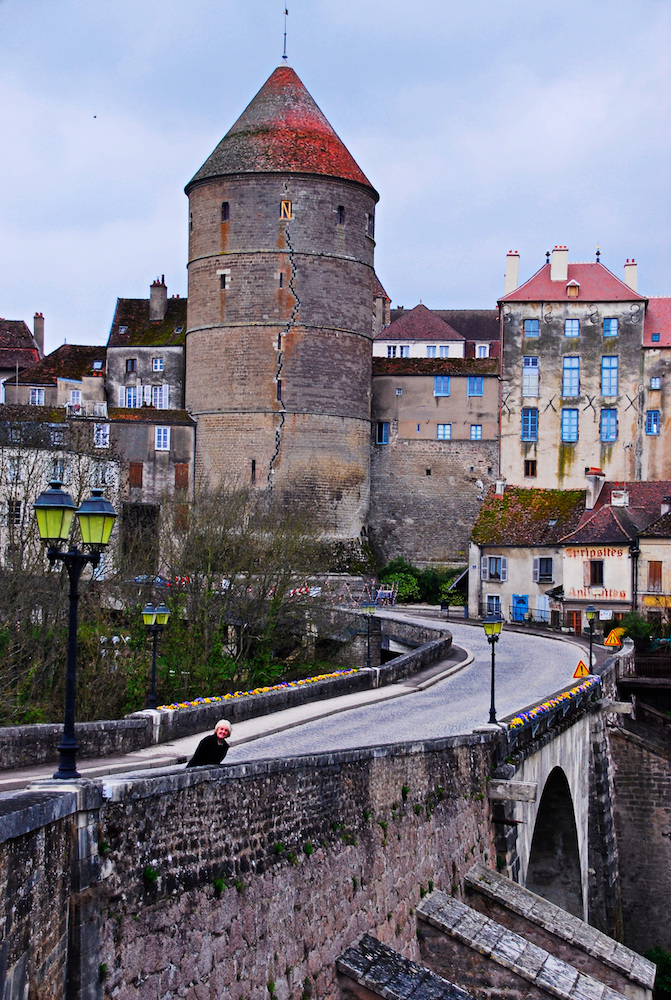
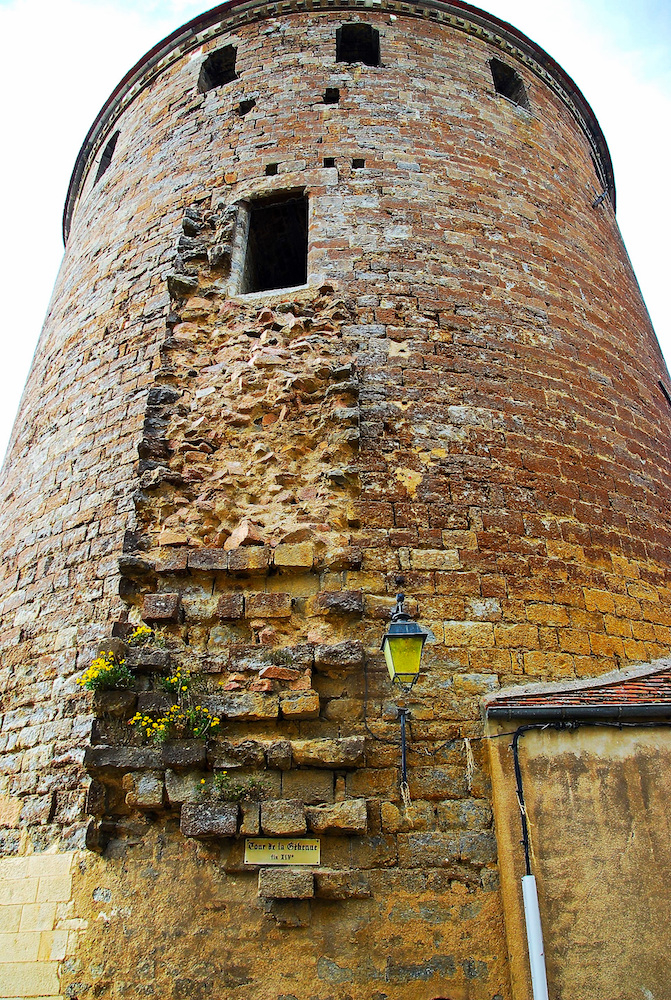
The rest of the buildings seemed in various states of decay as we braved the freezing conditions to see these ruins. I was in photography heaven, except the light – what little there was of it – barely made it through the European haze.
It was about this time we lost Cheryl. Rosemarie was ill attired for the conditions and required more clothing from the car but, as we turned around and recrossed the Pont Joly, Cheryl was nowhere to be seen. We walked back to the car and got the extra layers and then moved the car across to the main part of the town in an obscure carpark. Still no Cheryl.
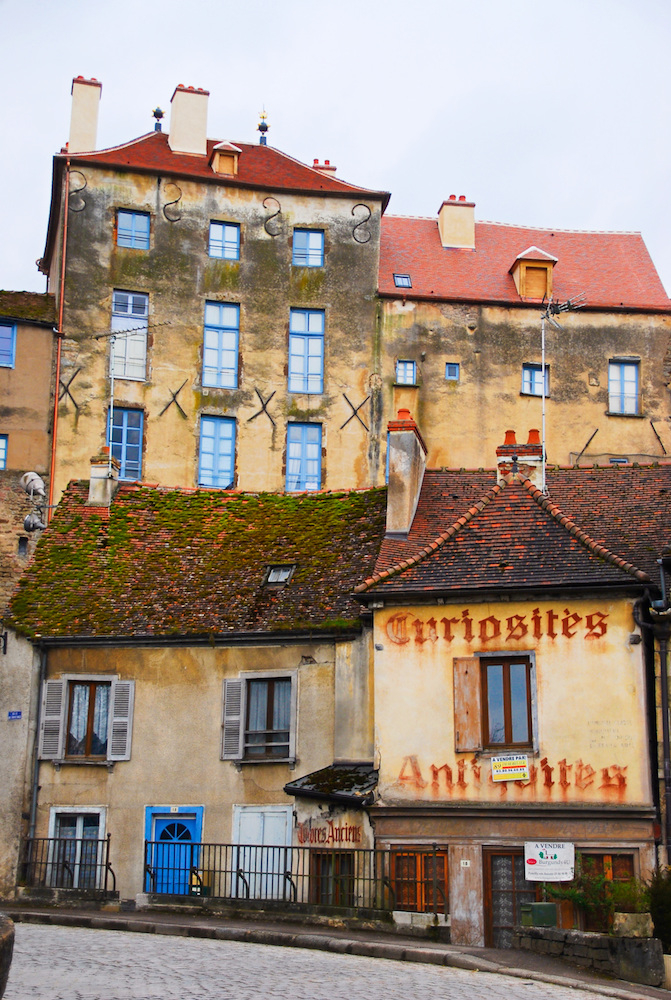
We made our way to the main square, but Rosemarie was desperate for coffee… actually, anything warm would have done, while I went searching for Cheryl. In and out of alleys, stumbling over cobblestones, gazing across the river, but Cheryl was nowhere to be found.
I knew I’d have to return to where the car was parked and could almost see the exact spot from where I stood, but she wasn’t there. Eventually I walked all the way back anyway, just to be sure and – lo and behold – there was Cheryl on the other side of the street, stressed out as she had never been on a holiday before; her only comfort was that she knew I always returned to where we’d last seen each other.
The relief on her face was palpable and she vowed never to stray with her camera again (but, truth be known, both parties were at fault). But now it was all rejoicing as we enjoyed our repast in the cafe and recklessly attacked a lemon crepe.
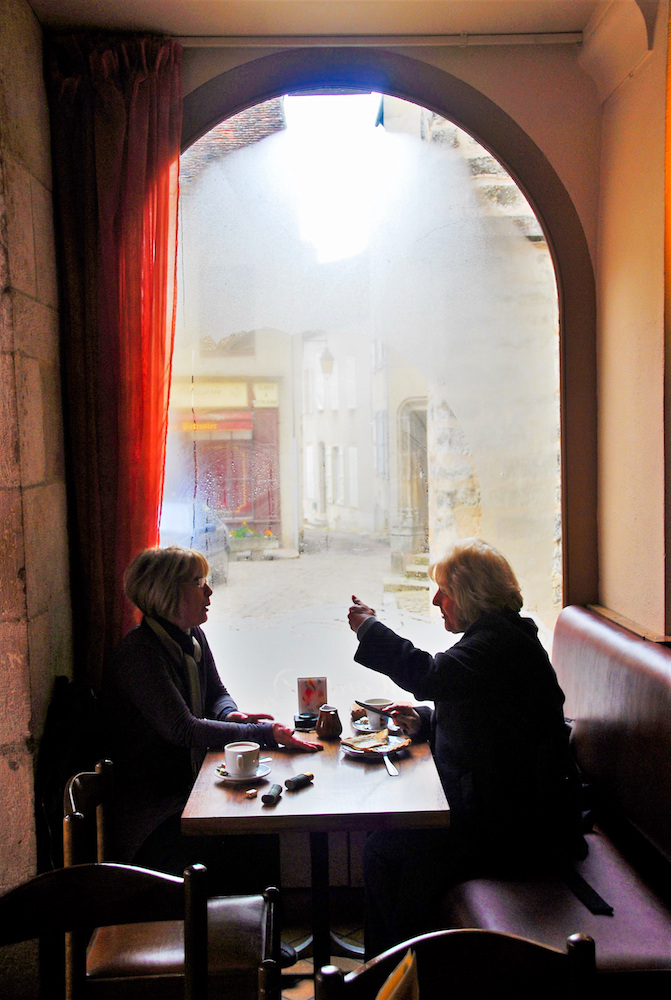
The town, Semur-en-Auxois, was actually on my list of things to see, so when I was offered a free half-hour while the girls finished their chatting, I bolted out of the cafe and was away, the rugged architecture of this ancient town unfolding before me in a wondrous variety of angles, antique ironmongery, bas reliefs, half-timbered shops, wonky tiles and unkempt cobbles.
“The people of Semur take great pleasure in meeting strangers.” This wonderful sentiment, inscribed in 1552 on an archway leading to the oldest part of the village, purportedly emphasises the attitude of the residents of Semur-en-Auxois. The city itself was incorporated in the Duchy of Burgundy in 1050.
Narrow lanes curved here and there and well-worn staircases twisted in seemingly ridiculous directions until you saw the even-more ridiculous situation of some of the houses. It was all centred around the river though, and charming brick bridges forded the stream but, in the distance, a towering viaduct type structure that spanned the river Armançon seemed at odds with their profile and drew my attention.
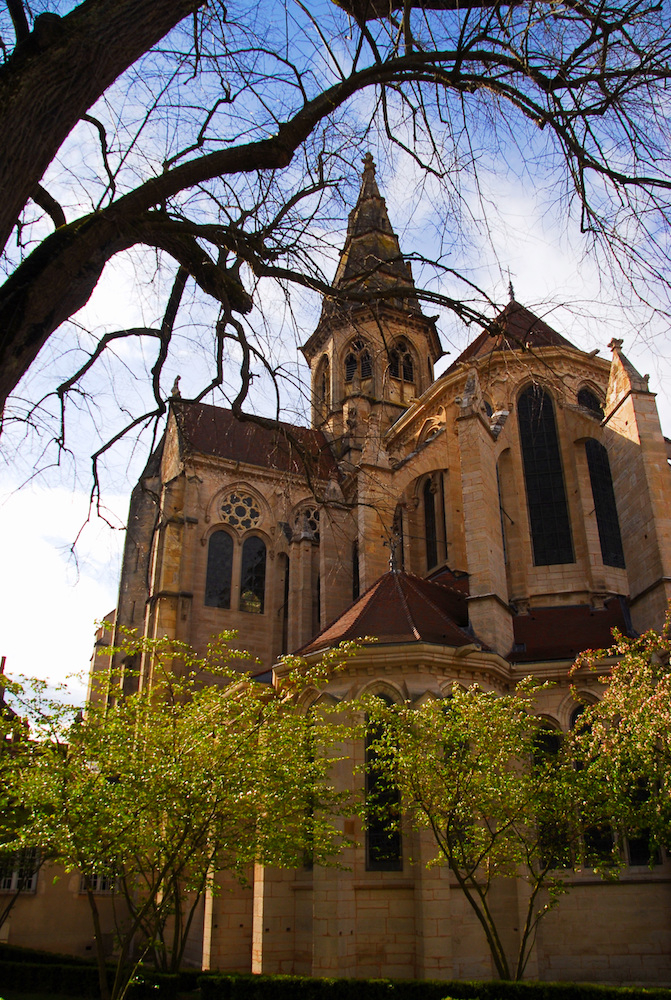
The icy wind hurried me along as I sought an optimum viewpoint, but failed to take the warmth out of my enthusiasm for the task. Every 10 metres another aspect emerged, colours flaunting themselves before my eyes, emerging from gardens or draped over walls until it was sadly time to return to the car. I marked this as a place to one day make another pilgrimage when the weather afforded a kinder face than I was experiencing.
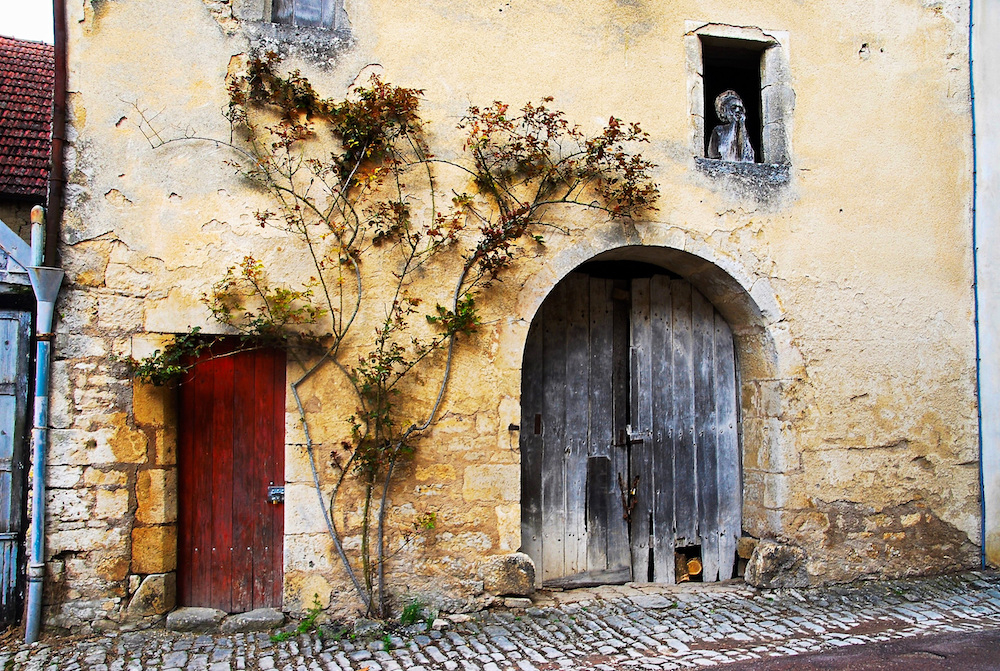
So we pushed on to Flavigny-sur-Ozerain, the original village I’d meant to visit, but we only had a short time there, just enough to get a photo. That was just before we decided to head for Dijon and our accommodation for the night – but I was able to return to Flavigny five days later, and get a classic pic, enjoy lunch and buy some aniseed balls from a famed monastery that was founded in 717 and rebuilt in the 17th century.





 Proudly Australian owned and operated