
8 Destinations that will reconnect you with Australian history


No matter how big a history buff you may be, there is always so much to learn about Australia’s colourful history and culture. While there are many destinations that feature as absolute must-sees around the country, here are some that you may not have on your historic trail map, but should!
1. Vaucluse House
Vaucluse House is one of Sydney’s few 19th-century mansions still surrounded by its original gardens and wooded grounds. When the towering colonial explorer, barrister and politician William Charles Wentworth bought the house in 1827, it was a single-storey cottage in a secluded valley of partly cleared coastal scrub.
In fits and starts over the next five decades, William and his wife Sarah developed Vaucluse into a large and picturesque estate. The grounds were extended and flourished to cover most of the present-day suburb of Vaucluse but the main house of the family’s dreams was left unfinished. In 1915, Vaucluse House became Australia’s first official house museum and continues to entice visitors to its lush and still secluded grounds, and in 2015, it celebrated its 100 year milestone of being a museum.
The Wentworths’ sprawling estate once covered most of the present-day suburb of Vaucluse. Enjoy a picnic in the grassy paddock behind the house, follow the creek from its waterfall down to sandy Vaucluse Bay or walk up to the family’s Gothic Revival mausoleum on Chapel Road.
2. Old Melbourne Gaol
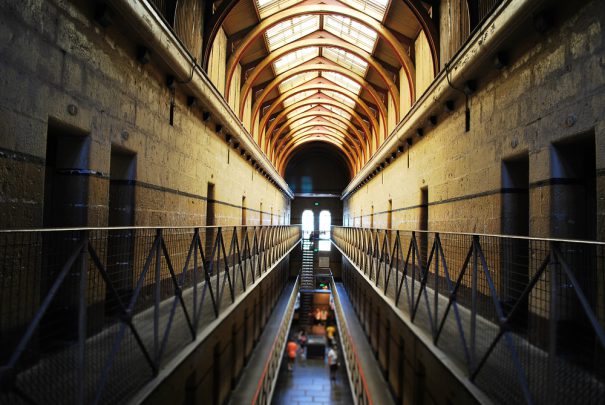
When the Old Melbourne Gaol was built in the mid-1800s, it dominated the Melbourne skyline as a symbol of authority. Inside the Gaol, dangerous criminals were held alongside petty offenders, the homeless and the mentally ill.
Between 1842 and its closure in 1929 the gaol was the scene of 133 hangings including Australia’s most infamous citizen, the bushranger Ned Kelly. Today you can visit the Old Melbourne Gaol to find out life was like for the men and women who lived and died here all those years ago.
View the cells where the prisoners were held, discover the life and death of Ned Kelly, be arrested by the Charge Sergeant in the Police Watch House. You can also see the Old Melbourne Gaol by candlelight with one of the night tours!
3. Cooks Cottage
Built in 1755, Cooks’ Cottage is the oldest building in Australia and a popular Melbourne tourist attraction. Originally located in Yorkshire, England, and built by the parents of Captain James Cook, the cottage was brought to Melbourne by Sir Russell Grimwade in 1934. Astonishingly, each brick was individually numbered, packed into barrels and then shipped to Australia.
Combining modern interpretations of Captain Cook’s adventures, centuries-old antiques, a delightful English cottage garden and volunteers dressed in 18th century costumes, Cooks’ Cottage is a fascinating step back in time.
4. Perth Mint
The Perth Mint opened in 1899 in response to the discovery of rich gold deposits in Coolgardie and Kalgoorlie. It was Australia’s third branch of Britain’s Royal Mint – the others being the Sydney Mint and the Melbourne Mint – and holds the position of being one of the world’s oldest mints.
Situated in a magnificent heritage listed building, the Mint is located right in the heart of a modern capital city and has played a central role in the development of Western Australia’s gold industry.
Diggers, who flocked to the then colony of Western Australia in huge numbers from other parts of Australia and from around the world deposited their raw gold here, where it was refined and minted into gold coins.
5. Kelly’s Steps
Leading up from Salamanca Place is a flight of steps. These are Kelly’s Steps, built in 1840 by the legendary adventurer James Kelly to connect Battery Point – Hobart’s oldest suburb – with Salamanca Place.
Steep and constructed of sandstone, the stairs lead from Kelly Street, providing a short-cut from the pleasant colonial houses of Kelly Street and Arthur Circus in Battery Point, directly down to the warehouse and dockyards district of Salamanca Place.
You can climb up these stairs and do a ghost tour of the area too.
6. Charles Darwin National Park
Charles Darwin National Park is a small gem close to the centre of Darwin. The park has national significance for its ecological diversity and Aboriginal and World War Two history. It also protects part of the Port Darwin wetland, one of Australia’s most important wetlands.
Historic sites are scattered through the park and there’s a World War Two display where you can learn about Darwin’s role in the Pacific War. Shell middens in the park suggest the Larrakia people have used this land for many thousands of years.
7. Old Mill in Brisbane
The heritage-listed Windmill in Wickham Park is believed to be the oldest surviving building in Queensland and features in Alfred Elliott’s beautiful photographs almost as a character looking out over the bustling city.
Brisbane’s oldest building has many facets to its sometimes dark and brutal history – built by convicts in the late 1820s, it is not just the longest surviving convict building but also the oldest windmill in existence in Australia.
At first seen as a folly due its ill-conceived often windless location, it morphed into a symbol of dread and torture as penal Commandant Patrick Logan used convicts to work a treadmill he had constructed to keep the arms turning in lieu of wind. As a punishment they would be set to work in 8kg leg irons for fourteen hours straight and in the burning sun to keep the maize grinding.
Be one of the few people who have explored this intriguing structure and learn more about its past and connection to the city with one of the special tours.
8. Worker’s cottage of Mugga Mugga
This simple cottage stands as a testament to the workers who made their lives on the pastoral properties of the Limestone Plains. Originally built for the head shepherd of Duntroon estate, it is preserved as it was in the time of the Curley family who made it their home from 1913 to 1995.
The original four room stone cottage lies at the heart of the building. Extensions were added around it in the 1860s including the slab bedroom and verandah at the front, and the kitchen and dining room at the back. Further additions were made in the 1950s and 60s.
You can take a guided tour of the cottage.
Have you been to any of these historic destinations? Which ones would you like to add?





 Proudly Australian owned and operated