
72 hours in Yorkshire: Harrogate, the Dales and a Jack Russell called Ted


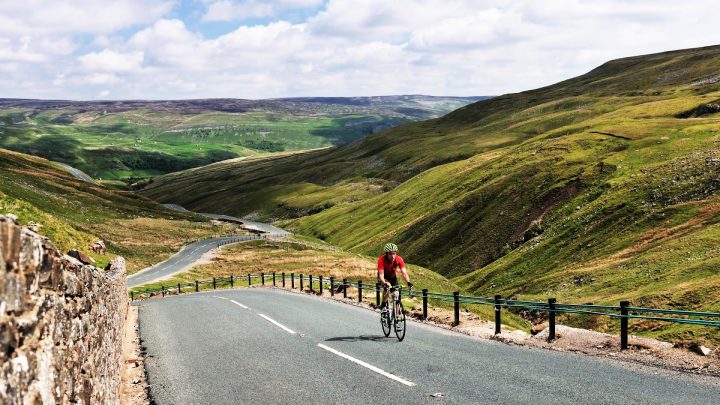
With Harrogate as our base, a local who has lived there for 30 years as our guide, and a small, opinionated dog riding shotgun, we set out to see as much of Yorkshire as three days would allow.
There are two kinds of travel companion. There are the ones who’ve read the guidebook. And there are the ones who’ve lived somewhere so long they could have written it, then spent the next 30 years quietly correcting it.
Karen is the second kind. She has been one of my wife’s best friends since they were teens, and she has lived in Harrogate for three decades. She knows which tearoom has the shortest queue, which Dales road floods first and which pub does the proper Yorkshire pudding. She drives like a rally driver who has made peace with God.
Then there’s Ted. Ted is a Jack Russell, and like all Jack Russells, he believes he’s in charge. For most of the trip he rode in the front passenger seat on my wife’s lap, surveying the countryside like a small, hairy duke inspecting his estates. I was in the back. With the mother-in-law. This, I was informed, is the natural order of things.
DAY 1: Harrogate, the spa town that never stopped being posh
Morning: taking the waters (sort of)
Harrogate made its fortune on water. In the 16th century, someone noticed that the local springs tasted like the famous ones in Spa, Belgium. By the Victorian era the town was one of the most fashionable spas in Britain, packed with aristocrats who came to drink the sulphurous water, which smells like a boiled egg’s revenge, and to be seen drinking it.
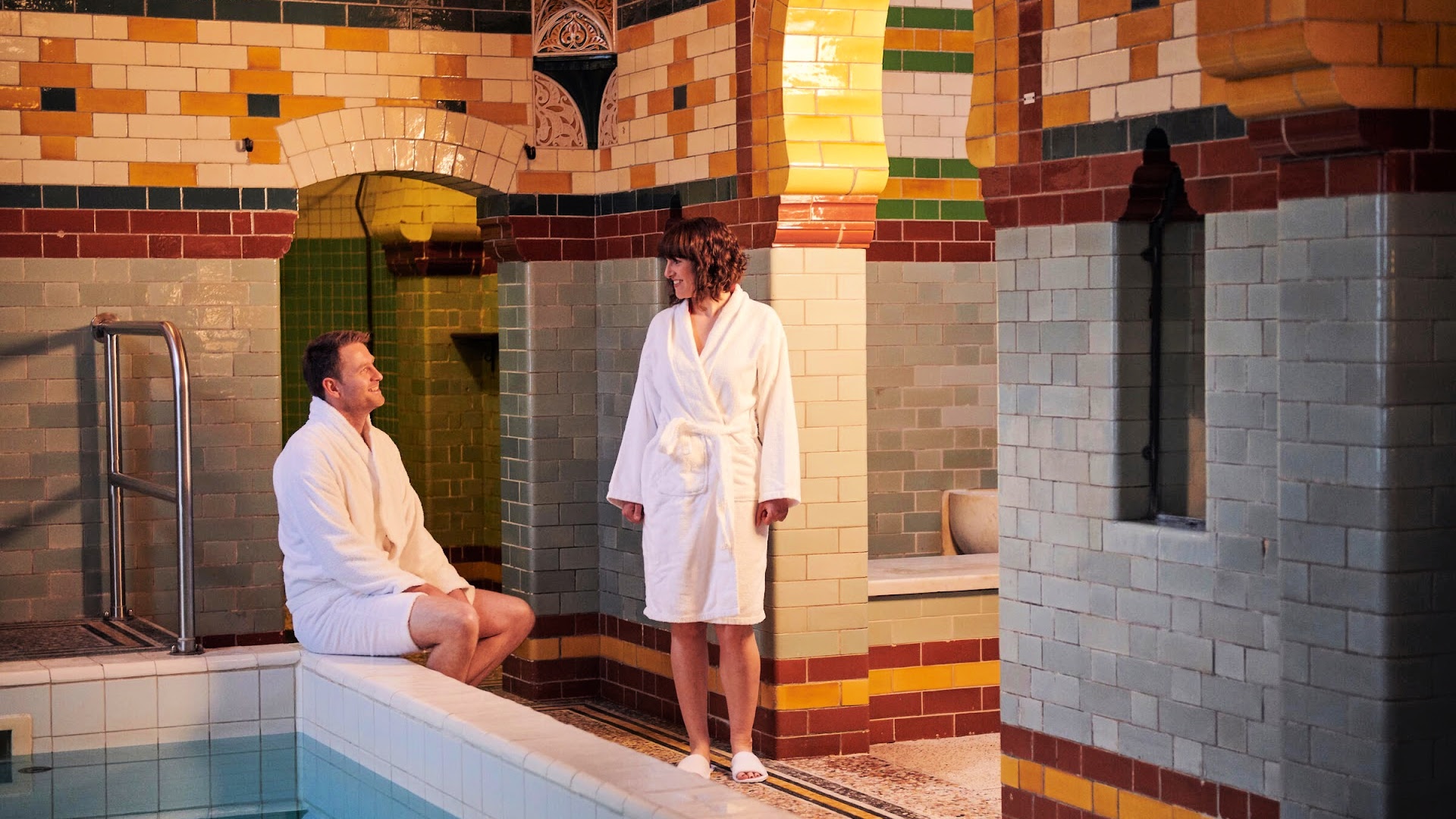
Start at the Royal Pump Room Museum, where you can learn all about it and, if you’re brave, sniff the water. Then make your way to the Turkish Baths on Parliament Street. They opened in 1897 and are one of only a handful of Victorian Turkish baths left in Britain. They’re all Moorish arches, glazed tiles and steam. Book a session, lie back in the heat and pretend you’re a Victorian duchess with gout. Some sessions are women-only, so check before you book.
Lunch: Bettys
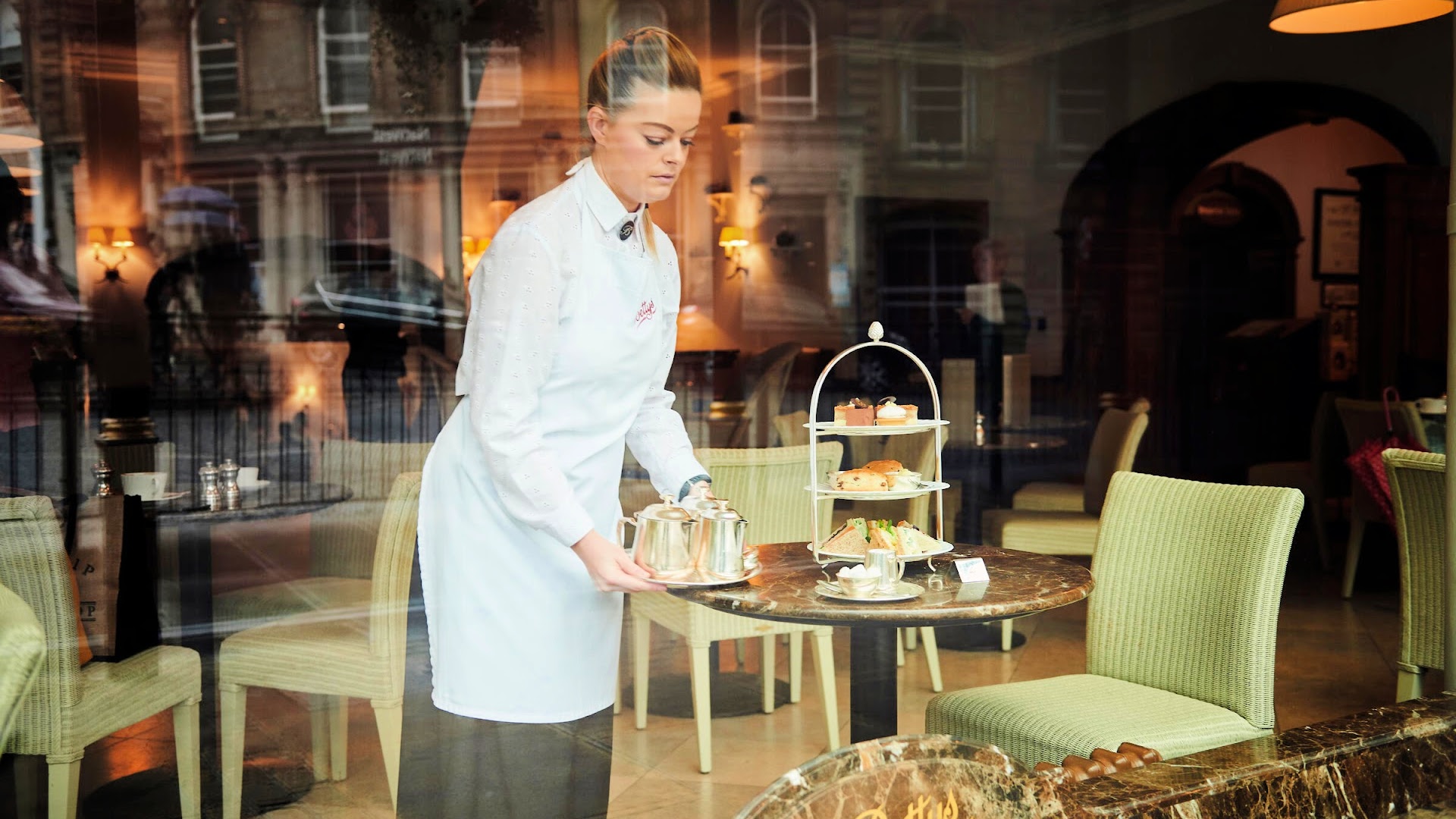
You can’t come to Harrogate and not go to Bettys. The tearoom has been here since 1919, and it’s as much a part of the town as the water. There will be a queue. Karen knows a trick to beat it, which she refused to share in print. Order the Fat Rascal, a giant fruit scone with a cherry-and-almond face that grins at you from the plate, and a pot of Yorkshire tea.
Afternoon: gardens and greenery
Walk it off on The Stray, the 200 acres of open parkland that wraps around the town centre. Ted was particularly impressed by it. Then wander through the Valley Gardens, with its flowerbeds and Victorian pavilions, during the day. Keen gardeners should head to RHS Garden Harlow Carr on the edge of town, the Royal Horticultural Society’s northern showpiece, which has its own Bettys tearoom. Of course it does.
Evening: dinner at Hotel du Vin
We stayed at Hotel du Vin & Bistro Harrogate, a row of handsome Georgian townhouses looking out over The Stray. It’s stylish without being stuffy. The bedrooms are big, the bathrooms are bigger and the wine list is the size of a phone book. Better still, it’s dog-friendly, which meant Ted could join us, and ruled out the alternative of leaving him in charge of the car.
The bistro does French classics done well, and the bar is a lovely place for a nightcap. We ate steak frites, drank a very good claret and let Karen tell us everything about Harrogate we’d got wrong that day.
DAY 2: Into the Yorkshire Dales
Morning: Pateley Bridge and Stump Cross Caverns
The Yorkshire Dales National Park covers more than 2,000 square kilometres of limestone hills, green valleys, dry-stone walls and stone villages. It’s the England of jigsaw puzzles and biscuit tins, and it’s barely half an hour from Harrogate.
Head first to Pateley Bridge, a pretty market town on the River Nidd with independent shops and Victorian buildings, where, Karen swears, otters and kingfishers live along the riverbank. Ted went looking for them. They had the sense to stay hidden.
Nearby, Stump Cross Caverns takes you underground among stalactites, stalagmites and fossils, with tours led by a resident geologist. It’s cool, fascinating and dog-free, so Ted waited in the car with a stern look on his face.
Lunch: a Dales pub
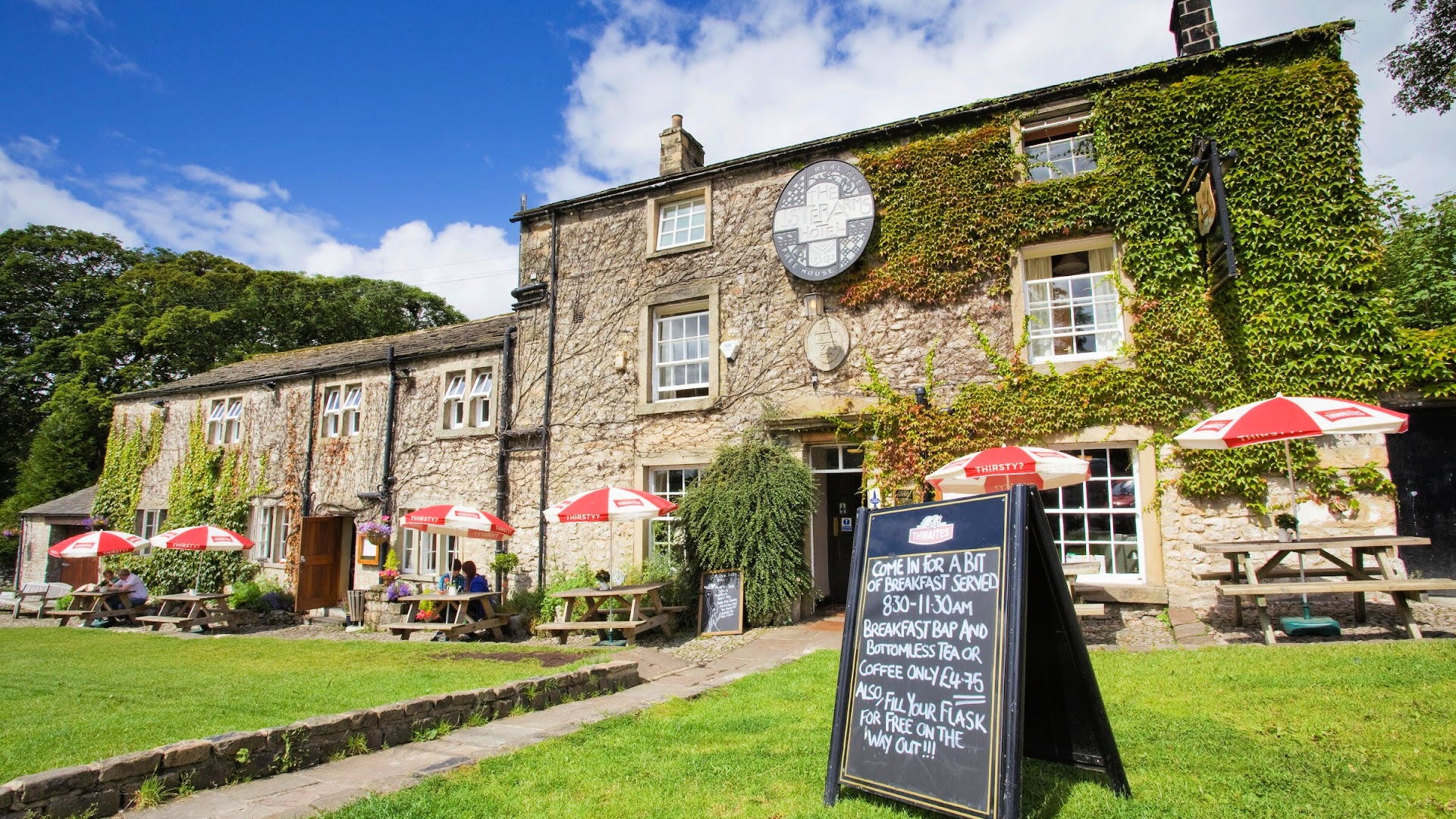
Every Dales village has a pub. Most of them have a fire, a dog asleep in front of it and a sticky toffee pudding you’ll think about for weeks. Go wherever the locals go. In our case, Karen chose. In your case, ask the person behind the bar of the first pub you see where they’d go instead.
Afternoon: Malham or Bolton Abbey
You have two choices, depending on your knees.
Malham is the Dales at their most dramatic: a vast limestone cliff, Malham Cove, and the strange, fissured limestone pavement on top. The walk to the cove is fairly gentle. The climb up to the pavement isn’t.
Bolton Abbey, on the River Wharfe, is gentler. There are the romantic ruins of a 12th-century priory, riverside walks and stepping stones that look much easier to cross than they are.
Along the way, pick up some Wensleydale cheese, the Dales’ most famous export. Try it with a slice of fruitcake, as the locals do. It sounds wrong, and it’s absolutely right.
DAY 3: Fountains Abbey and York
Morning: Fountains Abbey
Twenty-five minutes north of Harrogate, near Ripon, lie the ruins of Fountains Abbey, one of the largest and best-preserved Cistercian monasteries in England. Together with the neighbouring Studley Royal Water Garden, it’s a UNESCO World Heritage Site. Walk through the soaring, roofless nave and you’ll understand why monks once came here to be closer to God. Then wander the 18th-century water garden, all lakes, temples and perfectly trimmed lawns.
Afternoon: York
Harrogate is about 40 minutes from York by car or train, and no trip to Yorkshire is complete without it.
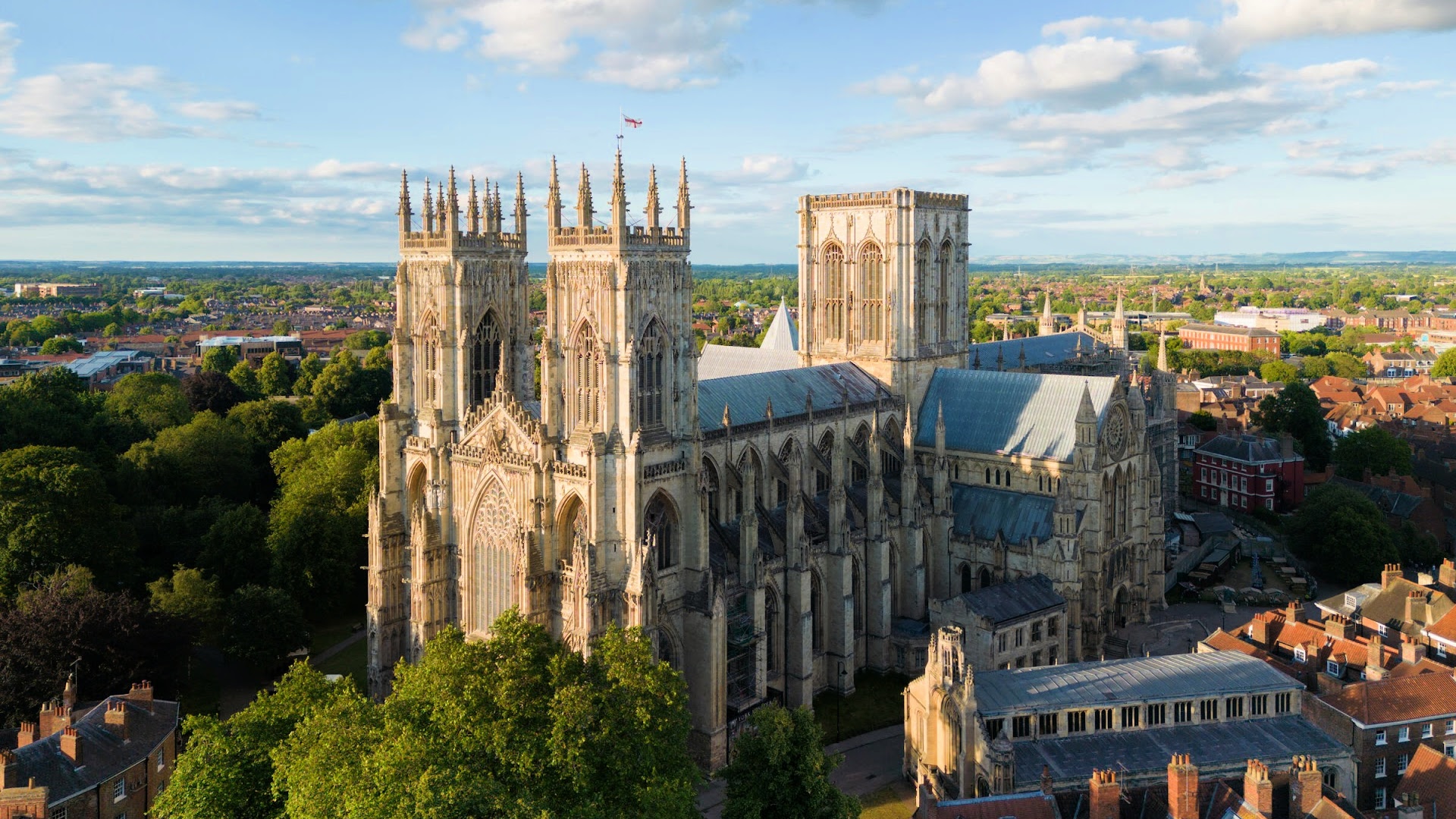
York Minster is one of the great Gothic cathedrals of Europe. Look up.
The Shambles is a crooked medieval street of overhanging timber buildings, often said to have inspired Diagon Alley in the Harry Potter films. It’s beautiful, and it’s busy. Go early or late.
The city walls are the longest town walls in England, and a stretch of them makes a lovely walk above the rooftops.
And yes, there’s a Bettys in York too. At this stage of the trip, it would be rude not to.
Evening: back to Harrogate
Back at Hotel du Vin, Ted was asleep on the bed before we’d even taken our coats off. Karen sat by the window looking out at The Stray and told us she’d fallen in love with the town on her first visit 30 years ago and had never once thought about leaving. After 72 hours, I understood why.
GETTING THERE AND AROUND
Flights: Qantas flies non-stop from Perth to London. From the east coast, connect through Asia or the Middle East with Qantas, Emirates, Singapore Airlines, Qatar Airways and others. Manchester Airport is about 1 hour 15 minutes’ drive from the Dales, and Leeds Bradford Airport is closer still, if you can connect there through Europe.
Entry: Australians visiting the UK need an Electronic Travel Authorisation (ETA). It costs £20 and you apply online at gov.uk. Use only the official site, because copycat sites charge more.
Trains from London: Direct trains from London King’s Cross reach Leeds in about two and a quarter hours and York in under two. Harrogate has one direct London train a day (not Sundays). Otherwise, change at Leeds (about 35 minutes to Harrogate) or York (about 40 minutes).
Getting around: A car is by far the easiest way to explore the Dales. Hire one in Leeds, York or Harrogate. The DalesBus also connects many walks and villages.
Travelling with a dog: Under Rule 57 of the Highway Code, dogs must be suitably restrained in a vehicle, so they can’t distract the driver or be hurt in a sudden stop. A seatbelt harness, crate or dog guard all count. A dog on a passenger’s lap doesn’t. Breaking the rule isn’t a fine in itself, but drivers can be prosecuted for driving without due care, with fines of up to £5,000. It may also affect your insurance. Ted now has a harness. He hates it.
Where to stay: Hotel du Vin & Bistro Harrogate overlooks The Stray, a short walk from the town centre. It’s dog-friendly, with an extra fee, so mention your dog when you book.
Money: The pound is strong. £1 costs about A$1.89, so a £10 pub lunch is closer to A$19. Prices in shops and restaurants include VAT, but tipping of 10 to 12.5 per cent is customary in restaurants. Check whether a service charge has already been added.
When to go: Late spring and early autumn are ideal, with mild weather, fewer crowds and the Dales at their greenest or most golden. Summer is busiest. Winter brings short days and cold, but cosy pubs and roaring fires.
Find out more: visitbritain.com, yorkshiredales.org.uk, visitharrogate.co.uk, hotelduvin.com
Prices and details were correct at the time of writing but may change. Check before you travel.
To book: Contact the team at Travel at 60.





 Proudly Australian owned and operated
Comments 0
Join the conversation. Comments are reviewed before they appear.
Be the first to comment.
Join the conversation
Tell us who you are to post a comment. We'll remember you next time.