
The U.S. is blowing up boats: What’s really going on – and why it matters


When news first broke in early September 2025 that the U.S. military had launched a missile strike on a vessel suspected of carrying drugs, many in Australia – and around the world – were shocked. This wasn’t a police interception or a seizure by coast guard cutters. This was a strike: a deliberate, lethal military action against what the U.S. described as “narcoterrorist” traffickers.
Since that first attack, dozens more boats have been destroyed, with an official death toll reaching at least 80 people across more than 20 separate strikes – in the Caribbean, the Pacific and along key trafficking routes from South America.
But with each exploding boat comes heavier controversy. Critics call it extrajudicial killing, raising deep concerns about international law, due process and innocent lives being lost. What was intended as an aggressive stand in the war on drugs has become one of the most polarising foreign-policy episodes of the Trump presidency.
For many of us watching from afar – it’s a grim reminder of how quickly a policy of “No mercy” can turn into a humanitarian and legal nightmare.
The First Strike – and the rapid escalation
The campaign began on 2 September 2025, when the U.S. military struck a suspected drug-trafficking vessel off the coast of Trinidad. The boat was reportedly carrying narcotics destined for the United States. The strike killed all 11 people on board. U.S. officials, including Defence Secretary Pete Hegseth, described the crew as members of a narco-terrorist organisation.
In the weeks that followed, similar strikes multiplied – some hitting vessels in the Caribbean, others in the Eastern Pacific. By late October, four more boats had been destroyed in one day alone, with 14 people killed. The U.S. military said its intelligence indicated these vessels were carrying illicit drugs and operating along known trafficking routes.
Pentagon social-media posts frequently showed brief videos of small boats in open water, exploding into flames moments after missile impact. Each strike was justified as a necessity – part of a broader campaign dubbed Operation Southern Spear. By mid-November, the campaign included dozens of warships, surveillance aircraft, and special-operations forces.
Reactions – from support at Home to Global Outrage
In the United States, initial public reaction was mixed. A poll conducted in early October reported that 71 per cent supported destroying boats suspected of drug trafficking.
That said, just a month later, sentiment had shifted. A Reuters/Ipsos poll found only 29 per cent of Americans still backed “killing suspected drug traffickers abroad without judicial process,” while 51 per cent opposed it.
Abroad – especially in Latin America – the reaction has been overwhelmingly hostile. Governments in Venezuela and Colombia condemned the strikes as illegal, extrajudicial killings. Families of victims have filed human-rights complaints with international bodies, demanding accountability.
The legal arguments are stark. International-law experts insist that under peacetime and non-war conditions, using lethal force against suspected non-combatant smugglers – without trial, capture or warning – violates conventions on extrajudicial killings.
United Nations officials, human rights organisations and regional governments have called for investigations. The United States has released little public evidence to support its claims that the targeted boats were indeed smuggling narcotics, or that those aboard posed an imminent threat to national security.
Legal, ethical and strategic questions
This isn’t small-scale law enforcement – this is military force acting unilaterally in international waters. That raises profound questions:
Due process vs. summary execution: Were those aboard given any chance for capture or arrest – or simply annihilated from the air?
Proof and transparency: So far, the U.S. has not publicly shown conclusive evidence that the targeted boats carried drugs, or that all aboard were traffickers.
Regional sovereignty and backlash: Countries like Colombia warn this might damage long-standing anti-drug partnerships; others fear broader U.S. aggression, particularly toward nations like Venezuela.
Precedent and escalation: What stops further expansion – from boat strikes to air raids over land? Indeed, the U.S. has already signalled possible land-based operations against cartel infrastructure in countries accused of facilitating drug exports.
For older readers – many of us who grew up in an era when the U.S. sought to “rescue” nations with conventional wars – there’s a sombre discomfort to this new kind of conflict: unannounced, unexplained, often distant — and deadly.
What Happens Next?
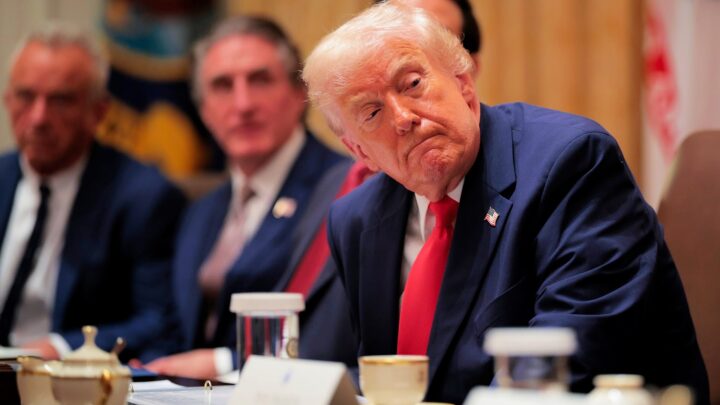
The Trump administration has boldly signalled its intent to expand the campaign. President Trump recently declared that any country trafficking drugs to the U.S. could be attacked – not just ships at sea, but land targets too.
Meanwhile, U.S. lawmakers are pushing back. A bipartisan group has introduced a war-powers resolution to block further military action without explicit congressional approval. They argue the strikes represent an undeclared war, lacking democratic oversight or lawful justification.
Internationally, bodies such as the Inter-American Commission on Human Rights are being petitioned by victims’ families. Human-rights organisations warn the attacks may amount to war crimes – a claim growing louder with each new strike.
For now, the campaign pushes on. More warships, more strikes, and U.S. officials insisting this is a necessary escalation to defend national security. But every boat blown up – every life lost – deepens the divide between those who see decisive action, and those who see state-sanctioned violence without accountability.
What This Means for the Rest of the World
For Australians tuning in from afar, the unfolding events are troubling on multiple levels.
Global precedents: If a superpower can destroy suspected smuggling boats without charge or trial – on a mere suspicion – what stops that power from applying the same logic elsewhere? It shifts norms about international law and maritime safety.
Humanitarian concern: Among the victims may well be fishermen, sailors, or small-time crews – not cartel kingpins. The human cost is unknown, unrecorded, often anonymous.
Erosion of diplomacy: Traditional anti-drug cooperation – involving intelligence sharing, interdictions and arrests – is being replaced by bombs and bombs alone. That risks alienating regional partners and destabilising politics across Latin America.
Our own vulnerabilities: As an older generation, we recall earlier Cold War-era interventions and the rhetoric used to justify them. We know how quickly fear becomes justification – and how hard it is to reclaim transparency once it’s lost.
This campaign against drug boats may have begun with good intentions – to stem the flow of narcotics, to protect communities, to strike hard against cartels accused of fueling opioid tragedies. But in its execution, it’s already unravelled the threads of law, transparency, and humanity.
What remains uncertain is how far the U.S. will go. Whether it’s strikes at sea, covert raids on land, or deeper incursions into sovereign nations – the choices being made now could redefine what war looks like in the 21st century.
For the sake of justice – and for the lives potentially lost under headlines and flame – the rest of the world needs to watch carefully.





 Proudly Australian owned and operated
Comments 0
Join the conversation. Comments are reviewed before they appear.
Be the first to comment.
Join the conversation
Tell us who you are to post a comment. We'll remember you next time.