
The right hiking shoes after 60: why comfort, fit and the individual matter more than the brand


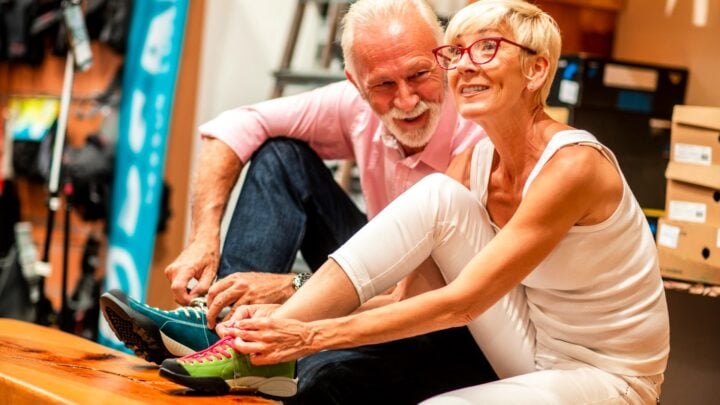
For Australians embracing walking holidays later in life, choosing the right footwear can be one of the most important decisions to make before departure. The mistake people often make when shopping for hiking shoes is trying to find the best shoe, rather than looking for the best shoe for them.
Shoes are a tricky one; no two people will fit the same type of shoe in the same way.
Park Tours has been leading guided walking journeys since 1975, taking small groups into remarkable natural environments in Australia and around the world. Our guests range from their mid-50s through to their 80s and beyond, and this has given me the opportunity to observe first-hand the different needs and preferences of mature walkers.
For us, walking is not simply a way of getting from one sightseeing stop to another. Our journeys are designed around experiencing a place on foot, with guides interpreting the landscape, wildlife, history and culture along the way. Groups are deliberately kept small, and itineraries are designed to allow travellers to slow down and spend meaningful time in destination.
That same approach carries through to every stage of the journey, including how we prepare our guests for their walks. Our aim is to ensure they feel informed, confident and ready to make the most of every experience.
One way we do this is by providing pre-departure training and preparation videos, including practical guidance on footwear and equipment. Our advice isn’t about endorsing a particular brand or style but helping walkers understand what they need from a shoe.
Start with your feet, not the label!
The most highly rated hiking shoe on the market may still be completely wrong for your feet.
Foot shape and width, comfort, support and personal preference all make a difference.
A shoe that one walker considers exceptionally comfortable may create rubbing or pressure for somebody else. That’s why I recommend trying several different options rather than automatically buying the brand or model that has received the best reviews online. A specialist outdoor or footwear store can also help with fitting and explain how to adjust the lacing to suit your foot.
When you’re preparing for a walking holiday, the time you spend choosing footwear is far more valuable than just buying the most expensive or most highly recommended option. Because a blister, pressure point or uncomfortable shoes can turn what should be an enjoyable day in nature into a very long walk.
How much shoe do you actually need?
There is a tendency to assume that a serious walking shoe needs to be a substantial, heavy hiking boot, but that isn’t necessarily the case. I’ve experienced an ‘evolution’ myself over the years. After using heavy, sturdy boots for a long time, I’ve now moved towards much lighter and more flexible footwear like lightweight trail shoes and barefoot-style shoes.
But my choice changes according to the circumstances. For lighter walking and in certain conditions, I like minimal footwear. But when I’m carrying a heavier pack or travelling over more challenging terrain, I prefer extra support.
A very important consideration for anyone choosing footwear for a walking holiday is that the right shoe depends partly on what the walk involves. A relatively smooth walking trail will generally call for something very different from a rocky, uneven or wet track.
Look beyond the upper
For more challenging terrain, consider what’s underneath your foot as well as the fit around it.
A more rigid sole or shank can provide useful support when you’re walking over rocks and uneven surfaces by reducing the amount of foot bending over the terrain.
A protective rubber toe can also provide added protection when walking off-track or through rougher country.
Grip matters too. A rugged sole with good traction can make a huge difference on uneven, slippery or wet surfaces.
And for more changeable conditions, waterproofing is worth considering, because spending a full day walking with wet feet can be uncomfortable and contribute to ongoing problems.
What about ankle support?
Higher-cut boots have traditionally been seen as the obvious choice for walkers wanting additional ankle support. But this comes down to the individual.A low-cut shoe provides greater freedom around the ankle, while a mid- or higher-cut boot can provide a different level of support and stability. Some walkers like that feeling of additional control; others prefer the freedom of a lower shoe.
The same applies to the amount of cushioning, flexibility and structure underfoot.
Don’t buy your walking shoes for how they look
The most practical piece of advice is also the simplest: try the shoes on properly before buying them. Walk around the store; if there’s a ramp or uneven surface, use it. Test how the shoe feels when your foot’s moving, rather than just standing still.
Footwear needs to perform on your feet, not just look good.
This is particularly relevant for online shopping. Reviews can be helpful, but somebody else’s five-star experience may be your feet’s worst nightmare.
Your walking holiday starts before you leave home
For mature travellers, preparing for a walking holiday is about more than buying equipment.
We embrace a preparation-first philosophy. It’s about helping our guests build confidence before departure, with preparation guidance which includes encouraging walkers to make their training walks fun rather than a have-to-do. Preparation also provides the opportunity to discover whether your footwear is working for you. If something hurts, don’t just push through. A small niggle during a short local walk is a useful warning; discovering the same problem several hours into a multi-day walking holiday is considerably less convenient.
For the growing number of mature Australians choosing walking holidays, that may be the most useful lesson of all: Good equipment should support the experience, not become the experience.
The goal isn’t necessarily to find the most technical boot or the lightest trail shoe. It’s to find footwear that fits your feet, suits the terrain, works with the way you walk and allows you to spend the day doing what you came for – exploring somewhere extraordinary on foot.
Luke Christiansen, owner and lead explorer of nature-based tour operator Park Tours





 Proudly Australian owned and operated
Comments 0
Join the conversation. Comments are reviewed before they appear.
Be the first to comment.
Join the conversation
Tell us who you are to post a comment. We'll remember you next time.