
The Manchester Coronation: What Andy Burnham’s Rise Tells Australian Politics About the Cost of Drift


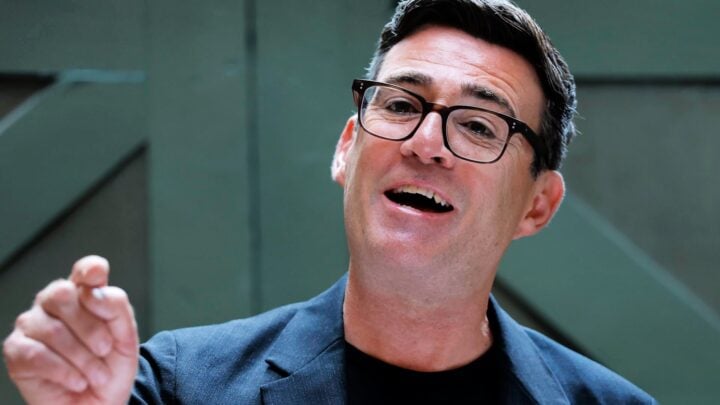
There is a particular smell that hangs around a governing party in terminal decline, and anyone who has spent time in a press gallery – Canberra’s or Westminster’s – knows it instantly. It is the smell of a leader everyone privately agrees has to go, combined with nobody quite having the nerve to say so out loud until the numbers become undeniable. Britain has just lived through that exact moment, and the man walking through the wreckage into Downing Street is Andy Burnham.
Who is Andy Burnham?
For readers who haven’t followed British politics closely, Burnham is not a fresh face. He is 56, a veteran of the Blair and Brown governments, a two-time failed Labour leadership candidate (2010 and 2015), and for the past eight years the directly elected Mayor of Greater Manchester – a role he used to build a genuinely formidable personal brand as the self-styled “King of the North,” reorganising Manchester’s buses and trams and positioning himself as the voice of a England beyond the M25.
What makes his current position extraordinary is the mechanics of how he got there. Burnham wasn’t even in Parliament six weeks ago. A sitting Labour MP in Makerfield resigned specifically to create a vacancy, Burnham won the resulting by-election, and within days Keir Starmer – battered by dismal local election results and a collapsing approval rating – announced he would resign as Labour leader and Prime Minister. It is, by any measure, one of the strangest and most engineered successions in modern British parliamentary history: a by-election manufactured to install a leader-in-waiting, followed almost immediately by the incumbent’s exit
Why does Labour think he’s the answer?
The honest answer is that Burnham polls like a man who has never actually had to govern from the centre – which, handily, he hasn’t, not since 2010. Years of running a devolved mayoralty rather than sitting in a deeply unpopular Westminster government have let him accumulate what commentators openly describe as the only positive net favourability rating of any senior figure in British politics. He’s popular with Labour’s soft left, and Angela Rayner’s faction, and – crucially – he was fast endorsed by Wes Streeting, the one man positioned to turn this into an actual contest rather than what insiders are now openly calling a “coronation.”
Strip away the personality and what you’re left with is a party executing the classic move of a government in freefall: reach for the version of yourself that has been safely quarantined from the failures of incumbency. Burnham gets to run as continuity-but-different – same party, same governing mandate from 2024, entirely different personal brand, none of the fingerprints on two years of ebbing poll numbers.
What can Australian politics learn from this?
Plenty, and none of it especially comfortable for whichever side of Australian politics is currently misreading its own mandate.
First: landslide majorities are not insurance against collapse. Starmer won a 172-seat majority in 2024 with, on some analyses, the smallest vote share of any majority UK government since 1830 – a lesson in how thin an electoral mandate for reform can be even when the seat count looks emphatic. Australian governments holding comfortable majorities off preferential and Senate quirks would do well to remember that seats won and public trust banked are not the same currency.
Second: engineered successions look clever right up until they don’t. Manufacturing a by-election to instal your chosen successor is precisely the kind of “smartest people in the room” manoeuvre that plays brilliantly in the Westminster bubble and terribly with an electorate already primed to distrust politics-as-stitch-up. If Burnham stumbles even slightly in his first year, expect “the Makerfield by-election” to become shorthand for exactly the kind of insider fix voters increasingly punish.
Third: personal brand now travels faster than party brand. Burnham built his reputation regionally, away from Westminster, in a role where he could take credit without wearing blame. Australian state premiers – several of whom have out-polled their federal counterparts for years – should recognise the playbook immediately, and federal strategists on both sides should be nervous about it.
Can anything stop him now?
On the numbers, barely. Burnham cleared the 81-MP threshold with room to spare, Streeting’s endorsement removed his most credible rival, and Labour insiders are speaking openly of an uncontested “coronation” when nominations close on 16 July. Barring a serious misstep, the King will be inviting him to form a government within weeks.
But “barely” is not “never,” and Burnham inherits every problem that broke Starmer: a restless electorate, a resurgent Reform UK that badly underperformed only once – in Burnham’s own by-election, aided by tactical squeezing of smaller parties that may not repeat easily – and a Labour base whose patience is already thin. He will also face the immediate, awkward question Labour’s opponents are already weaponising: is it legitimate to change prime ministers twice in two terms without ever putting the new occupant to the country in a general election? Starmer himself made that exact argument against the Conservatives in 2022. Burnham will spend his honeymoon explaining why the rule doesn’t apply to him.
Australian observers watching this unfold should resist the temptation to treat it as a curiosity of British eccentricity. A first-term government with an enormous majority, cratering approval, and a manufactured succession plan to a popular outsider is not a uniquely British story. It’s a cautionary tale that translates perfectly well into Spring Street, Macquarie Street or Capital Hill, should any government there start believing its own numbers are permanent.





 Proudly Australian owned and operated
Comments 1
Join the conversation. Comments are reviewed before they appear.
Very pleased so far with the results.
And next will be Rupert Lowe, with him in charge there will be many changes for the better.
Join the conversation
Tell us who you are to post a comment. We'll remember you next time.