
The Last Tourist makes me want to travel better


OPINION
I’d heard about the documentary ‘The Last Tourist’, but it took me a while to get around to watching it – maybe I thought I knew what it was about.
I didn’t expect it to make me question something I dearly love and an industry that has been my livelihood for more than two decades: travel.
I’ve always considered myself a good traveller. I’m curious, respectful, and conscious of where my money goes, to the best of my determination. This film quietly but firmly dismantled that comforting belief. And that’s precisely why I think it’s essential viewing for anyone who travels, or intends to.
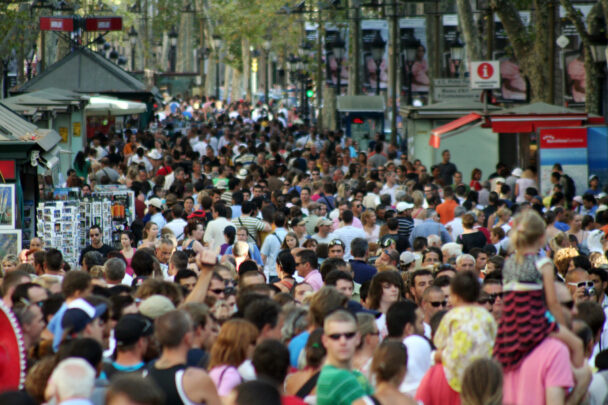
Directed by Tyson Sadler, The Last Tourist isn’t anti-travel. It’s anti-complacency. Sadler doesn’t wag a finger at individual travellers so much as expose a system that has rewarded volume over value for decades. The documentary reveals how mass tourism often benefits global corporations far more than the communities hosting it, leaving locals to deal with huge crowds on a daily basis, environmental degradation and rising living costs – while visitors are reassured that simply turning up is somehow enough.
Where does your money go?
The film is particularly effective at dismantling the myth that tourism should automatically be considered a force for good. We’re encouraged to believe our spending trickles down, when in many cases, much of it actually heads offshore through multinational hotel chains, cruise companies and booking platforms.
The destination remains Instagram-ready, but the people who live there absorb the consequences. Watching it, I couldn’t help but recognise places I’ve visited – and moments where it’s remarkably easy to confuse good intentions with genuine impact.
Yet what makes The Last Tourist more than just a critique is that it appeared at a moment when the tourism industry itself had begun to acknowledge these failings, with remediation work ongoing to this day. One of the film’s quiet strengths is that it doesn’t pretend the conversation is starting from zero. In recent years, real progress is being made.
There is now far greater scrutiny of operational ethics across the industry, both from travellers and the industry itself. Animal welfare, once brushed aside as a cultural curiosity or “part of the experience”, is finally being interrogated. Practices involving elephants, bears and other wildlife are increasingly assessed through ethical frameworks that prioritise welfare over entertainment.
An industry paying closer attention
Many operators have walked away from exploitative encounters altogether, while newer tourism businesses have emerged that focus on animals in genuine rehabilitation or sanctuary-style habitats, where observation replaces interaction. I’m talking about the Cat Tien Bear Rescue Centre in Vietnam – a paradisiacal haven for sun and moon bears rescued from insidious bile farms that will fill your heart with goodness. And that is just one example.
Similarly, issues once considered outside tourism’s remit – such as labour rights and exploitation – are now firmly on the agenda. Modern slavery statements, supply-chain transparency and independent auditing are becoming baseline expectations rather than niche nice-to-haves. These measures aren’t perfect, but they represent an industry beginning to accept responsibility for its footprint, rather than hiding behind glossy brochures and marketing slogans.
This shift is reinforced by the involvement of the film’s executive producer, Bruce Poon Tip, whose long-standing advocacy for community-based and ethical travel gives the documentary much of its credibility.
Poon Tip founded G Adventures – a pioneer and leader in a burgeoning market sector that celebrates respectful community tourism and helps provide real opportunities to small communities to celebrate their culture, protect their environment, deliver meaningful experiences for visitors and to make a genuine living from it.
Paying more to do good
This context matters when we talk about one of the film’s most contentious implications: tourist taxes. I find myself firmly in agreement with the film here. Taxes on tourists – most of which you may not even notice you’re paying – are not a punishment; they’re an acknowledgment of reality.
Travel has environmental and social costs, and it’s reasonable that visitors help offset them. The indignation some people feel about paying a little extra per night often ignores the far greater costs borne by locals – from housing pressure to strained infrastructure and fragile ecosystems.
The crucial caveat, of course, is purpose. A tourist tax that disappears into general revenue or vanity projects risks becoming another empty gesture. But when those funds are transparently directed toward conservation, public services, cultural preservation and community-led tourism initiatives, they become a practical tool for balance. Paying more to ensure a destination remains liveable for the people who call it home isn’t an inconvenience; it’s the ethical cost of access.
Travel better, not less
By the time The Last Tourist ends, it doesn’t leave me wanting to travel less – quite the opposite in fact. It leaves me wanting to travel better. It challenges the idea that access is an entitlement, that cheaper is always better, and that individual choices don’t matter. At the same time, it acknowledges that change is already underway, driven by travellers, operators and destinations demanding higher standards.
This is why I believe The Last Tourist is a film travellers need to see. It condemns a way travel used to be and challenges us to grow up as travellers – to recognise both the damage tourism has caused and the genuine progress being made to fix it.
Travel can still be transformative. But only if we’re willing to change our habits, support ethical operators, and accept that responsible travel sometimes costs a little more – for good reason.





 Proudly Australian owned and operated
Comments 0
Join the conversation. Comments are reviewed before they appear.
Be the first to comment.
Join the conversation
Tell us who you are to post a comment. We'll remember you next time.