
The Last Great Romantic: Engelbert Humperdinck at 90


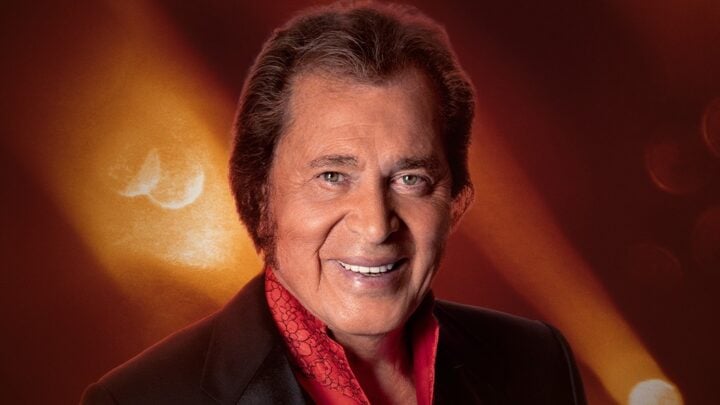
There are legends, and then there are survivors.
In the fickle, youth-obsessed world of popular music, endurance is perhaps the rarest form of success. Yet for nearly six decades, Engelbert Humperdinck has remained a constant presence – touring the world, filling theatres, recording new music and sustaining the improbable career of a singer whose name once baffled audiences almost as much as it intrigued them.
This year, the enduring crooner prepares to return to Australia once again as part of what he calls his “Celebration Tour,” a milestone that coincides with his approaching 90th birthday. The achievement is remarkable not just for its longevity, but for the fact that Humperdinck insists he is still performing with the same voice that launched him to fame in the 1960s.
“My voice hasn’t deteriorated at all,” he tells Starts at 60 matter-of-factly. “It’s the same as it was, well maybe it has come down a little bit in volume, but only a tiny bit. It’s still as strong as ever, and I’m still recording.”
To the notion that his career has slowed down, Humperdinck laughed and dismissed it wholeheartedly. And politely, of course. The master of the romantic ballad has instead pivoted slightly and completed a new album inspired by the rock stars of the 1980s, where he has taken songs made famous by bands like Kiss, Aerosmith, The Cars and Journey and done them “his way”.
The name that changed everything
At the time, the singer was performing under the name Gerry Dorsey. It wasn’t working. Enter manager Gordon Mills.
“Gordon chose it because it belonged to a composer,” Humperdinck explains. “He gave me my name. He gave Gilbert O’Sullivan his name. He gave Tom Jones his name.”
The name Mills selected – Engelbert Humperdinck – belonged to a 19th-century German composer. For a pop singer, it was wildly unconventional. And that was precisely the point.
“The name is so different that it caused a bit of a controversy,” he says. “People started to talk about it…but they couldn’t pronounce it.”
Humperdinck remembers the reaction vividly when he first took to the stage under his new moniker. “When you’re a starving singer like I was, you accept anything that comes along that is going to be successful,” he says.
If the goal was to attract attention, the strategy worked. Comedians joked about the name. Audiences stumbled over its pronunciation. But soon enough, everyone knew it.
The song that stopped The Beatles
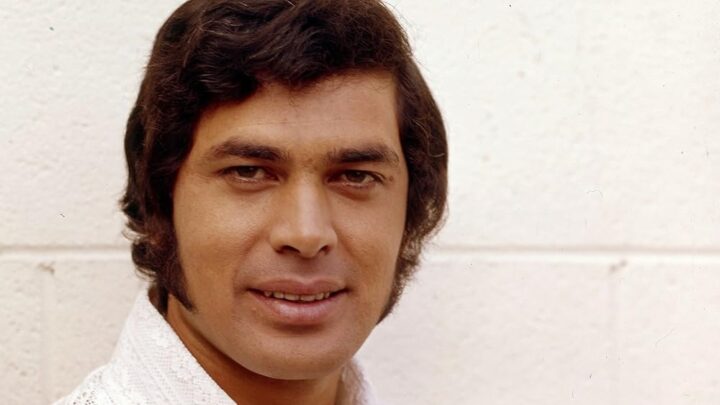
Then came the moment that would cement Humperdinck’s place in pop history. In 1967, Humperdinck recorded “Release Me,” a sweeping romantic ballad that seemed almost old-fashioned compared with the psychedelic revolution happening around it. Against all expectations, the song exploded.
Its success was amplified by a curious piece of chart history: it prevented The Beatles’ double A-side single “Penny Lane/Strawberry Fields Forever” from reaching number one in the UK. For Humperdinck, the experience was surreal.
“That to me was something, an event, if you want to know the truth,” he says. “I was a big fan of The Beatles, and then for this non-entity to come along and knock the almighty Beatles out of the number one position…”
The victory was brief but symbolic. At the height of Beatlemania, the unlikely balladeer had scored one of the decade’s biggest hits. More importantly, it established him as one of the defining romantic voices of his era.
The Las Vegas years
If “Release Me” launched his career, Las Vegas helped sustain it. The desert entertainment capital became a second home for Humperdinck, who performed marathon runs there during the golden age of casino showrooms.
“I played Vegas in the early days…a month at a time,” he recalls. “I did two shows a day, so that was like 56 shows in a row.”
It was exhausting work, but it placed him in the company of some of the greatest entertainers of the twentieth century.
“All of a sudden you meet the Sinatras and you meet the Shirley MacLaine’s and all these big stars… even the great Elvis Presley,” Humperdinck says.
One of his early breaks in Vegas came courtesy of another legend. Another Rat Pack member.
“The casino that I played at in Las Vegas was owned by Dean Martin,” he says. “Dean put his name on the marquee saying, ‘Dean Martin presents Engelbert Humperdinck.’ I was the only one he did it for.”
The two men would later become friends, sharing dinners during their Vegas residencies. Humperdinck also remembers the dazzling excess of those shows – glamour, stage spectacle and enough jewellery to rival rock royalty.
“I was introduced to the jeweller that made all Elvis’s stuff and Liberace’s jewellery,” he says. “We all used to use the same jeweller in Vegas.”
A romantic voice that endured
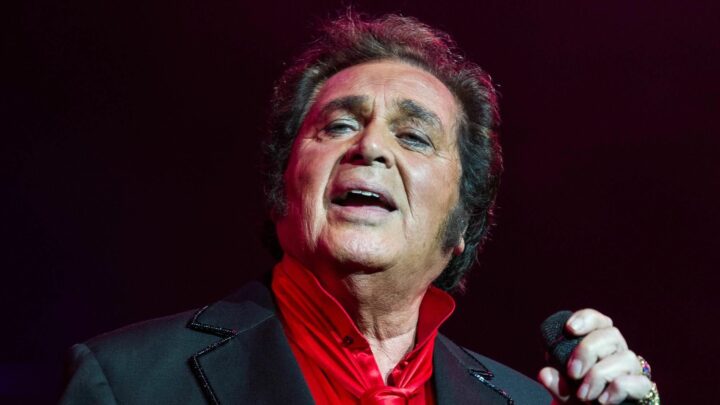
Humperdinck’s persona as part crooner, part matinee idol made him a favourite among audiences seeking something softer than the rebellious rock music dominating the charts.
“Apparently, they still think of me as a romantic singer,” he says. “I gained that title a long time ago, and I still keep it going because the kind of songs that I sing have lasting appeal.”
“This has been passed down over the years from my first fans to their children, to their children,” he says fondly.
The generational loyalty has helped sustain his touring career well into his ninth decade.
Encounters with the greats
Over the years, Humperdinck has collaborated with and befriended a vast roster of musical icons.
“When I think about doing a duet with Willie Nelson, and Kenny Rogers and Johnny Mathis… and of course the great Elton John… I have to pinch myself,” he says. “I’ve been involved with these people.”
He also recalls working with Gene Simmons of Kiss, a pairing that might seem unlikely on paper.
“You think that a balladeer with a rocker… it’s two different kinds of people,” he says. “But he made me feel so comfortable in the studio. What a wonderful person.”
Those encounters were often facilitated by his television show in the 1970s, which brought major stars onto the same stage week after week.
“Having a TV show like I had in the 70s made it possible for me to meet all these people,” he says.
But yet, not every relationship from his long career has aged so warmly.
A rivalry born in the same moment
Few rivalries in music have lasted quite as long, or remained quite as mysterious, as the one between Engelbert Humperdinck and Tom Jones.
Both men emerged from Britain in the explosive musical landscape of the 1960s. Both possessed powerhouse voices that could fill theatres without amplification. Both were managed early in their careers by the same industry figure. And both would go on to become global icons, selling tens of millions of records and building loyal audiences across generations.
It was Gordon Mills, who was managing both, who rechristened the singer then known as Arnold George Dorsey with the spectacular stage name Engelbert Humperdinck. It was a move that initially bewildered audiences but soon became unforgettable.
In the highly competitive entertainment industry of the 1960s, such arrangements could be fragile. Artists were constantly touring, recording and competing for the same audiences and opportunities. When success arrived, it arrived quickly, and often unevenly.
But at some point, Humperdinck and Jones – once professional partners, once travelling under the same management – stopped speaking. The reasons have never been entirely clear. Over the decades the silence hardened into one of pop music’s longest-running feuds.
“Something happened,” Humperdinck says simply. Was it professional jealousy? Competition? Perhaps both.
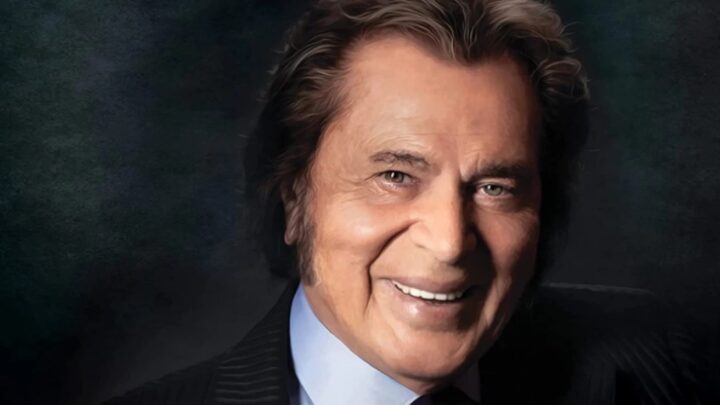
That understated explanation has remained remarkably consistent over the years. The details have never been publicly dissected with the kind of acrimony that defines many celebrity feuds. Instead, the relationship gradually cooled until the two men simply stopped speaking. Even as recently as last year, the two men were trading barbs, according to various media sources.
Yet when Humperdinck is asked about it today, nearly sixty years into his career, his answer is strikingly calm, reflective and unexpectedly generous.
“I still think Tom Jones is one of the greatest singers the world has ever known,” he says. “But the fact that we don’t get along together or we don’t talk doesn’t mean to say I don’t like his voice. I love his voice, I think it’s fantastic…but we just don’t get along.”
“I regret that the fact that there is an issue,” he admits. “I’d like it to be made up. I’d shake his hand tomorrow.”
For a dispute that has lingered for decades, the absence of bitterness from Humperdinck is almost disarming. What remains instead is something closer to regret.
Still going strong
At nearly 90, Humperdinck remains an active performer with a schedule that would exhaust artists half his age.
Part of the secret to his longevity, he says, lies in maintaining a close relationship with his fans.
“I keep up with it on social media,” he explains. “I do it for a thing called Tuesday Newsday where I keep in touch with my fans around the world. I tell them exactly what I’m doing in my life for that week.” He even reads their comments personally.
“I think it’s important that you read what they have to say. Because they’re your audience.”
That sense of gratitude is perhaps the most striking aspect of his personality. After more than half a century of fame, he still speaks like someone who can’t quite believe his luck.
“I’ve been in the business about 59 years,” he says. “It’s just an amazing amount of time…and I don’t feel any different today than I did 50 years ago.”
The hair may be dyed – he cheerfully admits that – but the spirit remains intact.
A celebration, not a farewell
When Humperdinck returns to Australia for his Celebration Tour, audiences can expect exactly what they have always come for: the songs that made him famous.
“You’ve got to bring in the classics,” he says. “People come to hear the classics, no matter how much new stuff you do,” he says. And if Humperdinck has his way, the story is far from finished.
As he continues to record, tour and even dream of collaborations with modern stars, he remains driven by the same enthusiasm that first propelled him onto a club stage as a teenager.
Nearly 60 years after “Release Me” made him famous, Engelbert Humperdinck is still doing exactly what he believes he was meant to do.
Engelbert Humperdinck. What a name, and what a game.





 Proudly Australian owned and operated
Comments 0
Join the conversation. Comments are reviewed before they appear.
Be the first to comment.
Join the conversation
Tell us who you are to post a comment. We'll remember you next time.