
The Invisible Load: Why Science Has Finally Caught Up With What My Wife Has Been Saying For Thirty Years


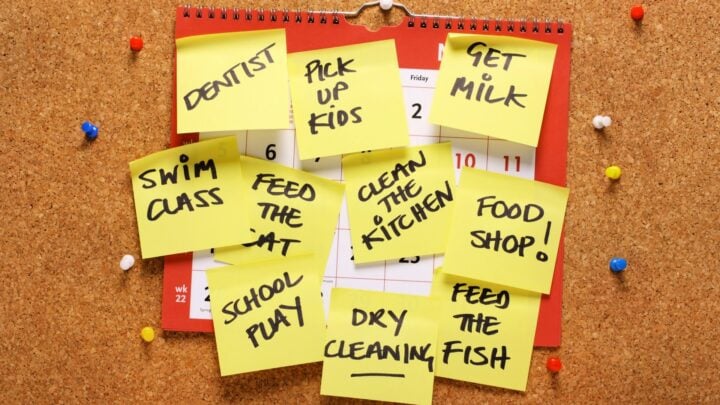
There is a particular flavour of smugness available to a man who does the washing up every night, empties the bins without being asked, and genuinely believes, in his heart of hearts, that household labour in his marriage is split more or less down the middle. I know this flavour of smugness intimately. I have marinated in it for years. And I am here today, as a public service, to report that a team of researchers at the University of Queensland has just conducted a proper scientific study whose primary function, as far as I can tell, is to dismantle that smugness entirely, with data.
The study, led by Dr Sarah Coundouris, examined 235 heterosexual couples and did something I think is genuinely clever: rather than just asking who does the chores, it broke household labour down into three separate categories, which the researchers rather memorably call the “tri-load.” There’s the physical load, which is the bit everyone already understands – the washing, the cooking, the actual bins. There’s the emotional load – the anticipating, comforting, consoling, the quiet ongoing work of noticing when someone’s had a bad day before they’ve said a word about it. And then there’s the cognitive load, which is the one I suspect has been quietly ruining marriages since roughly the invention of the shared calendar: the planning, the scheduling, the shopping lists, the remembering that the dentist needs rebooking and someone’s shoes have a hole in them and it’s nearly time for the dog’s vaccination again.
Here is the number that stopped me cold. Women in the study reported doing almost 25 per cent more of this cognitive load than their partners believed they were doing. Not 25 per cent more work, note. Twenty-five per cent more than the men themselves estimated. Which means an enormous number of men, myself very possibly among them, are walking around with a genuinely inflated sense of their own mental contribution to the household, like a man who’s convinced he split the bill fairly because he once, memorably, got the round in.
Dr Coundouris put it plainly: despite real progress on gender equality generally, women are still shouldering most of the work of running a household, and while that held true across all three categories, it showed up most starkly in the cognitive load specifically. I read that sentence at breakfast and experienced the particular, specific discomfort of a man being quietly informed that the argument he thought he’d already won was never actually settled.
But here’s where the study gets genuinely interesting, rather than just quietly devastating. It wasn’t only measuring who does what. It was measuring what happens to a relationship when the two people in it disagree about who does what. And the findings there are worth sitting with properly. When couples had genuinely different perceptions of how the physical and emotional labour was split, relationship quality suffered, and this effect was strongest for women. But when it came to the cognitive load specifically, the disagreement about who was doing the mental heavy lifting only predicted unhappiness in men.
I’ve turned that one over a fair few times, and I think what it’s telling us is something like this: women appear to already know, with grim and well-earned clarity, exactly how much invisible thinking they’re doing, and the relationship suffers when their partner doesn’t see the physical and emotional work either. Men, meanwhile, seem to genuinely struggle to register the cognitive load at all until the mismatch in perception itself starts causing problems, at which point it becomes a source of their own unhappiness too, having apparently never noticed the work existed until its absence, or its disputed ownership, became a live issue between them.
Dr Coundouris made the point that two people in the very same relationship can experience and interpret the division of household labour in genuinely different ways, and that this gap itself, not just the raw division of labour, is what predicts how the relationship is actually going. The bigger the gap between partners’ perceptions, the worse things tend to be.
I think what I appreciate most about this research, beyond the personal discomfort of finding myself gently indicted by a peer-reviewed journal before I’d finished my toast, is the insistence that the invisible stuff counts. Nobody hands out an award for remembering that the car needs its rego renewed, or for quietly noticing that someone’s gone a bit quiet since Tuesday and needs checking on. There’s no visible mess to point to afterwards, the way there is with a sink full of dishes. It simply gets done, or it doesn’t, and the person doing it either gets seen for it or, far more commonly, doesn’t.
So here is my genuinely earnest suggestion, offered with the full authority of a man who has just been thoroughly and scientifically humbled: this week, try actually asking, rather than assuming. Ask what’s on the mental list that never quite makes it to a physical one. You might discover, as I rather suspect I’m about to, that the ledger you thought was roughly balanced has been leaning rather significantly in one direction the entire time, and nobody’s mentioned it, because mentioning it is, in its own quiet way, yet another item on the very same invisible list.





 Proudly Australian owned and operated
Comments 2
Join the conversation. Comments are reviewed before they appear.
Sharing the load has, to me, it has always been about that bit men do not understand until it is forced upon them. Some will, with regret, admit they didn't know about all the little things that got done.
I know, appreciate and tell my husband how much his support helps me. Yet, I am the sole provider of the silent support system. I get the bills paid, appointments made etc., my dear husband has not idea about how I do this and he says it's beyond him.
It's not just the load. It's the expectation that any mess made will magically be cleaned. Like shaving hair in the bathroom sink or crumbs on the kitchen cupboard. 😮💨
Join the conversation
Tell us who you are to post a comment. We'll remember you next time.