
The Hidden Pressure Facing Family Caregivers of Chronic Wounds – And Why It Matters for Older Australians


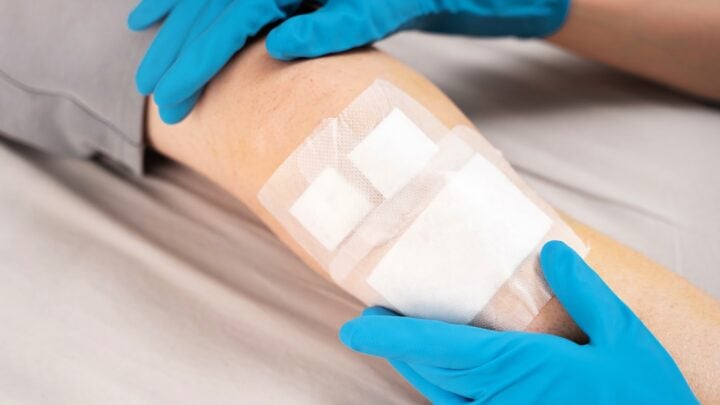
If you’re caring for a partner, parent or loved one with a chronic wound at home, new research suggests you’re far from alone in feeling underprepared for the decisions that come with it – and that better support is long overdue.
Chronic wounds affect around 450,000 Australians every year, requiring ongoing at-home monitoring, care and treatment to prevent infection. As more healthcare shifts from hospitals into the home, family caregivers have become essential partners in recovery – but new research from Murdoch University suggests many are being asked to make complex, high-stakes decisions with little preparation or support.
Why this matters so much for older Australians
Among the most common types of chronic wounds are diabetic foot ulcers and pressure injuries, commonly known as bedsores – both conditions that become considerably more common as we age, and both of which carry a genuine risk of serious complications. Research shows 50 to 60 per cent of diabetic foot ulcers become infected, and if that infection progresses, it can spread to deeper tissue and bone, in severe cases leading to amputation or death.
For the many older Australians managing diabetes, mobility issues or caring for a spouse or parent doing so, this isn’t an abstract statistic. It’s the kind of everyday decision-making that can carry real consequences, often made at the kitchen table rather than in a hospital ward.
The research
Murdoch University PhD candidate Chunhong Yu has been examining exactly how family caregivers navigate these decisions, and what she’s found paints a picture of people carrying significant responsibility with limited guidance.
“Family caregivers need to judge whether a wound is getting better or worse, whether the current care is working, or when it is time to seek professional help,” Ms Yu said. “Family caregivers take on a great deal of responsibility, often with limited preparation or training for the complex decisions they have to make.”
Ms Yu said the pressure this creates on caregivers is significant, as they attempt to weigh up a patient’s condition, sometimes conflicting advice from different healthcare professionals, family responsibilities, financial pressures and their own emotions all at once. As she put it, caregivers are often left constantly second-guessing themselves, wondering whether they’re doing the right thing.
Her research reviewed the current landscape of support available and found that while digital tools are increasingly being used for wound management, patient education and remote consultation at home, genuine support for the decision-making itself remains scarce. Of 35 relevant studies reviewed, only two specifically addressed shared decision-making in home-based wound care – a significant gap given how central those decisions are to a caregiver’s daily experience.
What’s being done about it
This research has laid the groundwork for the next stage of Ms Yu’s PhD, where she is working alongside supervisors Dr Melanie Murray, Professor Vicki Cope and Dr Ruth Wei to develop a practical, evidence-based decision-making support tool for family caregivers.
“Rather than simply providing more information, my goal is to develop a support tool that helps families make informed decisions with greater confidence while working in partnership with healthcare professionals,” Ms Yu said.
Ms Yu began her nursing career in a burns unit before moving into chronic wound management, an experience she says highlighted just how important genuine continuity is between professional healthcare and the care that happens at home once a patient is discharged.
“Today as the population continues to age and more healthcare is delivered in the community, families are taking on increasingly important roles caring for people with chronic wounds,” she said. “Supporting family caregivers has never been more important.”
What this means if you’re a caregiver right now
If you’re currently caring for someone with a chronic wound and often find yourself unsure whether what you’re seeing is normal or a sign something’s wrong, this research confirms what many caregivers already feel: it’s a genuinely difficult, high-stakes role to navigate without proper support. In the meantime, don’t hesitate to contact your GP, a wound care nurse, or your loved one’s treating team with questions, even ones that feel small — early advice is almost always easier to act on than a wound that’s been left to worsen.
This article reports on published research and is general in nature. It isn’t personalised medical advice — if you’re concerned about a wound not healing properly, contact your GP or treating healthcare team promptly.





 Proudly Australian owned and operated
Comments 3
Join the conversation. Comments are reviewed before they appear.
Just another example of how unpaid family carers are left to deal with it all, no support, no recognition.
In the case of diabetic ulcers the primary advice is to seek support from a high risk foot clinic, and if needed get hospital in the home support. Works for us in Sydney, where Westmead high risk clinic provides excellent service, albeit with long wait times.
This is so true. My husband has had a diabetic foot ulcer for four years. He also has neuropathy and didn’t feel anything. I only discovered it when I saw blood on a sock. Just finding out who to see initially and then getting a referral to the Specialist Podiatry at the hospital took a while. He sees a Community Health podiatrist every two weeks and I dress the wound in between visits. He has had three infections to date but I saw them early and got him onto antibiotics immediately.
Join the conversation
Tell us who you are to post a comment. We'll remember you next time.