
Scans, Stress Tests and Surprises: What Doctors Are Really Looking For


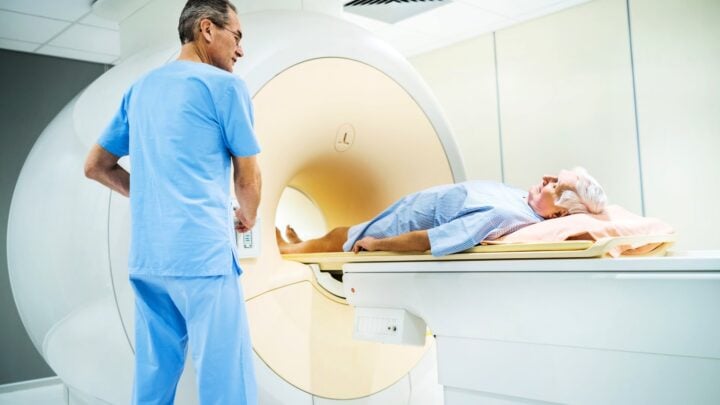
A simple guide to common tests after 60
At some point after 60, most people find themselves having more tests.
A scan here. A stress test there. Perhaps a bone density check.
It can feel like a lot, a shopping list, or as if the doctor is casting a wide net in the hope of finding ‘something’. These investigations aren’t random. Each one answers a different question.
Understanding what they’re for can make the whole process feel a lot less mysterious and help patients feel more in control.
CT Scan
A CT (computed tomography) scan is often the first test ordered when something needs to be assessed quickly. It’s also far more accessible to emergency departments and radiology sites than MRI machines.
These scans show the body in cross-sections – imagine slicing through a loaf of bread and looking at each slice. Each image shows a thin layer of the body, allowing doctors to see what’s happening beneath the surface.
Doctors commonly use CT scans to look for: strokes, internal bleeding, lung problems, causes of abdominal pain, cancers.
The main advantage is speed – a CT scan can be done in minutes, which is why it’s often used in emergency situations. The downside is that it involves radiation, so doctors don’t order it unless it’s likely to provide useful information. It may also require an injection of contrast dye, which needs to be used cautiously in people with allergies or kidney problems.
MRI
An MRI (magnetic resonance imaging) uses magnets, not radiation, to produce very detailed images – especially of soft tissues. That’s why it’s often used to diagnose and assess brain conditions, spinal problems, joint injuries and tumours.
MRI scans take longer, can be noisy and enclosed, but provide a level of detail that CT scans can’t.
If your doctor wants a closer look at something specific, this is often the best test. MRI scans take longer, can feel quite enclosed, and require you to lie still.
They’re also less available and more expensive than CT scans.
Not all implants are MRI-safe, so things like pacemakers or certain metal devices need to be checked carefully beforehand – although many newer ones are compatible. MRI contrast is different from CT contrast. It uses a substance called gadolinium, which is generally well tolerated but still used cautiously in people with severe kidney disease.
For people who are claustrophobic, the scan can be difficult. Some manage with reassurance or mild sedation, but in more severe cases, deeper sedation may be needed.
Bone Density Scan (DEXA):
A DEXA (dual-energy X-ray absorptiometry) scan is a simple test used to measure bone strength and estimate the risk of fractures in post-menopausal women, men over seventy and anyone who’s had a fracture from a minor fall.
It’s quick, painless, and uses very low levels of radiation. There are no injections, no enclosed spaces, and no noise. Another advantage is that most people are in and out within 10–15 minutes.
Patients lie flat on a padded table, fully clothed (although you may need to remove anything with metal, like belts or zips). A scanning arm passes slowly over your body – usually focusing on the hips and lower spine, where fractures are most likely to occur.
The scan gives a measurement of bone density, which helps determine whether your bones are:
normal
thinner than expected (osteopenia)
or fragile (osteoporosis)
This helps doctors estimate your risk of fracture and decide whether treatment or lifestyle changes are needed for prevention – identifying osteoporosis early so steps can be taken to reduce fracture risk.
PET Scan
A PET (positron emission tomography) scan is different from CT or MRI.
Instead of showing what the body looks like, it shows how tissues are functioning.
Because it highlights areas of increased metabolic activity, it can help identify abnormal cells that might not yet be visible on other scans.
It’s most often used in cancer diagnosis and staging, monitoring how cancer treatment is working and certain neurological conditions.
A PET scan involves an injection of a small amount of radioactive tracer – usually a form of glucose (sugar). This sounds concerning, but the dose used is very low and carefully controlled.
You’ll then rest quietly for about 30–60 minutes while the tracer circulates through your body. After that, you lie on a table that moves slowly through a scanner, which is more open than an MRI. The scan itself is painless and usually takes around 20–30 minutes.
PET scans aren’t suitable in every situation. They’re generally avoided in pregnancy, and blood sugar levels need to be well controlled beforehand, particularly in people with diabetes, as this can affect the accuracy of the results. Fasting is often required, and your doctor will advise you if any medications need to be adjusted beforehand.
Cardiac Stress Test
A cardiac stress test looks at how well your heart works when it’s under pressure.
It’s not about how fit you are – it’s about how your heart responds when it has to work harder.
Patients are connected to a heart monitor (ECG) with small sticky pads on their chest while blood pressure is regularly checked. The next step is walking on a treadmill or pedalling a stationary bike.
The speed and incline gradually increase every few minutes, making the exercise more challenging.
The aim is to gently “stress” the heart while monitoring: heart rhythm, heart rate, blood pressure and any symptoms such as chest discomfort or breathlessness.
It can also bring on abnormal heart rhythms.
The test usually lasts around 10–15 minutes, or until you reach a target heart rate or develop symptoms. Most people simply feel like they’re exercising – a bit puffed and warm.
For people who can’t exercise, medication can be used to mimic the effect of exercise by increasing blood flow to the heart while being monitored.
A stress test helps identify whether the heart muscle is getting enough blood when it’s working harder.
It’s commonly used to investigate chest pain, shortness of breath and possible coronary artery disease.
The test is supervised throughout, and it can be stopped at any point if needed.
Why Not Just Do Every Test?
A common question is: why not just do all the tests and be sure?
The answer is that more testing isn’t always better.
Each investigation is chosen carefully because:
some involve radiation
some can lead to false alarms
some findings don’t need treatment but can cause anxiety
and most importantly, tests should only be done if they will change management
The Royal Australian College of General Practitioners emphasises that investigations should be ordered when they are likely to influence diagnosis or treatment – not just for reassurance.
What You Can Ask?
If you’re unsure about a test, it’s reasonable to ask:
What are we looking for?
Why this test instead of another?
Are there any risks?
Will the result change what we do next?
These questions often make the process clearer and less stressful. And understanding what’s being looked for is often the first step in feeling more in control of your health.
Dr Kathryn Fox is an Australian medical doctor and bestselling crime writer, best known for her forensic thrillers featuring pathologist Dr Anya Crichton. Drawing on her medical expertise, she crafts gripping, authentic crime fiction and is also a passionate advocate for forensic medicine education and public engagement.





 Proudly Australian owned and operated
Comments 0
Join the conversation. Comments are reviewed before they appear.
Be the first to comment.
Join the conversation
Tell us who you are to post a comment. We'll remember you next time.