
Ralph McTell at 81: Streets of London, Loss, Legacy and a Farewell to Australia


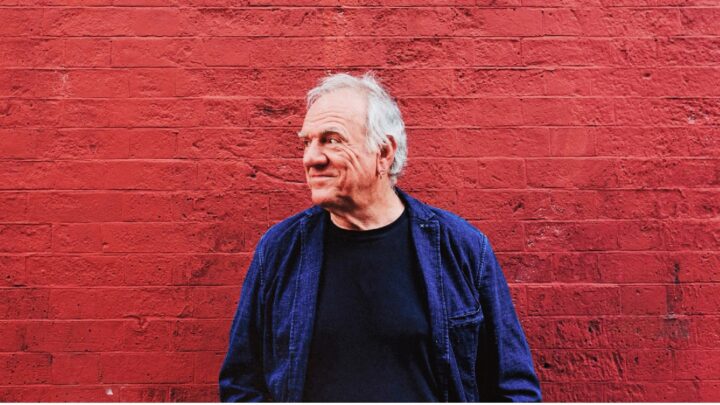
Ralph McTell is in London, drinking a pint, wearing the same gypsy earrings he put in during the early 1970s, and looking out at a February that appears to have been designed by someone who hates people. Grey. Wet. Leafless. Miserable. A month so unlovable even February itself would probably apologise if it could.
It feels exactly right.
McTell, now 81, is speaking to me from the other side of the world, having just come from visiting a terminally ill childhood friend. He tells me this plainly, without drama, the way men of his generation do – as though acknowledging sadness is simply another item on the day’s list, like buying milk or learning how to use a washing machine.
Which, incidentally, he has had to do.
Learning to Live Alone at 81
“I lost my wife 18 months ago,” he says, almost as an aside. “So I’ve had to learn how to make spaghetti Bolognese, beans on toast, do my own shopping. I tell people proudly – like old people do – that I do everything myself.”
There is something deeply McTell about that: understated resilience, quiet dignity, no interest in self-pity. This is, after all, a man who has spent more than six decades writing songs about people who fall through the cracks – and who somehow managed to do it without ever sounding superior.
McTell has released more than 30 albums across a career that stretches back to the early 1960s – folk records, blues records, children’s albums, political songs, deeply personal ones – but he will forever be associated with Streets of London, the song that refuses to loosen its grip on the collective throat.
“I never thought, in my wildest dreams, that one song would belong to so many people.”
Released in 1974, it reached No. 2 on the UK charts, sold well over a million copies, and earned him an Ivor Novello Award. It has since been covered endlessly, sung at funerals, school assemblies, protests, and pubs, and is now one of those rare songs people don’t merely listen to – they join.
“I remember the first time I played it live,” he says. “There was silence at the end. It felt like a minute, but it was probably ten seconds. Then this thunderous applause. I remember thinking – oh. Relief.”
These days, he often stops singing altogether and lets the audience take over.
“I say, ‘Let’s hear the ladies sing,’” he says. “My son – who’s my manager now – told me, ‘Dad, they’re not girls anymore.’ So I changed it.”
He laughs, softly. There’s something about female voices on that chorus, he says. Something that still gets him, even now.
And now is very much the point. This Australian tour – his first visit was 50 years ago – is being billed as a farewell. Not because he’s done writing, or playing, or thinking, but because the travelling has become the enemy.
“We don’t get paid for playing,” he says. “We get paid for travelling. And travelling at 81, long distances, airports, time zones – it’s tough. Especially when you’re on your own on stage. Any weakness shows.”
McTell is a soloist in the purest sense: one man, one guitar, a voice that sounds as though it has been lightly weathered rather than damaged. He owns more than 20 guitars, though he admits he regularly plays about ten. When they were moved to a new house recently, he describes it as being like sending his children overseas.
His main companion is a Gibson J-45.
“There’s something about the warmth of it,” he says. “The scale length suits my hands. Me and the guitar – we’re a pair. We go together.”
He still plays every day. The guitar sits beside him on the sofa while he watches television. He can’t go a day without touching it. Writing, he says, never stops – it happens in notebooks, on guitars, sometimes on computers – though he’s cautious about unleashing new material on an audience that has come to hear the songs that made him who he is.
“There’s a responsibility,” he says. “People want the songs they know. I don’t want to hit them with new ones. But maybe I’ll play one. Just to say – this is where I’m at now.”
Is the World Better? A Dangerous Question
Where he’s at now, politically and culturally, is … concerned.
“No,” he says flatly, when asked whether the world is a better place than when he was young. “We’ve got the power to destroy everything. We lie and get away with it. The moral code has slipped.”
He talks about the absence of trusted voices, about misinformation, about leaders setting terrible examples. It keeps him awake at night, he says. And then he pauses.
“But,” he adds, “isn’t that what all old men say?”
There’s the moment: self-awareness arriving just in time to save the sermon.
Australia, by contrast, fills him with affection. He loves the directness. The lack of hypocrisy. The mix of working-class grit and spiritual depth. The landscape that burns itself to regenerate. The mystery of it.
“At the risk of upsetting Melbourne,” he says, “Sydney is one of the most beautiful cities in the world.”
There is something fitting about McTell saying goodbye in Australia – a country that still understands, perhaps better than many, the power of a single person with a story and a guitar.
As we finish, he is still wearing those earrings. Still drinking his beer. Still very much Ralph McTell: solid, English, working-class, quietly extraordinary.
An ordinary bloke, you might say.
And sometimes, as Streets of London has been proving for 50 years, that’s where the greatest songs come from.
Tour dates:
BRISBANE – Old Museum – Thursday May 7
MELBOURNE – City Recital – Friday May 8
PERTH – State Theatre – Studio – Saturday May 9
CANBERRA – Street Theatre – Thursday May 14
SYDNEY – City Recital – Friday May 15
ADELAIDE – Norwood Theatre – Saturday May 16
Tickets: https://www.ralphmctell.co.uk





 Proudly Australian owned and operated