
Budget 2026: Somewhere between “Chalmergeddon” and reality


Older Aussies are once again left squinting through the political theatre of Budget night, Scott Podmore writes
Budget night now arrives like a sporting final crossed with a tabloid splash.
By the time most Australians were loading the dishwasher, the verdicts were already online … Chalmergeddon. The Jim Reaper. Boomer Bubble Burst.
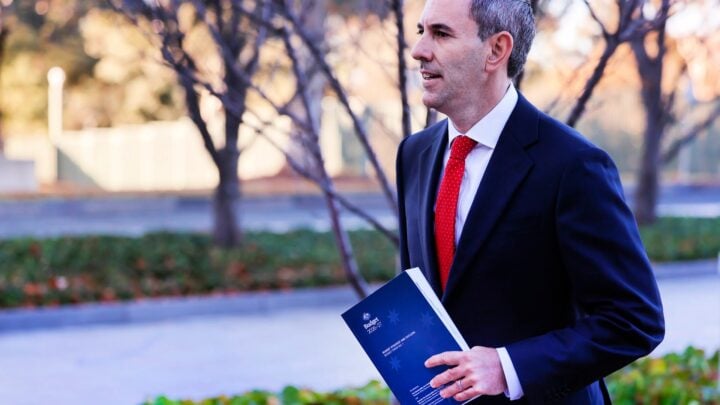
Depending on which homepage you clicked, Treasurer Jim Chalmers was either courageously reshaping the economy or personally detonating suburban Australia into a catastrophe.
That’s modern budget coverage: half economics, half political pantomime. And somewhere underneath the theatre, millions of Aussies over 60 were simply trying to work out whether anything in this budget might make life feel a little less expensive and a little less uncertain.
For some, there are a few positives.
There appears to be serious money going into aged care, hospitals and Medicare: extra home care packages, additional urgent care clinics, plus continued pressure to lift bulk billing rates. After years of grim headlines following the Royal Commission into Aged Care, few would argue those areas don’t need attention.
But budgets are funny things. Governments announce them in billions, while people experience them at the kitchen table and usually while staring at a power bill, or a rates notice, or the total flashing up at the supermarket checkout. People notice.
Retirement isn’t looking quite how people imagined
One of the stranger features of modern politics is the way older Australians are often discussed as though they’re all sitting mortgage-free on sprawling property portfolios, occasionally glancing up from a cruise brochure.
Some are comfortable, absolutely, but plenty aren’t.
Let’s break it down.
There are retirees renting. Older Australians are still working because super hasn’t stretched far enough. Some women who took time out of the workforce years ago to raise the kids are now feeling the consequences. Grandparents helping adult children with groceries, childcare or mortgage repayments because the numbers no longer stack up for younger families either.
More and more Australians in their 60s are quietly discovering retirement isn’t a finish line anymore. For many, it’s actually become another financial balancing act.
That version of ageing Australia rarely dominates budget coverage, and instead, we get lazy generational shorthand. Boomers versus millennials. Asset owners versus renters. Winners versus losers. Inner-city commentators versus the suburbs they love diagnosing.
Real life is nowhere near that tidy, thanks.
So this is what ‘doing the right thing’ gets you?
This is the point where some older Australians may feel slightly blind-sided by the budget. Changes to private health insurance rebates probably won’t dominate TV coverage for days on end, but they’ll be noticed around plenty of kitchen bench discussions and pharmacy counters.
Let’s face it, another few hundred dollars here and there genuinely makes a difference for retirees living on fixed incomes. Health costs are viewed differently once you’re older … you can delay replacing a television, but you can’t exactly postpone your body.
For many Australians nearing retirement, an investment property was never about becoming a mini property tycoon. It was the result of decades of extra shifts, missed holidays, risk-taking and the belief that if you worked hard and planned carefully, you might create a little security later in life.
That’s the gap that often opens between Treasury language and everyday reality. Governments talk about percentages and projections. Everyday people just know their direct debits seem to rise faster than everything else.
Housing: reform, revenge or reality check?
Housing is now gobbling up almost every budget conversation in the country. The government says its changes to negative gearing and capital gains tax settings are aimed at helping younger Australians get into the market, while critics say the reforms could spook investors and tighten rental supply. There’s merit in both arguments.
What’s become exhausting, though, is the increasingly simplistic framing around it all.
Older Australians are routinely painted as one giant wealthy bloc hoarding property while younger generations suffer below them. It makes for neat social media content, but it’s also wildly disconnected from the lives many people are actually living.
Property isn’t some glamorous wealth strategy for many retiring Australians. It’s security. Sometimes it’s the thing protecting them from becoming financially vulnerable later in life.
And increasingly, people are nervous.
Tell me you can’t feel it in conversations now? Among friends, families, community groups, and at cafes. Even financially responsible Australians who once felt reasonably secure are starting to wonder whether retirement might become a moving target rather than a destination.
People who spent 40 years trying to stay off government support are now being spoken about as though they somehow gamed the system simply by buying a second property in 1998 and hanging onto it.
That frustration is real, too, make no mistake.
The generation expected to quietly absorb it
Maybe that’s the broader feeling sitting underneath this budget. Older Australians increasingly sense they are becoming politically dependable — the generation expected to absorb rising costs, policy shifts and economic pressure without making too much noise about it.
The focus of modern politics has shifted and understandably so in some respects. Younger Australians are facing brutal housing affordability challenges and genuine economic pressure of their own, but there’s a risk in reducing older Australians to a stereotype of comfort and accumulated wealth because many are carrying far more than people might realise.
They’re supporting family members, caring for ageing parents in their 80s and 90s, helping grandchildren, working longer than planned, and quietly recalculating retirement plans they thought were all sorted years ago.
Some are even watching adult children move back home because rents and mortgages have become overwhelming. That’s a fact.
And despite all the noise surrounding budgets each year, those quieter realities rarely become the headline.
Beyond the slogans
This wasn’t a disastrous budget for older Australians, nor was it a particularly generous one.
There are worthwhile investments in care and health, some measures will genuinely help while others will barely register, and a few may quietly hurt.
But once the slogans fade and the TV panels move on, many Australians over 60 will probably land in roughly the same place:
Still doing the maths, watching every bill, and wondering why growing older in Australia suddenly feels financially sharper than they expected.
And perhaps that’s the real Budget 2026 story hiding underneath all the noise.
Not “Chalmergeddon”, nor “Boomer Bubble Burst”. Just millions of Australians trying to hold onto a sense of security they thought they’d already earned.





 Proudly Australian owned and operated
Comments 0
Join the conversation. Comments are reviewed before they appear.
Be the first to comment.
Join the conversation
Tell us who you are to post a comment. We'll remember you next time.