


By Matt Spetalnick and Nandita Bose and Humeyra Pamuk
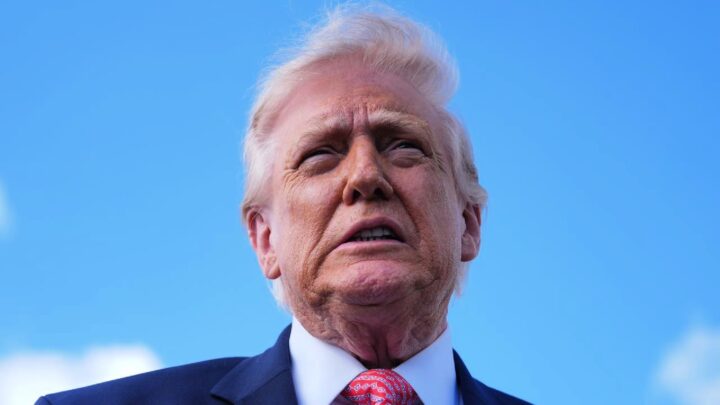
With global energy prices up and his job approval ratings down, Donald Trump faces stark choices after a month of war against Iran: cut a potentially flawed deal and get out, or escalate militarily and risk a prolonged conflict that could consume his presidency.
Despite a flurry of diplomatic activity, Trump ends another week of the joint US-Israeli campaign struggling to contain a widening Middle East crisis as a defiant Iran maintains a chokehold on Gulf oil and gas shipments and continues missile and drone strikes across the region.
The central question now, say analysts, is whether the US president is ready to wind down or ramp up what critics have called a war of choice, one that has ignited the worst global energy supply shock in history and spread far beyond the region.
Trump has told aides he wants to avoid a “forever war” and find a negotiated exit, urging them to stress the four-to-six-week duration of hostilities he has outlined publicly, a senior White House official said, adding that such a timeline appears “shaky.”
At the same time, Trump has threatened a major military escalation if talks fail.
Trump’s diplomatic overtures to Iran, including a 15-point peace proposal sent via a backchannel with Pakistan, appeared to demonstrate an increasingly urgent search for an off-ramp. But it remains unclear whether there are currently any realistic prospects for fruitful negotiations.
“President Trump has poor options all around to end the war,” said Jonathan Panikoff, former US deputy national intelligence officer for the Middle East. “Part of the challenge is the lack of clarity related to what a satisfactory outcome would be.”
A White House official insisted the Iran campaign “will conclude when the commander-in-chief determines that our objectives are met” and that Trump had laid out explicit goals.
Apparently hedging his bets, Trump is deploying thousands more US troops to the region and warning Iran of an intensified onslaught, possibly including the use of ground troops, if it does not yield to his demands.
Analysts say such a show of force could be aimed at creating leverage for concessions from Tehran but risks drawing the US into a more protracted conflict, with any commitment of boots on Iranian soil likely to anger many American voters.
Another possible scenario, experts say, would be for the US to wage a final major air assault in Operation Epic Fury to further degrade Iran’s military capabilities and nuclear sites, after which Trump would declare victory and walk away, saying his war objectives had been achieved.
But such a claim would ring hollow unless the vital Strait of Hormuz is completely reopened, which Iran is so far refusing to allow. Trump has voiced frustration over European allies’ refusal to send warships to help secure the waterway.
Trump, who has repeatedly vowed to keep the US out of foreign conflicts, is seemingly struggling to contain the expanding war that he started along with Israel.
Even as he has continued issuing triumphalist assessments, he has increasingly geared his messaging to reassuring nervous financial markets, pressing senior aides to emphasise that the war will be over soon, according to the senior White House official, who spoke on condition of anonymity.
But the lack of a clear exit strategy carries dangers both for Trump’s presidential legacy and his party’s prospects as Republicans scramble to defend narrow majorities in Congress in the November midterm elections.
Trump’s biggest miscalculation has been the extent of Tehran’s retaliation. It has used its remaining missiles and drones to strike Israel and neighbouring Gulf states and mostly close the Strait of Hormuz, the conduit for one-fifth of the world’s oil, sending shock waves through the global economy.
“The Iranian government’s bet is they can take more pain for longer than their adversaries, and they might be right,” said Jon Alterman of the Centre for Strategic and International Studies think tank in Washington.
The White House official, speaking on condition of anonymity, said Trump and his team were “well-prepared” for Iran’s response in the strait and are confident it will reopen soon.
Even so, the clearest sign of Trump’s growing anxiety about the war came on Monday with his dramatic climbdown from a threat to destroy Iran’s power grid if it did not allow shipping to resume through the strait.
In a move widely seen as intended to calm markets, he declared a five-day pause in carrying out his threat in order to give diplomacy a chance. On Thursday, he extended that for another 10 days.
At the same time, pressure is building at home.
Trump’s overall approval rating has fallen to 36 per cent, the lowest since his return to the White House, a Reuters/Ipsos poll found.
The White House has grown increasingly worried about the political fallout from the war, a former senior Trump administration official told Reuters, citing concerns expressed by Republican politicians about the coming midterm elections.
For now, however, the diplomatic path offers no easy solutions.
Trump is keeping the world guessing, one moment making pronouncements aimed at soothing volatile markets and in the next issuing threats that spike energy prices.
“Trump traffics in contradictory signals,” said Laura Blumenfeld of the Johns Hopkins School of Advanced International Studies in Washington.
“He is a one-man ‘fog of war’ messaging machine to keep opponents off-balance.”





 Proudly Australian owned and operated
Comments 0
Join the conversation. Comments are reviewed before they appear.
Be the first to comment.
Join the conversation
Tell us who you are to post a comment. We'll remember you next time.