
On This Day: April 25


The day Australia stood still, two scientists unlocked the secret of life, and a revolution was named after a flower
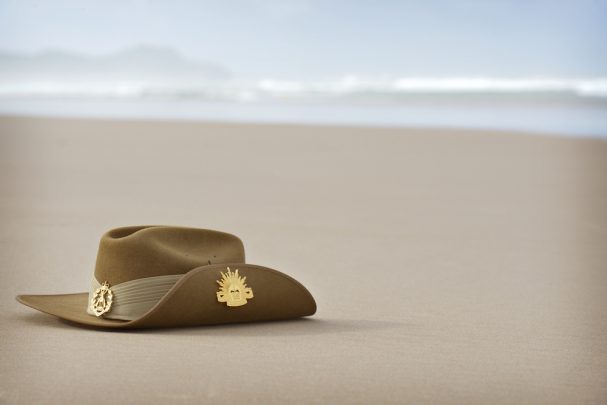
Today is not like other days. For Australians, April 25 belongs first and always to the men and women who served this country – and to the 111 years since a generation of young Australians stepped ashore at Gallipoli and changed us forever.
But the rest of the world has its own remarkable stories attached to this date. So we honour the day properly first – and then take a look at what else happened.
1915 — The landing that made us who we are
At dawn on 25 April 1915, the first of approximately 70,000 Allied soldiers landed at Gallipoli. The ANZAC force met fierce resistance from the Ottoman Army commanded by Mustafa Kemal – later known as Atatürk. What had been planned as a bold strike to knock Turkey out of the war quickly became a stalemate, and the campaign dragged on for eight months.
Around 2,000 of the 16,000 ANZAC soldiers who landed that day were killed or wounded before sunset. Over 10,000 Australians and New Zealanders died in the campaign. The military objective failed completely. But something else happened in those eight months of heat, flies, mateship and extraordinary courage on a Turkish hillside – something that became the bedrock of how Australians understand themselves.
Although the Gallipoli campaign failed in its military objectives, the actions of Australian and New Zealand forces during the campaign left a powerful legacy. Courage. Endurance. Mateship. Looking after the man beside you. These were the values forged at Anzac Cove, and they are the values we gather before dawn every April 25 to remember.
This morning, Australians are standing in the dark at memorials from Darwin to Hobart, from London to Gallipoli itself, as the Last Post sounds and the words fall across the silence: They shall grow not old, as we that are left grow old. Age shall not weary them, nor the years condemn. At the going down of the sun and in the morning, we will remember them.
Lest we forget.

1953 — The secret of life, published in a scientific journal
On the same date 38 years later, on April 25, 1953, two Cambridge scientists walked into a pub near their laboratory and made an announcement that sounds, in retrospect, almost absurdly casual. Francis Crick walked into the Eagle Pub and announced that “we had found the secret of life.” He was not exaggerating.
That day, Watson and Crick published their landmark 900-word paper in the journal Nature, describing the double helix structure of DNA – the molecule containing the genetic blueprint for all living things. Every living creature on earth – every human being who ever lived, every animal, every plant – carries this same elegant spiral structure inside every cell of their body. Watson and Crick didn’t invent it. They were the first to see it clearly.
The story has a shadow. The molecular biologists were aided significantly by the work of another DNA researcher, Rosalind Franklin, although she was not included in the announcement, nor did she share the subsequent Nobel Prize awarded for it. Franklin’s X-ray photograph, known as Photo 51, was the crucial piece of evidence – used without her knowledge. History has spent the decades since correcting that omission.
1974 — A revolution named after a flower
On April 25, 1974, a peaceful military coup in Portugal overthrew the Estado Novo authoritarian regime after nearly 50 years of dictatorship. The Carnation Revolution was so named because almost no shots were fired – and carnations were placed in the muzzles of rifles and on the uniforms of the soldiers.
Civilians, overjoyed at the end of decades of repression, ran into the streets and stuffed flowers into the barrels of guns. It remains one of the most visually extraordinary moments in modern European history – and one of the cleanest, most bloodless transfers of power ever recorded. Portugal woke up that morning in a dictatorship. By evening, it was a democracy.
Also on this day…
In 1983, the German news magazine Stern announced the discovery of Hitler’s diaries – one of the most spectacular media scandals in history. The documents were later exposed as forgeries. Dozens of historians and publishers had already authenticated them. It was an embarrassment on a global scale.
And Ella Fitzgerald was born on April 25, 1917 – the woman who became known as the First Lady of Song, who won 13 Grammy Awards and whose voice remains, decades after her death, one of the most purely beautiful sounds ever captured on record.
Some days carry the whole weight of history. April 25 is one of them.





 Proudly Australian owned and operated
Comments 0
Join the conversation. Comments are reviewed before they appear.
Be the first to comment.
Join the conversation
Tell us who you are to post a comment. We'll remember you next time.