
Why Vietnam Is the Destination Everyone Is Talking About in 2026


Words and Pictures by Adam Brunes
Vietnam wastes little time drawing you in.
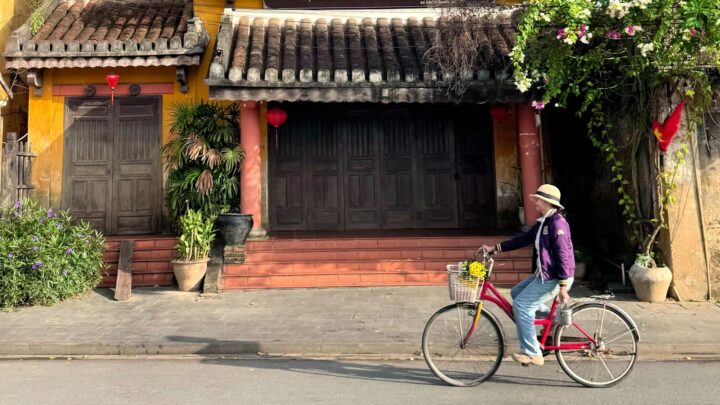
It sweeps you up in a blur of motorbikes, paper lanterns, river markets and curb-side dinners eaten on stools barely a foot off the ground. It asks you to keep pace and, somewhere between your first bowl of pho and your fiftieth Vietnamese iced coffee, you begin to understand why the rest of the world has caught on.
In January 2026 alone, nearly 2.5 million international visitors arrived in Vietnam – the highest monthly figure on record. That equates to more than 80,000 arrivals every single day. With numbers climbing 21.4 per cent month-on-month and 18.5 per cent year-on-year, Vietnam has firmly claimed its place as 2026’s ‘it’ destination.
My partner and I didn’t book it because of the statistics. After a brilliant but eye-wateringly expensive US holiday in 2024, we were looking for somewhere closer to home and more budget-conscious, and somewhere neither of us had visited before.
We booked our flights to and from first, leaving our travel agent to work their magic on the middle. That flexibility is part of Vietnam’s appeal. The range is extraordinary and transport refreshingly straightforward. Sleeper trains, efficient domestic flights, affordable private transfers. You can build the itinerary as you go. We travelled south to north over three weeks, beginning in Ho Chi Minh City and finishing in Hanoi – a popular route for good reason.
Ho Chi Minh City
Ho Chi Minh City is all pulse and precision and the perfect place to dive in headfirst.
On our first day, we booked two walking street food tours – one for lunch and one for dinner. Ambitious, in hindsight. One would have been plenty.
The lunchtime tour was intimate, just four of us: my partner and I, and two British businessmen extending a Southeast Asia work trip with a short holiday. At our first of nine stops, one of them mentioned he’d fallen so in love with Vietnam that he’d extended his stay by a week and sweet-talked his wife into flying over to join him. We knew we were onto something special.
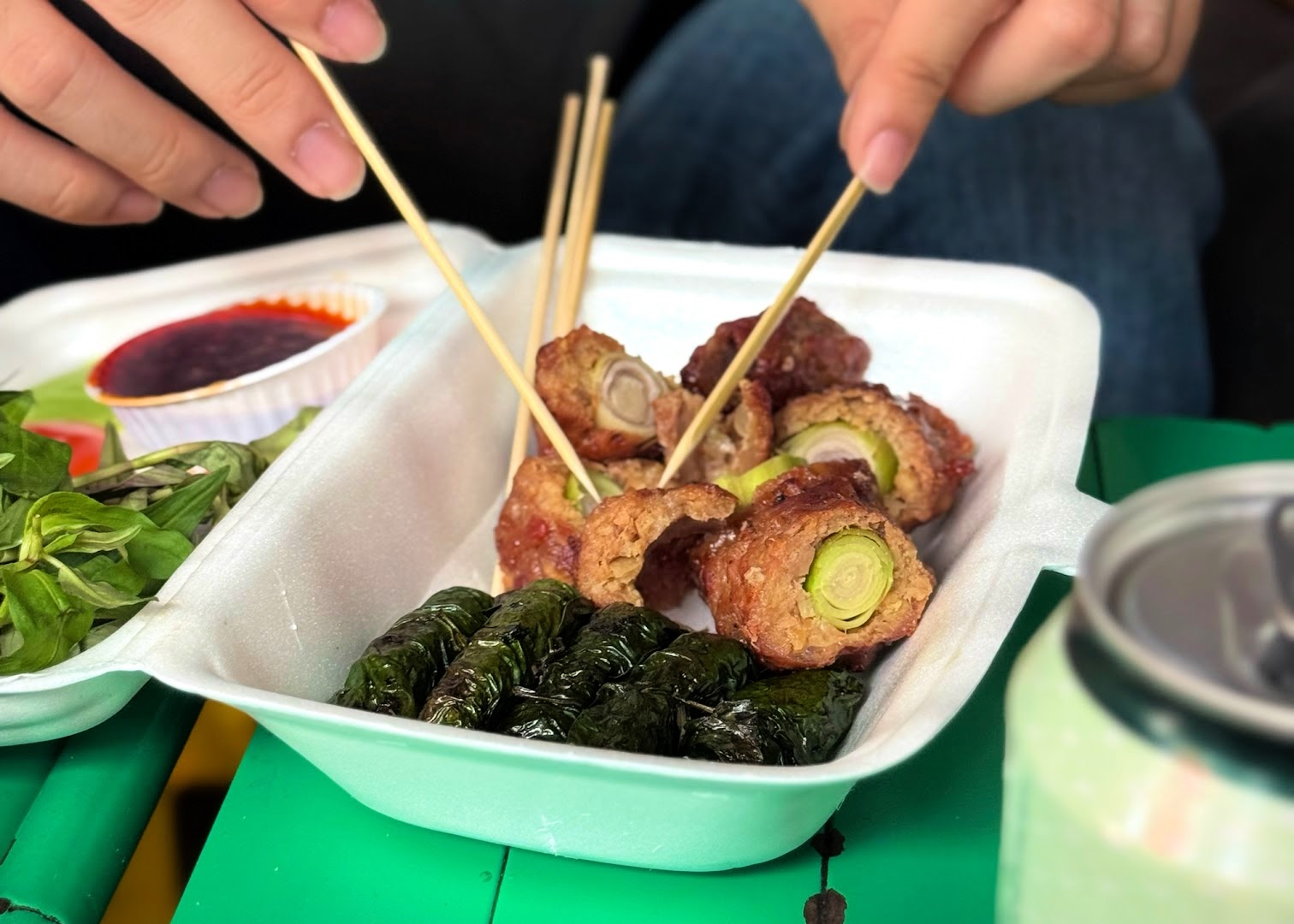
Over the three-hour food tour (AUD $55 per person), we ate crispy Mekong-style Bánh Xèo wrapped in fresh herbs, Bún Bò Huế slow-cooked for eight hours, lemongrass-grilled minced beef prepared using a traditional Khmer recipe, Vietnamese pizza, classic Bánh Mì, grilled bananas with coconut milk and more.
More than the dishes themselves, it gave us confidence. We began to understand the city’s district structure and how neighbourhoods flowed into one another.
That first day, we clocked more than 24,000 steps without realising. One alley led onto another. Apartment stairwells revealed hidden speakeasies. Dinner could appear anywhere.
During our three-night stay in Ho Chi Minh, we also visited the War Remnants Museum – a sobering reminder that Vietnam’s forward momentum sits alongside a complex and visible history.
Can Tho
From Ho Chi Minh City, we arranged a private transfer south to Can Tho in the Mekong Delta, a three-and-a-half-hour journey that was seamless and surprisingly affordable.
The highlight – not just of Can Tho, but arguably of the entire trip – was our sunrise visit to the floating markets. We boarded a small wooden boat in the dark and were on the water as first light broke.
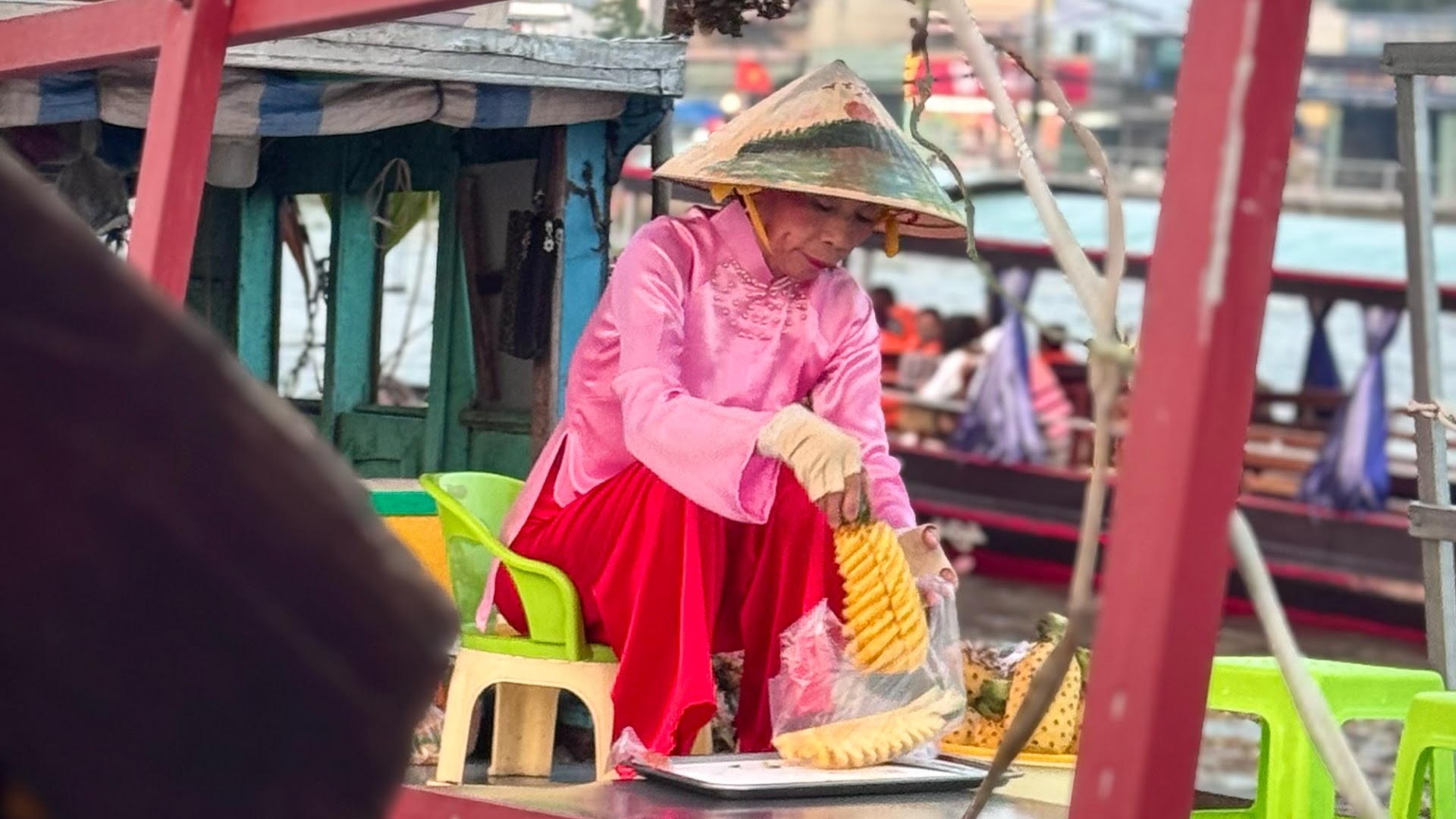
From every direction, other vessels appeared, converging with quiet urgency to trade. Floating vendors pulled alongside offering steaming bowls of beef pho assembled in front of us for around AUD $1.80. There is a haste to the exchange; the vendor waits patiently while you finish and return the bowl. Another boat arrives with Vietnamese iced coffee. Another with whole pineapples, carved into neat spears right before your eyes.
It is communal, efficient and unexpectedly moving.
We visited a floating rice paper workshop and saw the traditional process of making rice paper and noodles. Slightly tourist-forward, yes, but a reminder of the craftsmanship behind dishes we had been devouring all week.
The rest of our time in Can Tho unfolded slowly, much of it spent poolside.
Within days, Vietnam had already shifted gears.
Hoi An
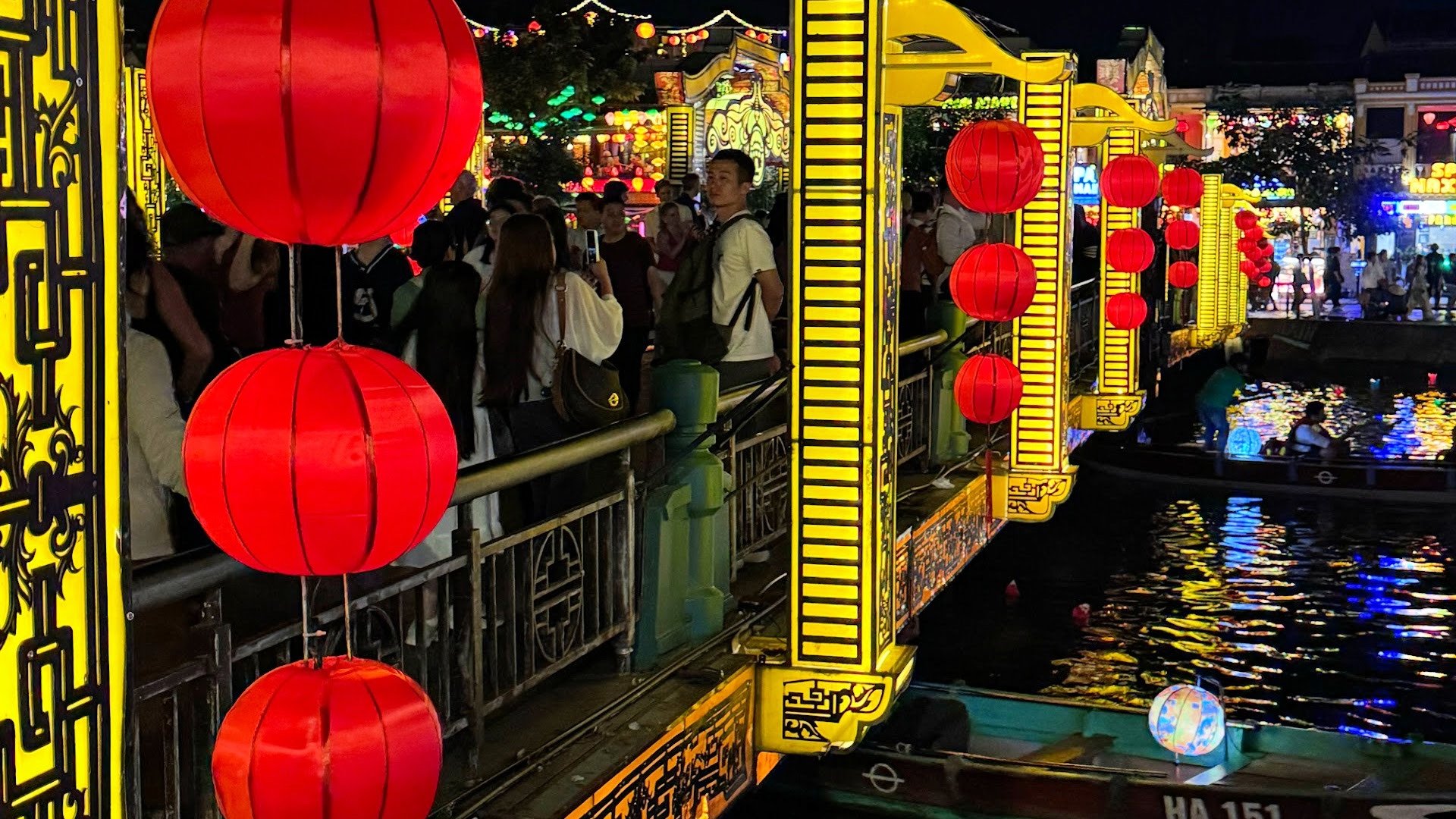
From the Mekong Delta, we flew north to Danang, just over 80 minutes in the air, not unlike the Brisbane to Sydney route we’ve travelled many times. A pre-booked transfer whisked us the 50-minute drive to Hoi An, Vietnam’s lantern city and home to more than 300 tailors promising made-to-measure garments in 24 hours.
The contrast with Can Tho was immediate. Hoi An teems with international visitors, mostly Europeans escaping winter during our February visit. Lanterns glow. Streets hum. Tailors gently compete for attention. And yet, the energy is infectious.
With only four days on the ground, we prioritised finding a tailor early, guided largely by instinct and Google reviews. The process was unexpectedly enjoyable – flipping through design books, trying on samples, selecting fabrics, then standing patiently for meticulous measurements. I opted for tailored business trousers and a replica of my favourite winter jacket, recreated in a more Queensland-friendly material.
Twenty-four hours later, we returned for fittings to find near-complete garments. The quality and precision were impressive enough that we added to our order before departure. Few souvenirs feel as satisfying as something you will genuinely wear.
Another highlight was a contemporary culinary tour recommended by a well-travelled friend. At around AUD $120 per person, it was one of the more premium experiences of the trip, but it delivered access we would never have found independently.
One stop lingered: Long Gia Kitchen, a private home where Vietnam’s first vegan cheese made from soybeans was created. In a shaded garden at our host’s home, we were served a vibrant salad built around the naturally smoked hard cheese produced on site. It was inventive and deeply local.
Hoi An may lean into its postcard reputation, but beneath the lanterns lies real craftsmanship.
Hue
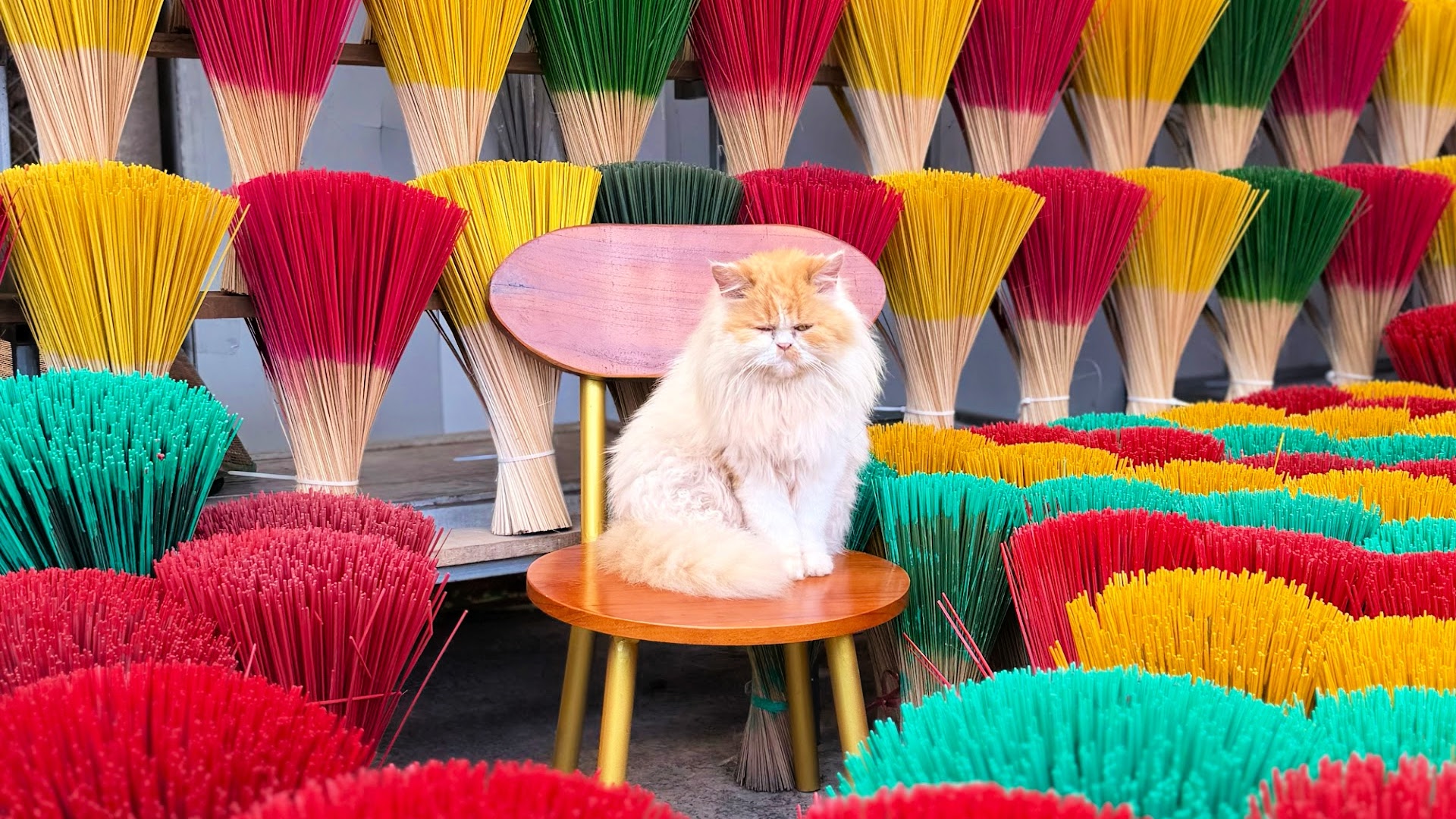
Hue offered stillness.
Once Vietnam’s imperial capital for almost 150 years, it now feels dignified and restrained. We were glad to visit, though in truth our French-Vietnamese garden hotel proved just as much the drawcard – so lush and enveloping that we rarely ventured far.
At the halfway point of our journey, in a country of 100 million people, we welcomed the pause.
Hanoi and Halong Bay
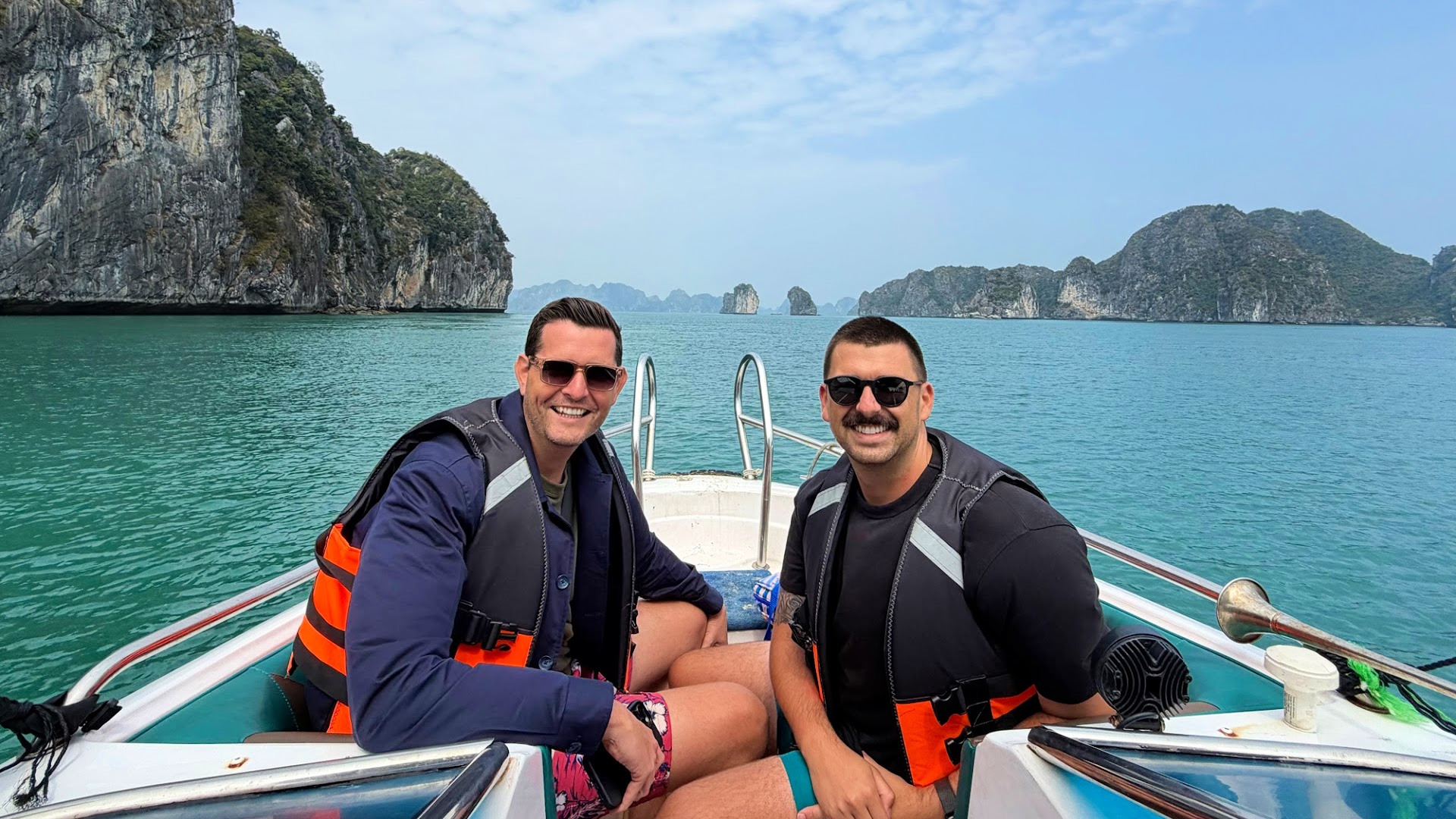
We flew from Hue to Hanoi in just over 80 minutes and arrived on Lunar New Year’s Eve.
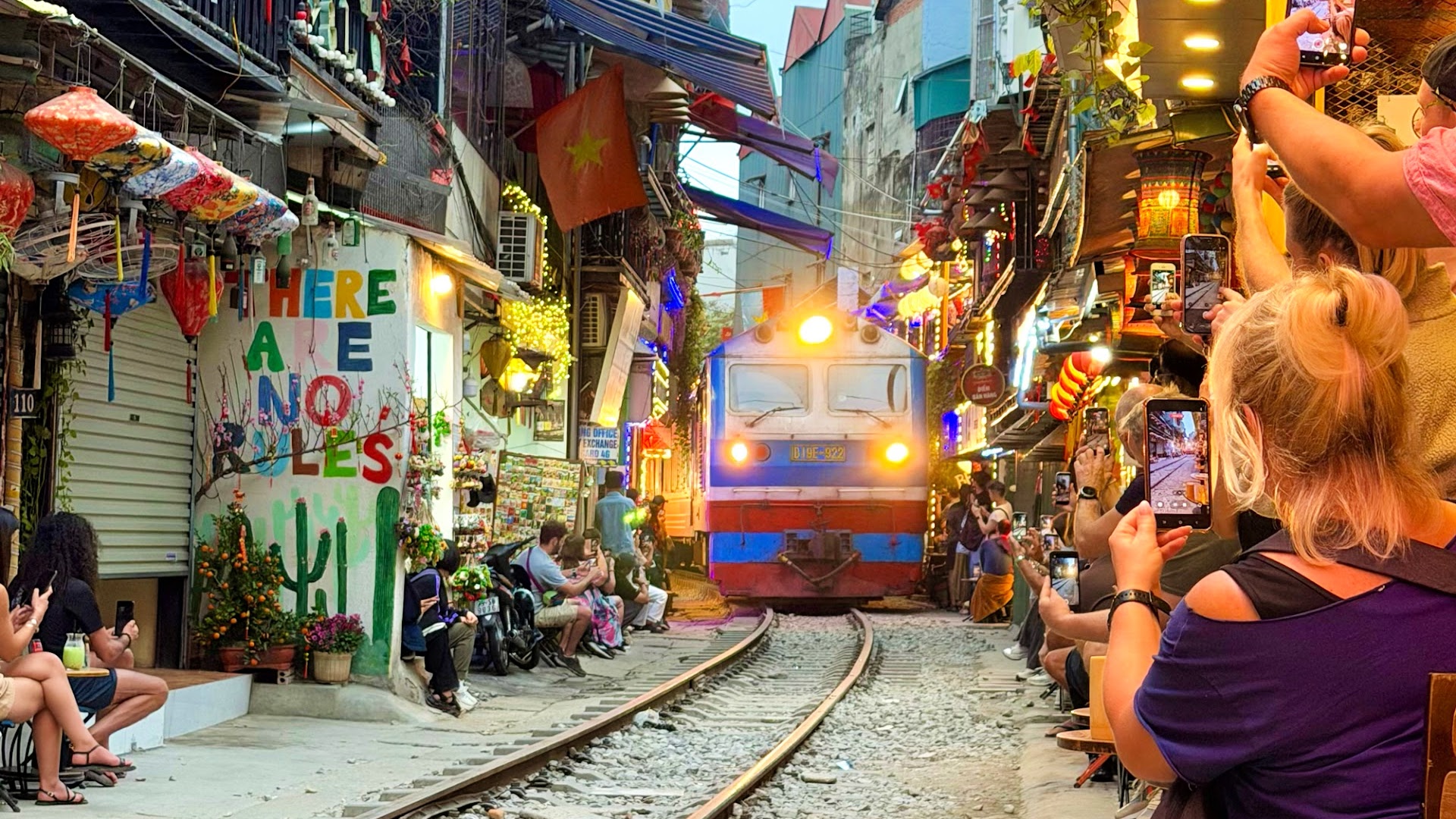
The streets were heaving. A happy coincidence placed our hotel just a five-minute walk from the city’s famous Train Street – an absolute must-see where cafés clear tables with impressive precision moments before a train rattles through.
There was such excitement in the air that we knew we had to be part of the midnight Tet fireworks at Hoan Kiem Lake, positioned between the Old Quarter and the French Quarter. It felt as though hundreds of thousands had gathered. The countdown, the eruption of colour, the collective cheer – it was impossible not to be swept up in it.
And then, the next morning, it was as though a switch had flicked. The usually frenetic capital became eerily still. Shops shuttered, restaurants closed and locals stepped away from work to enjoy time with family.
Given the shutdown, we were grateful to be heading the following day for our two-night Halong Bay cruise.
Believe the Halong Bay hype.
There is something hypnotic about gently sailing through nearly 2,000 towering limestone islands and inlets rising from emerald water. The scenery becomes the only item on the agenda. No photograph does it justice, yet you feel compelled to capture everything.
Our advice? Research the right vessel for your taste and budget. We chose to splurge, spending two nights aboard the newly launched Lyra Grandeur, a 35-cabin all-inclusive luxury liner. It was the perfect finale to an expansive three weeks.
Why 2026 Belongs to Vietnam
The record-breaking January figures are no accident.
What surprised us most was the diversity within one country – from urban intensity and river dawns to imperial history, Michelin-starred restaurants and limestone seascapes – all within easy reach of Australian travellers and without the long-haul price tag.
If 2026 belongs to any one destination, Vietnam makes a compelling case.
Book the flights. The rest has a way of unfolding.





 Proudly Australian owned and operated
Comments 0
Join the conversation. Comments are reviewed before they appear.
Be the first to comment.
Join the conversation
Tell us who you are to post a comment. We'll remember you next time.