
Why Morocco should be on your travel list right now – and why a guided tour is the smartest way to do it


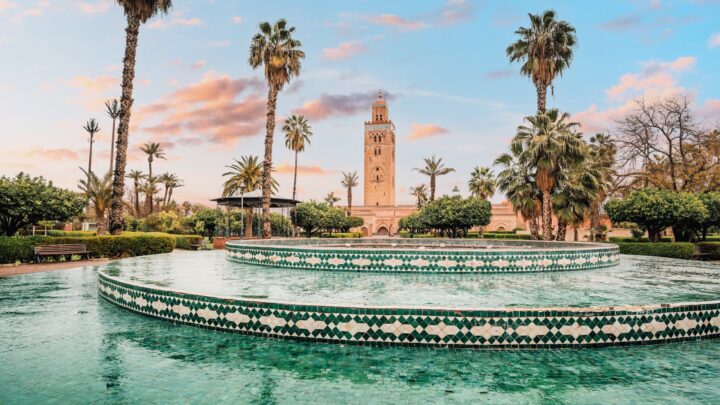
I have a confession to make. Until quite recently, Morocco sat in that category of destinations I described vaguely as “one day” – filed alongside learning to play the piano and reading War and Peace. Interesting in principle. Never quite urgent enough to actually do anything about.
That has changed. And if you have been harbouring a similar vague intention to visit North Africa at some unspecified point in the future, I want to make the case for moving it considerably closer to the front of the queue.
Why Morocco, and why now?
Morocco welcomed over 17.4 million visitors in 2024 – a record year – and arrivals have continued to grow strongly into 2025 and 2026. It is not a destination that is quietly waiting to be discovered. It has been discovered. What it has not yet become, for most Australians over 60, is the obvious choice it probably should be.
The reasons it deserves your attention are practical as much as romantic. Morocco is gaining attention as one of Africa’s most stable travel destinations, and in the 2026 HelloSafe Global Safety Index, Morocco was ranked the 42nd safest country in the world and the safest destination in Africa. The Australian Government’s Smartraveller advice carries no warning against visiting Morocco‘s cities and resorts. The country has dedicated tourist police, professional security forces, and a deeply ingrained culture of hospitality that makes it one of the most visitor-friendly countries in the Mediterranean region.
It is also, and this matters enormously for the over-60 traveller, preparing for something big. Morocco will co-host the 2030 FIFA World Cup, which means infrastructure investment is accelerating – roads, airports, hotels, tourism services. The country you visit in 2026 or 2027 will be better equipped than at any previous point in its history.
What makes Morocco extraordinary
Let me be specific, because “exotic” and “colourful” are words that lazy travel writing applies to anywhere east of Gibraltar.
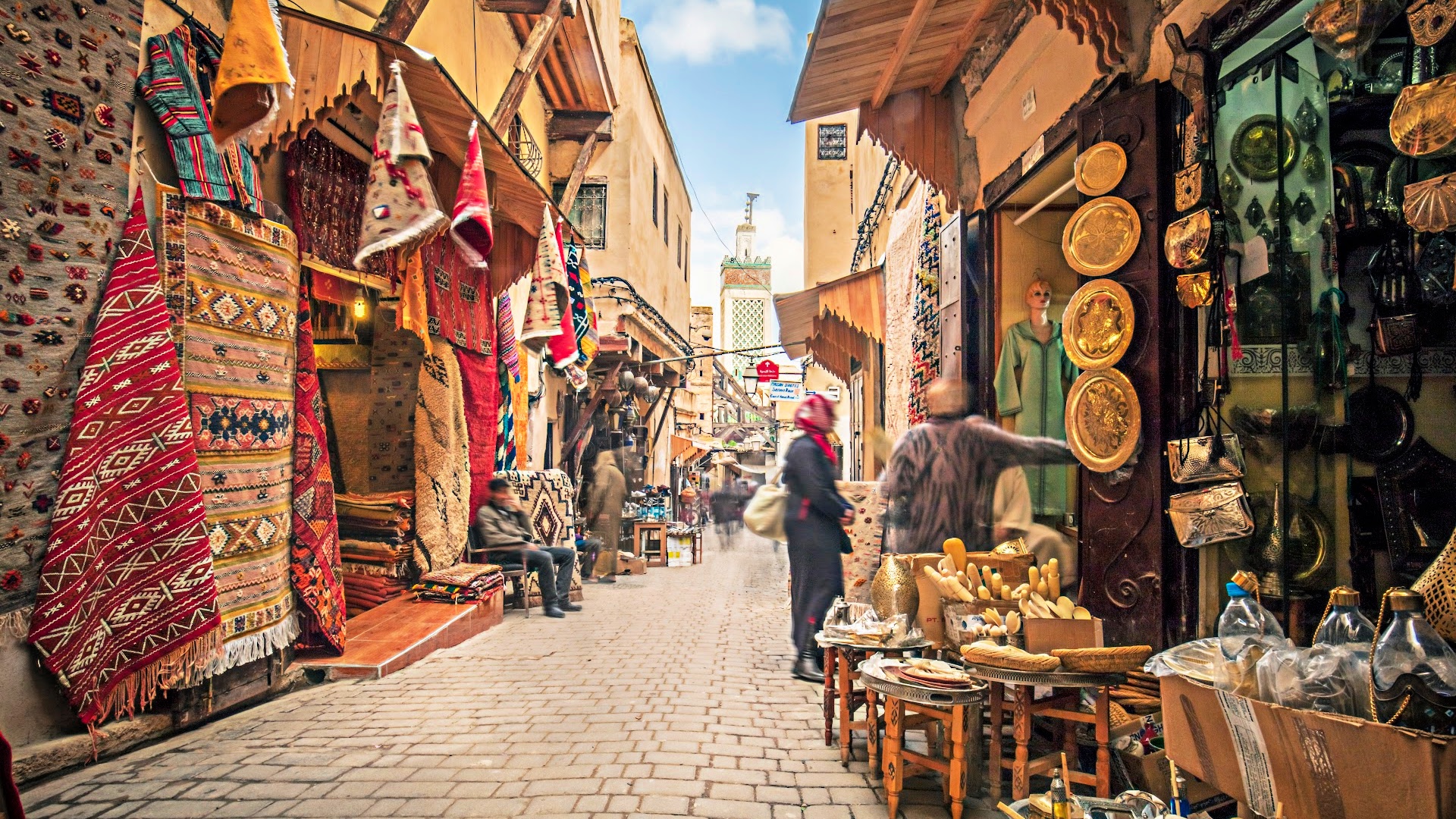
Morocco is the country where you stand in the medieval medina of Fes – one of the largest car-free urban areas in the world – and watch leather being dyed in stone vats that have been in continuous use since the 12th century. The smell is genuinely challenging. The sight is genuinely extraordinary. You are watching a process that has not fundamentally changed in 800 years, performed by craftsmen whose families have been doing this work for generations. That is not a tourist experience. That is a window into something real.
It is the country where you drive south through the High Atlas Mountains on the Tizi-n-Tichka Pass – one of the great mountain roads of the world – and descend into a landscape so dramatic that Hollywood has been using it as a film set for decades. Lawrence of Arabia, Gladiator, Cleopatra – all shot in and around Ouarzazate, which sits in the arid plains below the Atlas and looks exactly like the edge of the known world.
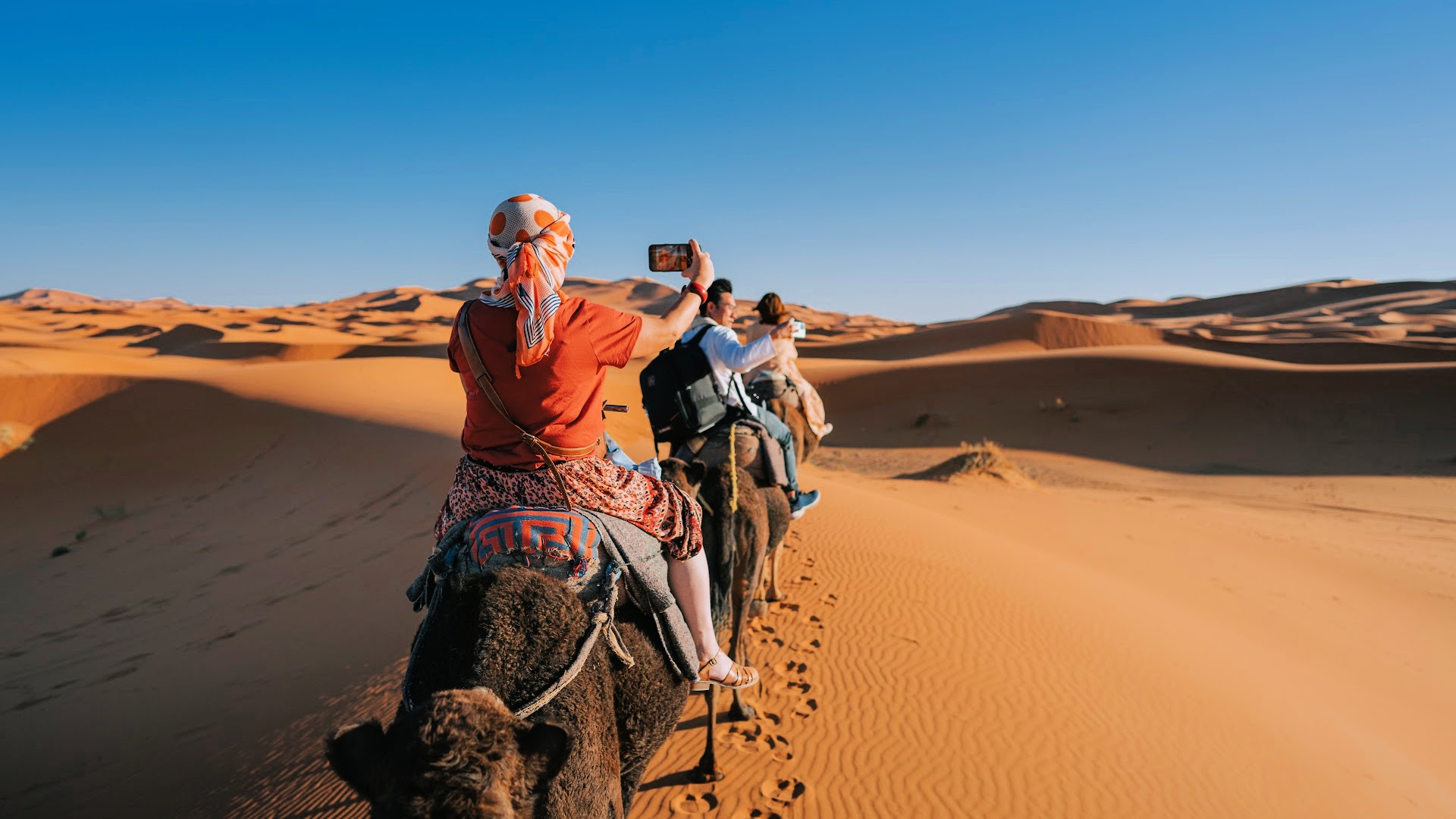
It is the country where you spend a night in an authentic desert camp in the Sahara at Erg Chebbi, watching the sun set over dunes that stretch to the horizon in every direction, eating dinner under stars so dense and so bright that you suddenly understand why the desert has produced so many astronomers, philosophers and mystics over the millennia.
And it is the country where you walk through the Djemaa el Fna in Marrakesh at dusk – the great square that comes alive every evening with food stalls, storytellers, musicians and snake charmers – and experience something that no theme park or curated cultural experience can replicate. It is chaotic, overwhelming, entirely authentic and completely unforgettable.
Why a guided tour makes sense here
I want to be direct about this, because it matters particularly for the 60-plus traveller.
Morocco is not a difficult country to visit. But it is a country where having someone who knows it well makes the difference between a good trip and an extraordinary one. The medinas are genuinely labyrinthine – getting lost in Fes is not a romantic adventure, it is a genuine navigational challenge. The driving between destinations is long and can be demanding. The cultural protocols – around bargaining in souks, tipping, dining etiquette, dress in religious areas – are specific and worth understanding before you encounter them.
A guided tour handles all of this. It means you experience the Todra Gorge, the kasbahs, the Atlas passes and the desert without worrying about logistics. It means you eat in places a tourist walking in off the street would never find. It means you understand what you are looking at, rather than photographing something beautiful and wondering about it later.
The Trafalgar Best of Morocco (booked through Travel at 60)
This is the itinerary that caught my attention, and it covers the country comprehensively without rushing.
Eleven days, ten nights, departing from Casablanca and moving through Rabat, Meknès, Fes, the Sahara Desert at Merzouga, the Dades Valley, Ouarzazate, Marrakesh, Essaouira and the coastal city of El Jadida before returning to Casablanca.
The highlights read like a greatest hits of North Africa. The medieval medina of Fes with a local specialist guide. The dye pits and tanneries that have operated since the Middle Ages. A night in an authentic Sahara desert camp at Erg Chebbi with dinner, music and a sky full of stars. The UNESCO-listed fortified village of Aït Ben Haddou. Marrakesh’s Djemaa el Fna square. The laid-back coastal town of Essaouira. And a Be My Guest dinner in a traditional riad, eating Moroccan specialities with local hosts.
What appeals to me about this particular itinerary is the balance. There is enough structure to feel supported but enough free time to explore independently. The accommodation is well chosen – riads, kasbahs, proper hotels rather than generic chains. The pace is measured rather than rushed, which matters when you are covering this much ground across mountains, desert and coast.
Prices start from $4,123 per person twin share, with departures running from August 2026 through to April 2028. For eleven days of accommodation, an expert travel director, all porterage, restaurant gratuities, hotel tips and must-see sightseeing included, that represents strong value by any measure.
The practical bits worth knowing
The best time to visit Morocco is spring (March to May) and autumn (September to November), when temperatures are warm but not extreme. Summer can be genuinely hot, particularly in the south and the desert. Winter is mild on the coast and cool in the mountains.
The Australian dollar cannot be exchanged in Morocco – you will need to carry euros, US dollars or British pounds and exchange them locally. ATMs are widely available in cities.
Dress modestly, particularly outside the major tourist areas. Respect the culture, arrive a few minutes early for everything and be prepared for the medinas to be louder, more crowded and more exhilarating than anything you have experienced before.
And go. Seriously. Stop saying “one day” and pick a departure date. Morocco is one of those places that people come home from and immediately start telling everyone they know about. There is a reason 17 million people visited last year. There is a reason it keeps drawing people back.
Be one of them.
For full details and to book, visit travelat60.com





 Proudly Australian owned and operated
Comments 2
Join the conversation. Comments are reviewed before they appear.
Lawrence of Arabia was filmed in Jordan
Having been to Morocco just over a week ago I cannot agree with your article. I did not feel safe there and one of our fellow passengers was approached by two men with a knife and asked to handover his goods luckily for him he was into martial arts and able to protect himself. The police were called and he had to spend some time at the police station. He was on a cruise to the boat had to wait for him.
Join the conversation
Tell us who you are to post a comment. We'll remember you next time.