
Why Canberra is wrong on electric cars


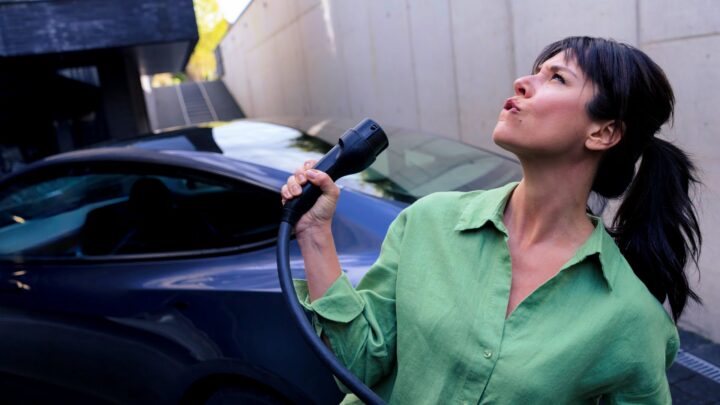
Australians love to talk. We talk about the climate, we talk about innovation, we talk about zero emissions. But when it comes to electric cars? We’re whispering. The Federal Chamber of Automotive Industries (FCAI) has blunt words: “the consumer shift to EVs remains elusive.” Flat at best.
We have policies. Incentives. Big targets. But you drive down any country road, any suburban street outside the capitals, and what do you see? Very few EVs. And almost no charging stations. So I ask: does anyone in power believe Australians will ever live in a country where electric cars are anything more than niche?
ACT: the outlier or the telling mirror?
They say the Australian Capital Territory is ahead. Far ahead. Reports suggest that in ACT, new EV registrations recently hit nearly one in four new cars sold — roughly 23.9 per cent. That figure dwarfs the national average, which hovers closer to 6 per cent of new car sales being EVs.
ACT residents are being given every chance: incentives, good infrastructure, proactive government messaging. It’s easy to buy, easy to charge, easy to feel virtuous. But – and here’s the rub – ACT is tiny. Geographically small. Densely packed. Urban. It’s almost a laboratory, not a roadmap for rural or regional Australia.
Rural Australia: the long slog
Outside of Canberra, in the vast spaces, the far reaches, you might wait a hundred kilometres for a decent charging station. Roads that stretch for hours, towns that pop up like isolated dots on a map, and limited service stations – mostly petrol, almost always petrol. With range anxiety alive and well, who in their right mind buys an EV if the next charger might be in a different postcode?
Yes, the Federal Government has approved $60 million for regional EV charging projects under the Driving the Nation Fund. There are promising plans. But promises are cheap when you have to tow a trailer, feed livestock, or take the kids to school across unsealed roads. The infrastructure isn’t just inconvenient – it’s often non-existent. That’s not adoption, that’s aspiration.
The statistic nobody likes to face
According to the FCAI, EVs accounted for about 4.9% of all new vehicle sales in March 2025, down from 9.5% in March 2024. The trend is not a steady upward climb; it’s jittery, uncertain, sometimes flat.
Some months, we hear of record highs. Others, we see sales dip. Why? Cost. Suitability (many EVs are not utes or tough rural-haul vehicles). Charging. Range. Trust. These things matter when you aren’t just driving to work in the city, but driving to a farm, driving across the Nullarbor, carrying loads, towing boats. The so-called zero emission future seems almost designed around urban luxury, rather than rugged reality.
And try selling a used EV. Buyers are losing a fortune on the value of used vehicles. I’ve seen 12-month old cars that originally cost $60,000 being traded in for as little as a third of the new value price. That’s not comforting.
Charging stations: the promise vs the present
“Build it and they will come,” they say. But it’s more “they talk about building it, but you won’t see it if you live two hours outside a capital.”
Australia’s public charging infrastructure is fragmented. Cities have more chargers; regions and remote areas, much fewer. According to recent reports, the placement is uneven. Rural black spots are real. Grid capacity matters. Permitting issues, cost of installation, ongoing maintenance – all real obstacles. Placing fast chargers every 200 km on major highways doesn’t help much if the local farm roads are unlit, and the power supply is shaky.
ACT is installing more public chargers, aiming for 180 by 2025. That’s laudable. But does that inspire confidence in someone in the Kimberley, or the tablelands of NSW, or lonely strips of SA trying to get a charger every 500 km? For many, the answer is no.
So: Will it ever happen?
Yes – but only if decision makers wake up. Policies must reflect the whole country, not just glossy postcards of Canberra. We need:
Incentives that match realities in rural and regional areas, that acknowledge towing loads, rough roads, distance.
Massive investment in charging infrastructure – not just kerbside in wealthy suburbs, but fast chargers on outback highways and reliable power everywhere.
Affordable EVs that aren’t just city-slick sedans. Utes, 4x4s, utility vehicles that can cope with what Australia demands.
Without those, EVs will always be for the few – the wealthy, the urbanites, those whose commute is 15 minutes and whose charging plug is outside the garage.
My verdict
I want to believe. I want Australia to shift. Climate change demands it. Air pollution, global reputation, future generations – they all demand we do it. But I look around, and I’m angry. Because it’s not happening fast enough. Because the people who decide are too far removed from the people who drive long distances. Because a car is more than a toy. For many, it’s essential. And right now, EVs are possibilities in the cities, optional (if that) everywhere else.
ACT shows it could happen. But just because Canberra gets it doesn’t mean the bush does. And until the infrastructure, the incentives, the vehicles themselves catch up, I fear electric cars will remain a promise, not a reality – and a divide will grow between those with access and those without. And sadly, the people making decisions live in Canberra, and they think the EV revolution is actually happening. It isn’t.
Will they ever take off in Australia? Maybe. But for many of us, the journey to get there is long, bumpy, and lit mostly by tail-pipes. And you can’t charge rage on solar power.





 Proudly Australian owned and operated
Comments 0
Join the conversation. Comments are reviewed before they appear.
Be the first to comment.
Join the conversation
Tell us who you are to post a comment. We'll remember you next time.