
What happened to the school tuckshop?



LESSONS THAT LAST
The tiny Australian institution that fed a generation
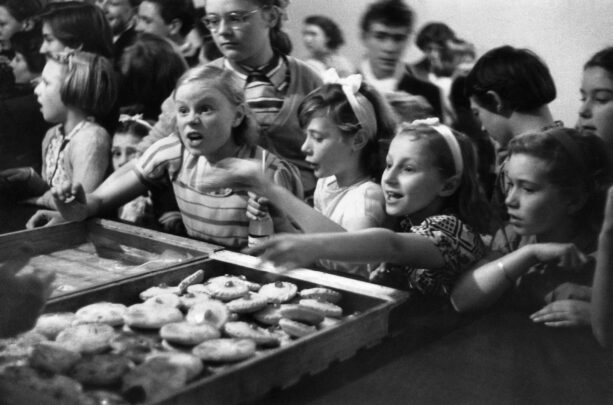
Tuckshop day once felt like winning the lottery.
A few coins wrapped in foil and a handwritten lunch order tucked carefully inside a brown paper bag. Then the smell of hot pies drifting across the playground before lunchtime even arrived. Or that unique smell of devon and tomato sauce sangas as the cling wrap is peeled off.
Then came the serious decisions. Did you eat your meat pie like a normal person? Or were you one of those kids who carefully peeled the pastry lid off first, ate that separately, flooded the exposed meat with tomato sauce and somehow wore half of it down the front of your school uniform before the lunch bell ended?
Australian school tuckshops in years gone by were more than places to buy food. They were social hubs, playground currency exchanges and tiny weekly moments of joy.
They also operated under nutritional standards that would probably trigger an emergency staff meeting today.
Big M diplomacy and Twistie politics
Every school had its food tribes.
There were the pie kids, the sausage roll crowd, the kids who somehow survived exclusively on cream buns and red frogs.
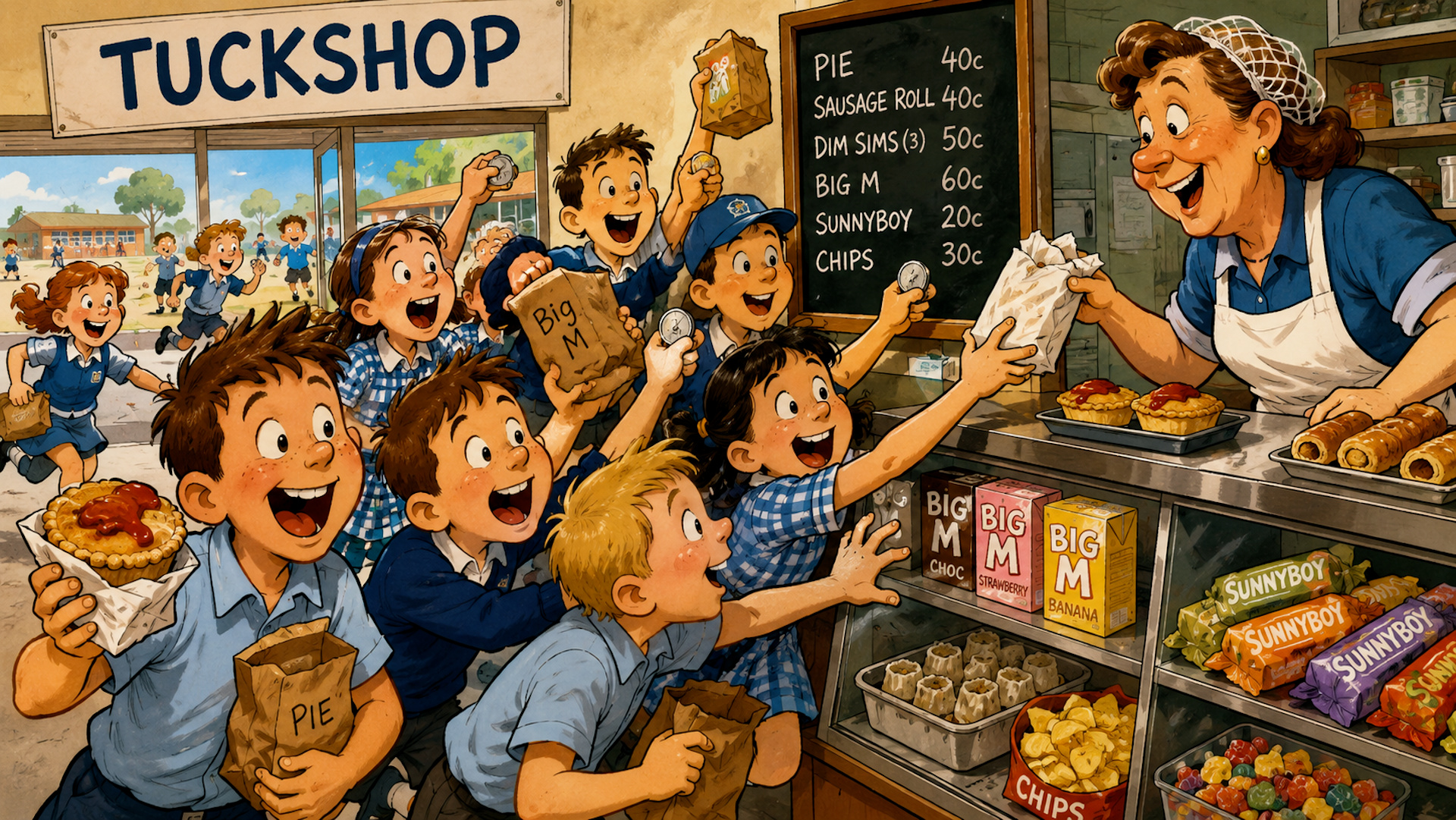
Then come the late 1970s, there were the Big M drinkers. Chocolate, strawberry, iced coffee or banana. Entire lunchtime reputations could rise or fall depending on what flavour appeared in your brown paper bag.
And no Australian schoolyard debate was more divisive than Twisties.
Cheese or chicken?
Friendships nearly collapsed over less.
Some students, like my mate Tristy, stuffed Twisties into buttered bread rolls like miniature orange sandwiches created by people with absolutely no concern for long-term health outcomes.
But to be perfectly honest, they were magnificent!
The unmistakable Dim Sim era
Many of you will still remember steamed Dim Sims arriving at school wrapped in paper so thin it practically dissolved on contact.
Three for 50 cents if you were lucky.
They were hot enough to remove skin from the roof of your mouth and somehow still cold in the middle.
And afterwards came the classroom burping. Silent. Brutal. Inescapable.
Most Australian classroom had them, along with that kid who enjoyed leaning in while sharing a read during class to slowly release a dimmy burp that turned into a toxic air python making its way up the nasal canals.
Teachers pretended not to notice while students tried desperately not to laugh. Some poor child near the windows usually got blamed regardless of guilt.

Before kale conquered the canteen
School tuckshops reflected Australia itself at the time… practical, cheap, slightly chaotic and not overly concerned about preservatives.
Sunnyboys nearly dislocated jaws as children sucked the final frozen syrup from cardboard triangles. Sausage rolls leaked grease through paper bags. Tomato sauce arrived in tiny packets specifically engineered to explode onto shirts.
And somehow, everybody survived.
Volunteer mums often ran the tuckshop with military efficiency. Orders were shouted across kitchens. Coins clattered onto counters. Sandwiches appeared at remarkable speed despite half the volunteers seemingly operating on instinct and weak instant coffee.
Looking back now, the tuckshop was often less about the food and more about the ritual.
The anticipation.
The freedom of choosing your own lunch and the excitement of finally reaching the counter before the best food sold out.
The tiny social dramas unfolding around who had money, who forgot their lunch and who was willing to trade half a cream bun for a packet of chips.
Check out The Schoolyard Australia Left Behind.
More than just lunch
Like many parts of Australian school life, the tuckshop carried a strange sense of community.
Long before food delivery apps and cashless payments, school canteens brought children together in one noisy lunchtime ritual shared across generations.
Today’s school menus are undoubtedly healthier: nut-free, allergy-aware, organic labels, and considerably more sophisticated… certainly no chocolate buds or Wagon Wheels in sight!
But many Australians over 60 still remember the old tuckshop with enormous affection because it represented something larger than food.
It represented childhood, and perhaps that explains why so many people can still remember exactly what they ordered decades later.
Your turn
What do you remember about school that would surprise Australian children today? A one-teacher classroom? Ink wells? A cane? A tuckshop treat that cost a few cents? Head on over to our Facebook page, we’d love to hear your memories.
This article is part of ‘Lessons That Last’, a new Starts At 60 series exploring the memories, traditions and school experiences that shape Australians across generations, presented in partnership with Schoolblazer Limited, a specialist school uniform company that works with hundreds of schools internationally. Through Lessons That Last, Starts At 60 is exploring the memories and experiences of school life across generations of Australians.





 Proudly Australian owned and operated
Comments 0
Join the conversation. Comments are reviewed before they appear.
Be the first to comment.
Join the conversation
Tell us who you are to post a comment. We'll remember you next time.