


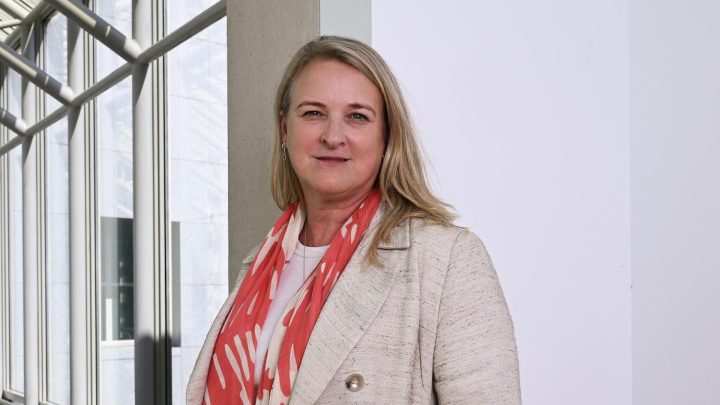
The personal safety of women in prominent roles in Australia is being questioned following the alleged attack on a federal politician.
Independent MP Helen Haines remains in a critical but stable condition after being struck by a vehicle on Monday and losing both legs in hospital.
Brendan Nugent faces multiple charges after allegedly deliberately striking her with his four-wheel drive outside her Victorian electoral office.
The incident has sent shockwaves through the nation, sparking parliamentarians and community leaders, particularly women, to share their experiences of threats of violence.
Former independent MP Kylea Tink made history as the first woman to hold the electorate of North Sydney.
But in putting her hand up for office, she was subject to a flood of hostility.
“The most shocking element of that experience was the amount of vitriol and hate and the physical and death threats directed not only at myself but also at my children,” Ms Tink told AAP.
Some threats took aim at her decision to stand for office, while others were more direct.
“I literally received a threat that said, ‘We know where you live, we know where you come and go, we’re going to grab you, rape you, stab you, and set you on fire,” she said.
“And that sort of level of threat makes your heart go into your throat.”
Ms Tink said politicians were encouraged not to talk about threats in public in case it inspired further hostility and there was no way to report it other than through the Australian Federal Police.
She left politics in 2025 when her seat was abolished but still receives threats online.
“I think there are actually people that are still watching me, kind of going, ‘Is she coming back? We don’t want her to. We will do everything we can to stop her from deciding to run again’.'”
For Ms Tink, who now leads Foodbank Australia, the targeted threats have led to her increasing her personal security.
“It seems to be that there is a sense of fair game in terms of trying to direct intimidatory remarks towards a woman in that position of power,” she said.
It’s a sentiment echoed by former ACTU secretary Sally McManus, who stepped down in August.
“Over the 20 years I was in a public leadership position I had to call the police four times for death and rape threats,” Ms McManus told AAP.
“I had constant abuse online, which is still visible for anyone to see. Abusive and threatening phone calls. I had to change my routine and moved where I was living.
“This is because I was a woman in public life.”
Ms McManus said most of the targeted threats were fuelled by men in leadership with influence, such as media identities, politicians and “unfortunately a small number of male union leaders”.
While reports of death threats were rarer in the corporate sector, women faced hostile environments, according to the latest Chief Executive Women Census released days before Dr Haine’s alleged attack.
It found more women in leadership roles were experiencing increasing hostility and backlash against a global backdrop of heightened misogynistic rhetoric.
“The consequences … are that it will mean that women are less likely to want to pursue careers that might lead them to have a public profile,” Chief Executive Women head Lisa Annese told AAP.
She said corporate life and politics should reflect the diversity of the community.
“That is good for the organisation, but leadership affects much more than just the individuals who are personally realising their career aspirations … there’s this ripple effect around people that affects how organisations are shaped.
“This is not a fringe issue. This is half the population.”
If you enjoyed reading this feature on the threat to Australia’s prominent women, you might want to read our feature on how mental health is in the spotlight after the attack on Helen Haines.





 Proudly Australian owned and operated
Comments 0
Join the conversation. Comments are reviewed before they appear.
Be the first to comment.
Join the conversation
Tell us who you are to post a comment. We'll remember you next time.