
U2 at 50: The band that came to Australia and never really left us


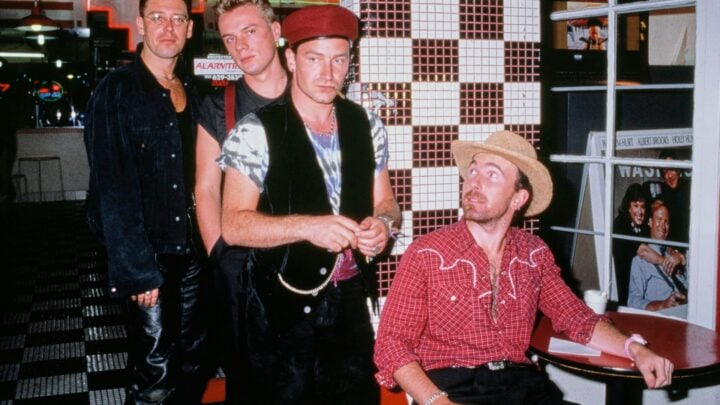
Fifty years after four Dublin teenagers got together in a kitchen, U2 are still making new music. And for Australian fans, the story has been quite a ride.
There are bands you remember.
And then there are bands that become part of the furniture of your life.
U2 are firmly in the second category.
If you were young in Australia in the 1980s, there’s a good chance you discovered them through Sunday Bloody Sunday, New Year’s Day or Pride (In the Name of Love).
If you were a little older, you may have gone all-in with The Joshua Tree.
Then came Achtung Baby, Zooropa, Pop, Beautiful Day, Vertigo and all the rest.
And if you were at a U2 concert in Australia over the past four decades, you’ll know that the band has never been particularly interested in doing things by halves.
Now they’re 50. Well, technically the band is.
The four men who started it – Bono, The Edge, Adam Clayton and Larry Mullen Jr – are still U2.
And that’s remarkable in itself.
The official U2 story begins on September 25, 1976, when 14-year-old Larry Mullen put a notice on the school board at Mount Temple Comprehensive School in Dublin seeking musicians.
A handful of teenagers turned up at his house.
Among them were Paul Hewson, who would become Bono, David Evans, who would become The Edge, and Adam Clayton.
The rest, as they say, is music history.
But for Australian fans, the really interesting part starts eight years later.
They arrived in Australia before they were U2
When U2 first came to Australia in September 1984, they were not the enormous stadium band we would eventually know. They were an ambitious young Irish band with three albums behind them and a growing reputation.
The tour was called Under Australian Skies. And they didn’t exactly sneak into the country and play a few pubs. They went straight into theatres and arenas.
In Sydney alone they played five sold-out shows at the Entertainment Centre, selling about 60,000 tickets – the biggest audience they had yet played to in a single city.
Then came Brisbane.
Melbourne.
Adelaide.
Perth.
Australia was being introduced to U2 while U2 was still figuring out exactly what U2 was going to become.
That first Australian run would turn out to be a rather important moment. The Unforgettable Fire was released after the tour and went to No.1 in Australia. Suddenly, this wasn’t just another promising overseas band. Something was happening. And we were here for the beginning.
Then came … The Joshua Tree
If you want to understand U2’s transformation from big rock band to global phenomenon, you can probably draw a line through one album.
The Joshua Tree.
Released in 1987, it turned U2 into something much bigger than a successful rock band. There were songs about America, politics, religion, desire and disillusionment.
There was Where the Streets Have No Name.
I Still Haven’t Found What I’m Looking For.
With or Without You.
And Bono had become one of the most recognisable frontmen in the world. Australia was already firmly aboard. But the next tour would take things somewhere else entirely.
Lovetown was U2’s great Australian love affair
In 1989, U2 returned for the Lovetown Tour. This time Australia wasn’t simply another stop on the itinerary. It became a major chapter in the band’s story.
They played an extraordinary run of shows across the country, including multiple nights in Sydney, Melbourne, Brisbane, Adelaide and Perth.
There was also that famous Sydney Harbour performance.
And filmmaker Richard Lowenstein followed the band for the documentary U2 Lovetown, capturing a band that had reached the absolute peak of its fame while simultaneously wondering where it could go next.
It is difficult to imagine now, but this was the moment when U2 were beginning to realise they couldn’t simply make another Joshua Tree. They needed to change. And change they did.
Hello, Achtung Baby
Then came Berlin.
Then came Achtung Baby.
Then came Zoo TV.
If The Joshua Tree made U2 huge, Achtung Baby proved they weren’t going to sit comfortably on the throne. They reinvented themselves. The earnest Irish rockers became ironic, playful, electronic, glamorous and occasionally ridiculous.
Bono became The Fly.
There were giant TV screens, satellite links, Trabants and enough visual stimulation to make your average rock concert look like a school assembly. And Australia got the full Zoo TV experience in 1993.
They played the Melbourne Cricket Ground, Football Park in Adelaide and multiple nights in Sydney.
For anyone who was there, it was a reminder that U2 didn’t just want to play songs. They wanted to put on a show.
And then they went completely bonkers
If Zoo TV was ambitious, PopMart was U2 looking at the rule book and deciding to set fire to it. nA giant golden arch. A giant lemon. A giant video screen. And a giant shopping trolley aesthetic.
Australia got the PopMart circus in 1998, including shows in Perth, Melbourne, Brisbane and Sydney.
By then, U2 were no longer merely one of the biggest bands in the world.
They were one of the world’s great rock institutions.
And there was something particularly Australian about the relationship.
We didn’t just listen to U2. We went to see them. Again and again.
The stadium years
The 2000s brought another phase.
All That You Can’t Leave Behind arrived in 2000, bringing with it Beautiful Day, Stuck in a Moment You Can’t Get Out Of and Walk On.
The band had reinvented itself again.
And Australia responded.
The Vertigo Tour came here in 2006. Then came the extraordinary 360° Tour in 2010. The Claw – that enormous circular stage structure – became one of the great pieces of concert architecture.
In Australia, the tour sold out shows and added second performances in Melbourne, Brisbane and Sydney after overwhelming demand.
The numbers were enormous.
More than 100,000 people attended the two Melbourne shows.
More than 85,000 went to the two Brisbane shows.
More than 107,000 attended the two Sydney performances.
And Perth drew more than 108,000 across two nights.
This wasn’t a cult band any more. This was mass entertainment on a gigantic scale.
But U2 never quite stopped being U2
There has always been a strange tension at the heart of the band. They are a massive rock act. But they’ve never been entirely comfortable behaving like one.
They’ve experimented.
They’ve preached.
They’ve annoyed people.
They’ve made spectacularly expensive shows.
They’ve made beautiful records.
They’ve made records that divided their audience.
They’ve talked about politics, religion, poverty, war, human rights and global responsibility.
And sometimes Bono has said more than people wanted to hear.
But the band has always been interested in the world outside the rehearsal room.
That has been part of the U2 package from the beginning.
The return to Australia in 2019
By 2019, U2 were no longer young men. But the appetite was still there. The Joshua Tree Tour 2019 finally brought the famous 1987 album to Australian audiences as a complete live experience.
It was their first Australian performance of that particular tour.
They opened the Australian leg at Brisbane’s Suncorp Stadium before travelling to Melbourne, Adelaide, Sydney and Perth.
I remember watching footage from that Brisbane opening night and thinking there was something almost comforting about it.
The technology was enormous.
The screen was enormous.
The stadium was enormous.
But when Bono, The Edge, Adam Clayton and Larry Mullen stood together and played those songs, the machinery fell away.
The songs were still there.
And that’s probably U2’s greatest trick.
Australia has never stopped buying the records
There’s another measure of the relationship that doesn’t involve a stadium.
The charts.
U2 have had 11 No.1 albums in Australia, the most of any group in ARIA chart history.
Their Australian No.1 albums include The Unforgettable Fire, Rattle and Hum, Achtung Baby, Pop, All That You Can’t Leave Behind, How to Dismantle an Atomic Bomb and No Line on the Horizon, among others.
ARIA noted in 2019 that U2 had also accumulated 23 Top 10 singles, 16 Top 10 albums and 24 weeks at No.1 on the Australian albums chart.
That’s an extraordinary run.
Particularly when you remember that this isn’t a band formed in London or Los Angeles.
They came from Dublin.
They arrived here in 1984 as young men.
And Australian audiences have essentially grown old with them.
So where are U2 now?
Here’s the really interesting bit.
You might have assumed that, after five decades, U2 would be quietly looking back.
You’d be wrong.
On September 24, 2026 – almost exactly 50 years after that first gathering in Larry Mullen’s kitchen – U2 announced a new album.
It’s called Carnaval De Luz.
It will be released on November 13, 2026.
And it will be their 16th studio album and first collection of new material in nine years.
There is a lovely symmetry to that.
The band that began with a teenager putting a handwritten notice on a school board is celebrating its 50th anniversary by releasing another album.
Not a farewell album.
Not a greatest hits collection.
A new album.
The record includes collaborations with Brian Eno, Daniel Lanois and Martin Garrix, while the closing track, Torn, features Dolly Parton in what has sadly become her final recorded vocal performance.
And, because this is U2, even the description sounds suitably grand.
Bono talks about loud guitars, deep bass, ecstatic rhythms and making the songs shine in dark times.
The Edge calls it a “messy, provocative, sacred collection”.
That sounds about right.
Will they come back to Australia?
Now there’s the question.
As things stand, there are no Australian U2 concerts announced.
In fact, there are currently no upcoming U2 shows listed by Live Nation.
But if history has taught Australian U2 fans anything, it is this:
Never assume they’re finished.
Their official tour history stretches from 1980 through the 2023–24 Sphere shows in Las Vegas.
And the Australian relationship has survived everything from the earnest young band of 1984 to Bono’s giant sunglasses, the Zoo TV madness, the PopMart lemon, the Claw and the Joshua Tree nostalgia trip.
We’ve been there for all of it.
Fifty years on
There’s something wonderfully unlikely about U2’s story. Four teenagers meet in a Dublin kitchen.
One of them puts an ad on a school noticeboard. They form a band.
They survive the usual arguments, fashions, musical revolutions and mid-career crises. They become one of the biggest bands on the planet.
And 50 years later, the same four men are still making records together.
For Australians, the story has an extra chapter. We saw them when they were young. We watched them become stars. We watched them reinvent themselves. We filled stadiums with them. We bought their albums. We argued about their albums. We complained about Bono. Then we went and bought tickets to see them again.
And that’s probably the simplest explanation of U2’s extraordinary longevity.
The songs mattered.
The spectacle mattered.
The politics mattered.
But ultimately, the relationship was about something much simpler.
U2 kept giving us a soundtrack to our lives.
And for those of us who discovered them in the 1980s, it’s now a soundtrack that has lasted half a century.
Not bad for four kids who started out in a kitchen.





 Proudly Australian owned and operated
Comments 0
Join the conversation. Comments are reviewed before they appear.
Be the first to comment.
Join the conversation
Tell us who you are to post a comment. We'll remember you next time.