
Suzi Quatro: Still home on stage, still chasing freedom


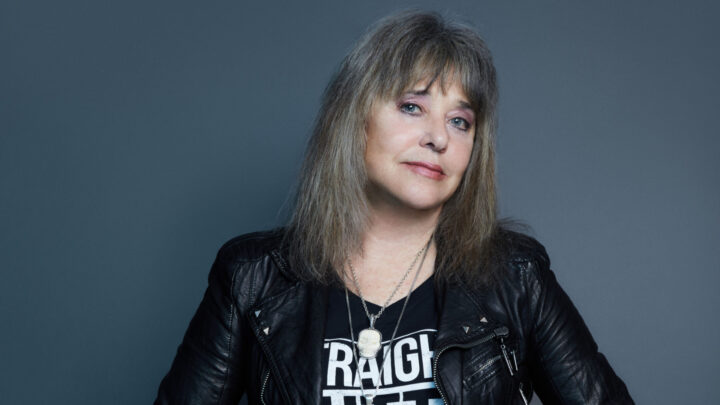
The BIG Sunday interview, with Matt Lennon
At 75, Suzi Quatro isn’t slowing down – she’s doubling down.
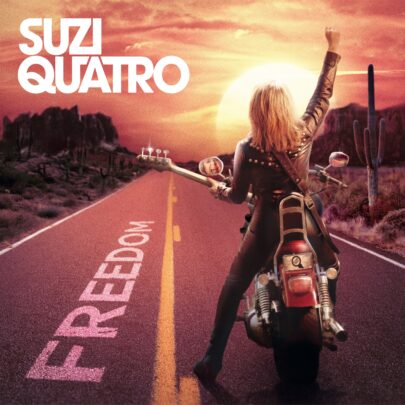
The self-declared Queen of Rock is marking the release of her latest album Freedom, released worldwide today, with the same ferocity that launched her five decades ago. The new record, produced with her son L.R. Tuckey and mastered at Abbey Road, strips her sound back to its rawest elements – guitar, bass, drums – and, by her own account, strips her back to herself.
“It’s all about getting back to who you are,” Quatro told Starts at 60.
“We all wear masks to get by in this world. For me, it’s all about being comfortable in your own skin, having nothing to prove to anyone, and not accepting any BS. Here I am, warts and all. Take it or leave it. Choose yourself…and finally Freedom.”
It’s a fitting manifesto for an artist who has never quite fit the mould, and never tried to.
With over 55 million records sold, a catalogue that spans era-defining hits like Can The Can and Devil Gate Drive, and a career that stretches across music, television and theatre, Quatro’s story is one of instinct, resilience, and perhaps most importantly, unconscious revolution. Because, as she insists, she never set out to break barriers. She simply followed the only path she ever recognised as her own.
Detroit beginnings: “This is my calling”
Long before the leather jumpsuit, the chart-topping singles, and the global acclaim, there was a young girl in Detroit – one of five children in a household where music wasn’t just encouraged, it was expected.
“My dad was a musician. Five children, four girls, one boy. I grew up watching him play various gigs,” Quatro recalls.
“It could be with a trio. It could be an orchestra. He plays keyboards [and] he was a child prodigy on the violin.”
Music, in the Quatro household, was a language, and all five children were fluent by an early age.
“All five of us kids, we play minimum three instruments each, so we all have been musically trained.”
Her own journey began early – and loudly
“My first instrument was bongo drums,” Quatro said to some surprise.
“At seven, I got really good on it really quick and [Dad] used to take me to his gigs and let me sit in front of his trio and play a couple of songs.”
From there came percussion, then classical piano, and eventually the instrument that would become synonymous with her identity.
“Then I taught myself bass. It’s my main instrument.”
That sense of inevitability – of music not as a choice but as destiny – was cemented when she first stepped onto a stage as a teenager.
“The first gig that I did when I was 14 with the band. I stood on stage with my bass guitar and I looked down at the audience. I said to myself, I’m home.”
She pauses, then repeats it, as if the moment still lives inside her.
“I’m home.”
Detroit, Motown, and finding her own sound
Growing up in Detroit meant being surrounded by the gravitational pull of Motown emanating from one corner of the city. But Quatro’s musical identity formed in the tension between worlds.
“Motown was one part of Detroit. And then you had your white rock and roll bands,” she explains. “We all were influenced by Motown.”
That influence seeped into her playing style – particularly her bass work and vocal arrangements.
“I took a lot of my bass style from JJ [Barnes]. And I took my love of backing vocals from the 60s Motown Records.”
Yet even in a city teeming with musical talent, Quatro carved out something distinct – something that didn’t yet have a name, let alone a blueprint.
When producer Mickey Most spotted her performing, he didn’t see a band member. He saw a star.
“He watched the band, and he picked me out as the sun,” she says, laughing at the obviousness of it. “He said, come here. I’m going to take you…”
Two offers came in the same week: one from Elektra Records, proposing to mould her into the next Janis Joplin; the other from Most, offering something radically different.
“Mickey Most said: ‘I’ll take you to England and make you into the first Suzi Quatro.”
Her choice was immediate and defining.
Breaking barriers without noticing them
It’s tempting, in retrospect, to cast Quatro as a trailblazer who consciously dismantled the male-dominated rock scene. But she resists that narrative – at least as it applies to her mindset at the time.
“There was nobody, I didn’t have a role,” she says challengingly. “Name me somebody who was playing an instrument in a rock band. Name me somebody.” The absence of precedent didn’t intimidate her; it simply didn’t occur to her.
“I did not realise what I was doing. It’s who I am. How could I feel any different?”
Raised in an environment where gender wasn’t a barrier, she entered the industry with the same assumption.
It wasn’t until decades later – watching her own documentary premiere in London – that the magnitude of her impact truly landed.
“I saw these women… Debbie Harry, Chrissie Hynde, Joan Jett… and they all at different points in the film, they all said… they couldn’t have done what they did had Suzie Quatro not done it first.”
She pauses, remembering the moment.
“At the age of 69… that’s the first time the penny dropped. I was crying [to realise] that I had indeed kicked the door.”
Now, she accepts the legacy.
“Now at 75, I accept that accolade, and I’ll take it. I’m proud of it now. I’ll take it to my grave. But I can’t pretend I knew I was doing it.”
Leather, image, and instinct
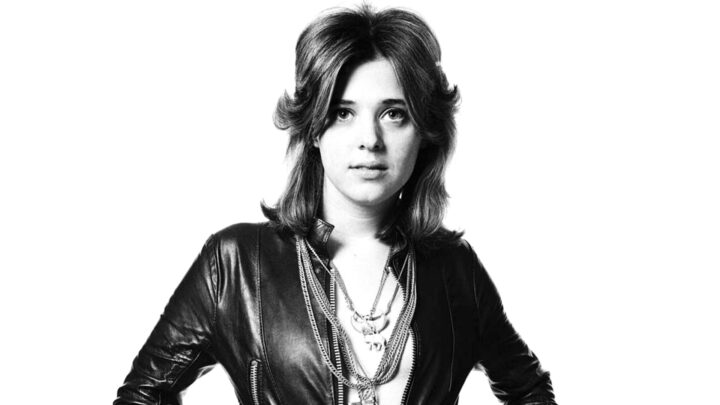
Few images in rock are as iconic as Quatro in her black leather jumpsuit. It’s a look that became shorthand for her tough, no-nonsense persona. But like much of her career, it wasn’t a calculated branding exercise.
“I was always a tomboy,” she says. “I got my first leather jacket, and when the time came, Mickey Most asked me what I wanted to wear, and I said leather.”
The jumpsuit itself was a practical suggestion and one she accepted with characteristic directness.
“He said ‘how about a jumpsuit?’”
It was only later, seeing photographs, that she grasped the visual impact.

“I didn’t realise it until I saw the photo, and then I went ‘yeah’, I got it.”
What made it work, she insists, was authenticity.
“You can see I’m not trying to be manufactured. It’s my natural way.”
America, fame, and Leather Tuscadero
By the mid-1970s, Quatro was already a major star in the UK and Europe. But in the United States, recognition came through an unexpected avenue: television. Being sought out especially for a role as Leather Tuscadero on Happy Days introduced her to a new audience, but it did also risk redefining her identity.
“I got the part, did three seasons,” she recalls. “It’s the only country in the world that happened in.”
The experience was transformative, but she approached it with humility.
“This is a new job for me. I have not acted before,” she told confidants at the time.
“I won’t pretend I have, so whatever help you can give me, I’d be grateful for it.”
Her honesty won over the cast, including Ron Howard and Henry Winkler.
“It was never like I was new to the show,” she says. Yet she made a decisive choice to step away before the role overshadowed her music.
“I thought it started to take over a little bit, and I didn’t want that to happen. I’m not Leather. That’s a character I’m playing.”
It was a move that preserved her artistic autonomy – something she has guarded fiercely throughout her career.
Longevity and staying real
In an industry defined by reinvention, Quatro’s secret to longevity is deceptively simple.
“I always say I keep my feet on the ground. I like to think that I’m still around because I’m real.”
That authenticity extends to her music, her performances, and her relationship with audiences.
“Never take an audience for granted,” she advises. “Always be self-critical. Be patient and always be professional.”

Her shows today reflect the breadth of her appeal – spanning generations.
“Now at my shows, the first four or five rows are full of screaming girls. But behind them, I can see their parents and behind their parents, I can see their grandparents.” It’s a living testament to the enduring power of her catalogue.
Family, legacy, and Freedom
If Quatro’s career began as a family affair, it has come full circle with Freedom. Her latest album marks her third collaboration with her son L.R. Tuckey – a partnership that has reshaped her recent work.
“My son took me back on this album,” she says. “He said Mom, on Freedom, we are going to go back to your first album.”
The approach was deliberate: strip everything back, rediscover the core.
“So we stripped everything. It’s old fashioned. Mainly guitar, bass, and drums.”
The result, she says, feels both nostalgic and immediate.
“Everybody’s been saying ‘oh my God, it’s like the original Suzi’, although it doesn’t sound retro…it sounds today.”
The album also includes a standout collaboration with fellow Detroit icon Alice Cooper – a duet on the classic Kick Out The Jams. It’s a nod to her roots, and to the city that shaped her.
“I love Detroit. Detroit is my heart and soul.”
Still moving, still proving nothing
For an artist with nothing left to prove, Quatro remains driven by the same impulse that first drew her to the stage.
“I’m home,” she says again, echoing the words of her 14-year-old self.
That sense of belonging has never faded. If anything, it has deepened. Her philosophy now is as much about self-acceptance as it is about performance. And perhaps most tellingly:
“If you’re a nice person and an honest person… you will have the same kind of people around you… I like to think that you get back what you give,” Quatro reflects.
The final word
As she embarks on yet another tour – still shaking stages, still commanding audiences – Quatro offers a line that feels less like bravado and more like a promise.
“I will retire when I go on stage, shake my ass, and there is silence,” she says.
But there is no silence yet. Not even close.
And with Freedom, she isn’t closing the book – she’s writing another chapter. One that sounds, by her own design, like the beginning all over again.
Or, as she might put it: coming back home.





 Proudly Australian owned and operated
Comments 0
Join the conversation. Comments are reviewed before they appear.
Be the first to comment.
Join the conversation
Tell us who you are to post a comment. We'll remember you next time.