


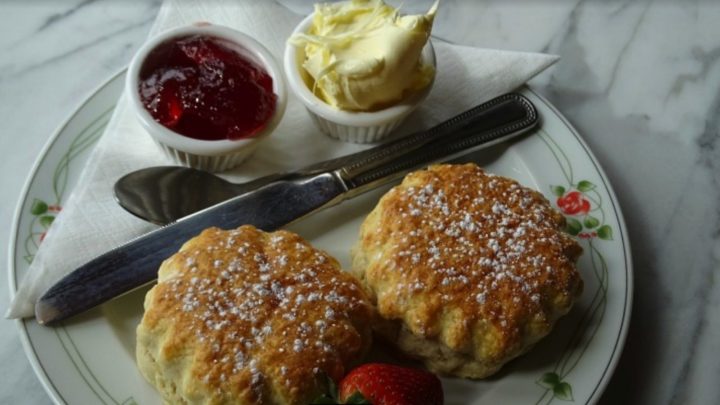
It’s the debate that has divided the world for decades – which is spread on scones first, the jam or the cream? Now, just hours after Starts at 60 readers weighed in on the debate in our own poll, a British study has finally settled the row once and for all.
Over-60s came out in their thousands to answer Starts at 60’s poll, with an incredible 4,600 people saying they’d spread the jam before the cream on their afternoon tea treat. Just 200 people voted the other way, saying the cream should come first.
Now it turns out the majority were spot on, with a survey of 2,000 of British people – the experts in all things afternoon tea – reportedly finding 52 per cent think jam should be spread before cream. While 25 per cent would go the opposite way and do the cream first, 19 per cent said they didn’t mind either way.
People living in Devon traditionally spread clotted cream first, however most other areas usually stick to tradition and go the other way. Meanwhile, according to multiple reports, the survey – by Village Hotel Club – also weighed into another controversial scone debate and found the majority of Brits (56 percent) insist the word “scone” should rhyme with “gone”, while 44 percent said it should be pronounced like “bone”.
Commenting on the debate, one Starts at 60 reader revealed: “If you come from Cornwall it’s jam and then cream on top, if you are from Devon it’s cream on the scone and jam on top! I am a Devonshire lass but always preferred the Cornish way!” While another shared their own memory and added: “When I went to family farm, it was butter, jam and cream. At home We had just jam and cream. At the farm it was all home made.”
Most readers vowed it should be jam first, but many suggested spreading butter on before either, with another person commenting: “Always jam, and lots of it – then cream on top. I actually like butter first as well, if I’m home.” One more reader added: “I’m currently in the UK and I have had it both ways, and they both taste the same. But when home in Australia our cream is different and you can’t really put the cream on first. So it’s jam then cream in Oz.”
It comes over a year after an English charity found itself in a spot of bother after posting a scandalous picture of the tea-time treat online. Lanhydrock National Trust shared a photo of a pretty plate of scones promoting its Mother’s Day afternoon tea, but it was soon inundated with comments from outraged Brits who couldn’t believe they’d used a photo where the cream was put on the scone before the jam.
Local Cornish residents voiced their shock at the idea of cream before jam, but they were soon met with jeering responses from their neighbours in Devon, who traditionally put the jam on last. The ensuing argument was thoroughly British and rather hilarious, with hundreds of people staking their pride with #JamFirst and #CreamFirst hashtags. Eventually, things got so heated the Lanhydrock National Trust released a joking statement apologising for their oversight.
“We’d like to sincerely apologise for any offence caused by a recent scone-shot shown on the page,” they joked. “The member of staff responsible has been reprimanded and marched back over the Tamar. We’d like to reassure our Cornish community that our catering team would never make such a heinous mistake and that our jam and cream are usually served in little pots so the order of their application is not subject to such appalling error. Rest assured, your mothers are safe here.”
They later added to their statement to clarify which side of the debate they were on. “We’d like to let you know our team will be sporting #jamfirst badges tomorrow in support of a proper cream tea. And there’s no truth in the rumour that we’re renaming the property Jamhydrock… #cornwall #lanhydrocknt #sconegate.”
Even after the apology, the debate continued to rage on, hitting a nerve with hordes of people across the UK. Many pointed out that the difference in opinion may be due to where the residents lived. Many argued it was a Cornish custom to put the jam on first, whereas the custom in Devon was cream first.





 Proudly Australian owned and operated