
Reddit Reddit: Eugenia, Mark Tedeschi QC


Available via Booktopia for $16.95
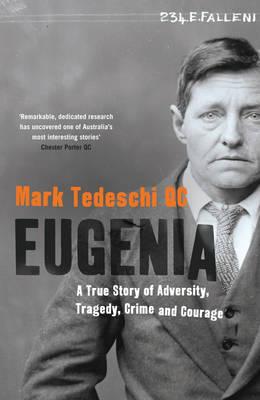 When the police arrest Harry Crawford for the murder of his wife Annie Birkett, they are not totally prepared for what happens next!
Since Annie’s death, Eugenia has remarried and his new wife laughs at the police and their ridiculous story. How can the man she loves, the man she married, be the person described by the police? How can her husband be a woman, when she believes herself to be expecting their baby?
Who is Harry Crawford, a Scotsman from Edinburgh, the Italian seaman, Eugene Falleni or the eldest daughter of Italian immigrants to New Zealand, Eugenia?
The truth, and the tragedy, is that Harry Crawford was born Eugenia Falleni, but at an early age felt more at ease as a man than he did as a woman. Only 5’4” tall, Eugenia is strong nonetheless and more than capable of earning an income as a labourer. As Eugene he signs onto a ship where for the first time his identity is discovered and he is brutally and repeatedly raped, becoming pregnant to his abuser. Dumped in Newcastle, New South Wales in 1898, he gives birth to a daughter and moves to Sydney.
Leaving his daughter with family friends, who know of his double identity, Harry Crawford the hard drinking, hardworking labourer is born. Harry meets and marries Annie Birkett whose badly burned body is found in Lane Cove National Park on the Labour Day weekend in 1917, but it is not until 1920 when her identity is finally discovered that Harry is arrested and Eugenia is revealed.
Mark Tedeschi is a QC and the Chief Crown Prosecutor in New South Wales, so his recounting of Eugenia’s story is evidentiary in style, but is not written without sympathy for its subject. Tedeschi’s way of dividing the book into three sections, gives a very clear view of the different periods of Eugenia’s life. His decision to use the male or female pronouns depending on the timeline of the story is sympathetic, easy to follow and accept. I found no difficulty referring to Eugenia as either he or she in similar manner.
We tend to think of “Trial by Media” as a modern phenomenon; the media trying to get the story first, living by the motto “don’t let facts get in the way of a good story”. But in Harry’s case they not only published his photo in the newspapers, they constantly referred to him as Man/Woman, making the job of witnesses very easy when they were asked to identify him.
Eugenia is fascinating reading and because of Tedeschi’s style there is no hint of voyeurism to the book. He gives us the facts and places the events in the history of the times. He does not endeavour to retry the case, but offers commentary on the differences in what would apply today and what was allowed in Court in 1920, totally accessible to anyone not legally trained.
Asked (on page 313) if he thinks Eugenia was guilty he responds, “My answer is always the same; that is the wrong question. The right question is: Was there sufficient evidence to justify her conviction for murder? ”
Thank you to The Reading Room and Simon & Schuster for inviting me to review Eugenia and to giving me access to Mark Tedeschi via a fascinating online discussion.
Available via Booktopia for $16.95
Reddit rating

About the Author
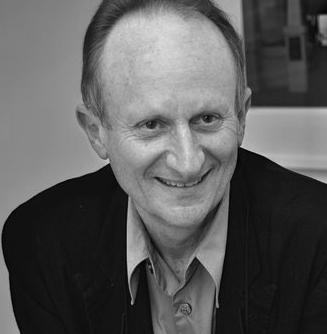 Born in 1952 Mark Tedeschi is an Australian Barrister, Professor, Photographer and Author. As a Barrister and a Crown Prosecutor for thirty five years, Mark Tedeschi QC has appeared in some of the most significant criminal cases in Australia, including the Backpacker Murders committed by Ivan Milat in the 1990s.
He has had many articles published on the law and is the author of a legal text book. He has published many articles on history, genealogy, photography, and horticulture.
He has won numerous awards for his photography and has been featured in galleries throughout the world including in the State Library of New South Wales, the New South Wales Art Gallery, the Centre for Fine Art Photography in Colorado and the National Library in Canberra.
Eugenia is his first book of creative nonfiction.
Available via Booktopia for $16.95





 Proudly Australian owned and operated
Comments 0
Join the conversation. Comments are reviewed before they appear.
Be the first to comment.
Join the conversation
Tell us who you are to post a comment. We'll remember you next time.