
Password Protected: A comedy of characters


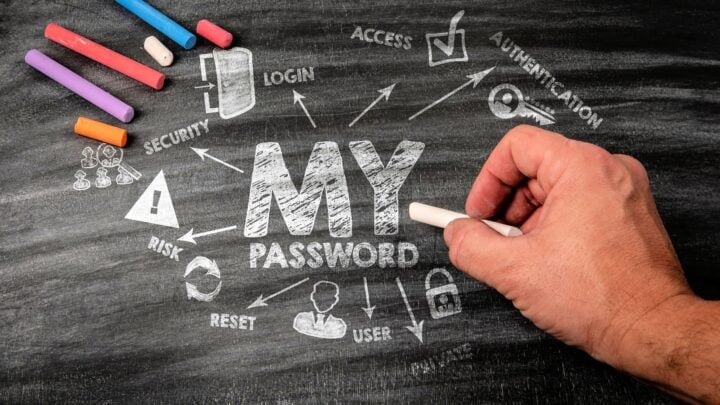
Every time I sit down at my laptop, mug of tea steaming away beside me, ready to do something innocuous like pay a bill or order Nespresso coffee pods, I am confronted with that most absurd of modern riddles: Enter your password.
And not just “enter.” Oh no. Nine times out of ten, the site informs me that my password has “expired” — as though it were a lump of cheddar left at the back of the fridge — and I am compelled to invent another. Cue the now-familiar kabuki dance of uppercase, lowercase, number, symbol, blood type, inside leg measurement and the name of the primary school teacher who taught me long division in 1972.
For people in their 60s — which is to say, my people — this is a particular agony. We are of the password-as-memory-jog generation. We grew up in a time when your most secure secret was the combination lock on your bicycle, and it was always your birthday because you couldn’t be bothered to learn another number. And now we are expected to remember 27 distinct codes that look like WiFi passwords scrawled by a drunken spider?
The methods we employ, in consequence, are charmingly anachronistic, occasionally ingenious, and often wildly dangerous.
Method One: The Nostalgics.
Many opt for the first car. Not just the make, mind you — but the actual number plate. “Sunbird1979!” they’ll type in, convinced that no one on Earth could ever guess it. Except, of course, anyone who’s heard them reminisce for more than three minutes at a dinner party. Or who can trawl their Facebook photos back far enough to see the sepia-toned snapshot of said Holden Sunbird with them grinning like a loon outside the SCG.
Method Two: The Pet People.
Then there’s the dog’s name. Rover. Daisy. Bella. Password123. Combine them and what you get is “Bella123.” Which is about as close to tattooing your PIN on your forehead as you can get. Worse still if the dog is still alive and answering to its name in the local park.
Method Three: The Obvious Romantics.
Wedding anniversaries. Spouses’ names. Grandchildren’s birthdays. You may as well just email the hackers a family Christmas card with everyone’s details laid out in gold script. These options are sweet, yes, but catastrophically unsafe.
The dangerous options are exactly those — the deeply personal ones that someone can guess from your Facebook page, your LinkedIn résumé, or, frankly, by standing next to you in the queue at Bunnings.
The smart options are boring. That’s the trouble. Password managers. Random generators. The sort of gibberish that looks like the result of a cat running across your keyboard: h$9KwT*2q!j. Nobody’s guessing that. But, equally, nobody’s remembering that. Certainly not a 67-year-old with three pairs of glasses scattered across the house and a mind already occupied with whether the bins go out tonight or tomorrow.
Which is why so many in our generation still keep “the little book.” You know the one. The battered address book, usually in a drawer by the phone, in which under “P” for “Passwords” is a list of them all, crossed out, re-written, pages full of little arrows like an archaeological dig. If burglars ever knew how many people store their entire digital life in biro on a bit of stationery, they’d ignore the telly and head straight for the desk drawer.
Younger people, of course, don’t have this problem. They grew up with touchscreens glued to their hands. They use password managers, Face ID, thumbprints, retina scans, things that make me feel like James Bond every time I try them but which they take utterly for granted. Ask a 25-year-old to tell you their Amazon password and they’ll look at you blankly. They’ve never known it. Their phone just knows it for them. Which is why, when they drop said phone down the loo, they are more digitally stranded than Robinson Crusoe.
And the number of passwords we need? Well, studies vary, but the latest estimates put it at about 100 accounts per person. One hundred! That’s bank logins, emails, streaming services, utilities, shopping, government sites, travel bookings, loyalty schemes, the bloody library. Each one with its own evolving password requirements and none of them satisfied by “Sunbrid1979.”
So what are the solutions for us sexagenarians, teetering on the edge of digital irrelevance?
· Use a password manager — the one clever, boring idea.
· Don’t recycle the same password across accounts. (And don’t pretend adding a “1” on the end makes it a different password. Hackers are wise to that.)
· And for heaven’s sake, stop putting them all in a little book labelled “Passwords.” You may as well hide your will under the welcome mat.
But of course, we won’t. We’ll continue to do it our way: the Morris Minor, the Labrador, the first grandchild. We’ll curse under our breath every time we have to reset something. And, once a month, one of us will lock ourselves out of Medicare until our son-in-law comes round to sort it.
It is the tax we pay, I suppose, for living long enough to see the world go digital. Passwords are the price of entry. And while the 20-somethings flit from face-scan to thumbprint with the ease of birds, we plod along behind them, lugging our histories, our nostalgia, and our sticky notes full of scribbles.
In the end, perhaps that’s the most secure system of all. Because if I can’t remember my own passwords, what hope does a hacker have?





 Proudly Australian owned and operated
Comments 0
Join the conversation. Comments are reviewed before they appear.
Be the first to comment.
Join the conversation
Tell us who you are to post a comment. We'll remember you next time.