
One Nation is about to make history in Farrer. The Liberals have no one to blame but themselves.


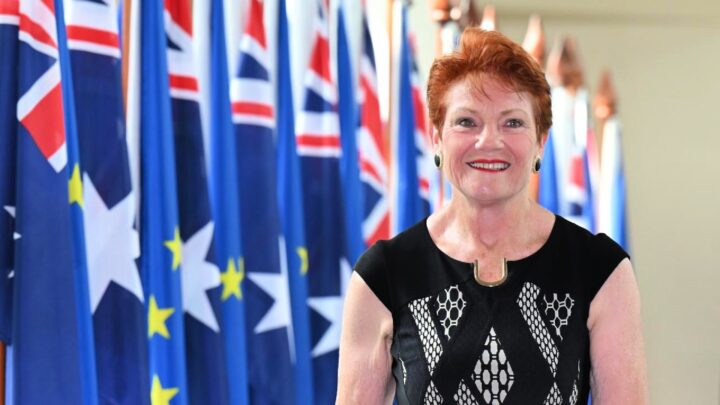
On Saturday, voters in the vast southwestern NSW electorate of Farrer go to the polls in a by-election that could rewrite Australian political history. One Nation is poised to win a federal lower house seat for the first time – and if David Farley crosses the line in Albury, the question every serious political observer needs to answer is not how Pauline Hanson got here. It is how the Liberal Party let it happen.
This is the story of a party that has been hollowing itself out for a decade, and a by-election that may mark the moment the hollowing became irreversible.
The numbers tell a brutal story
Polling conducted for The Australia Institute of more than 1,000 Farrer voters puts One Nation on 28.7 per cent of first preferences, independent Michelle Milthorpe on 23.3 per cent, the Liberals on 19.1 per cent and the Nationals on 5.2 per cent.
Read that again. The Liberal Party – which has held Farrer since 2001 and held it safely for most of that time – is running third in its own backyard. The Liberals and Nationals have both recommended preferences to One Nation’s David Farley ahead of independent Milthorpe, a decision that speaks volumes about how thoroughly the centre-right of Australian politics has been rattled. Rather than fight One Nation, they have decided to feed it.
In the March 2026 South Australian state election, One Nation won 22.9 per cent of first-preference votes, eclipsing the Liberal Party which got just 18.9 per cent. That was not a blip. It was a warning. In Farrer this weekend, we find out whether the warning was heard in time.
What is actually driving this
Ignore the commentary that reduces Farrer to a protest vote or a one-issue flare-up. What is happening in this electorate is a decade of accumulated grievance finding a political vehicle.
Water is the key issue likely to decide the electorate’s next federal MP, and One Nation has ridden a wave of resentment over it. The Murray-Darling Basin Plan has been a festering wound in this region for years – irrigation communities watching their water entitlements bought back by government, their towns quietly contracting, their livelihoods managed by bureaucrats in Canberra who have never walked a paddock. One Nation’s David Farley has argued the Murray-Darling Basin Plan is interfering with food security and wants to treat water as a sovereign asset. That may be economically debatable. But in Griffith and Leeton and Deniliquin, it is a message that lands.
The campaign has also focused on regional healthcare and cost of living – the standard complaints of a region that feels perpetually overlooked. But it is water that has given One Nation its emotional rocket fuel. Pauline Hanson’s party has argued the Coalition neglected the seat’s irrigation towns for decades. In Farrer, that argument is not wrong. The Coalition did neglect them. For twenty years.
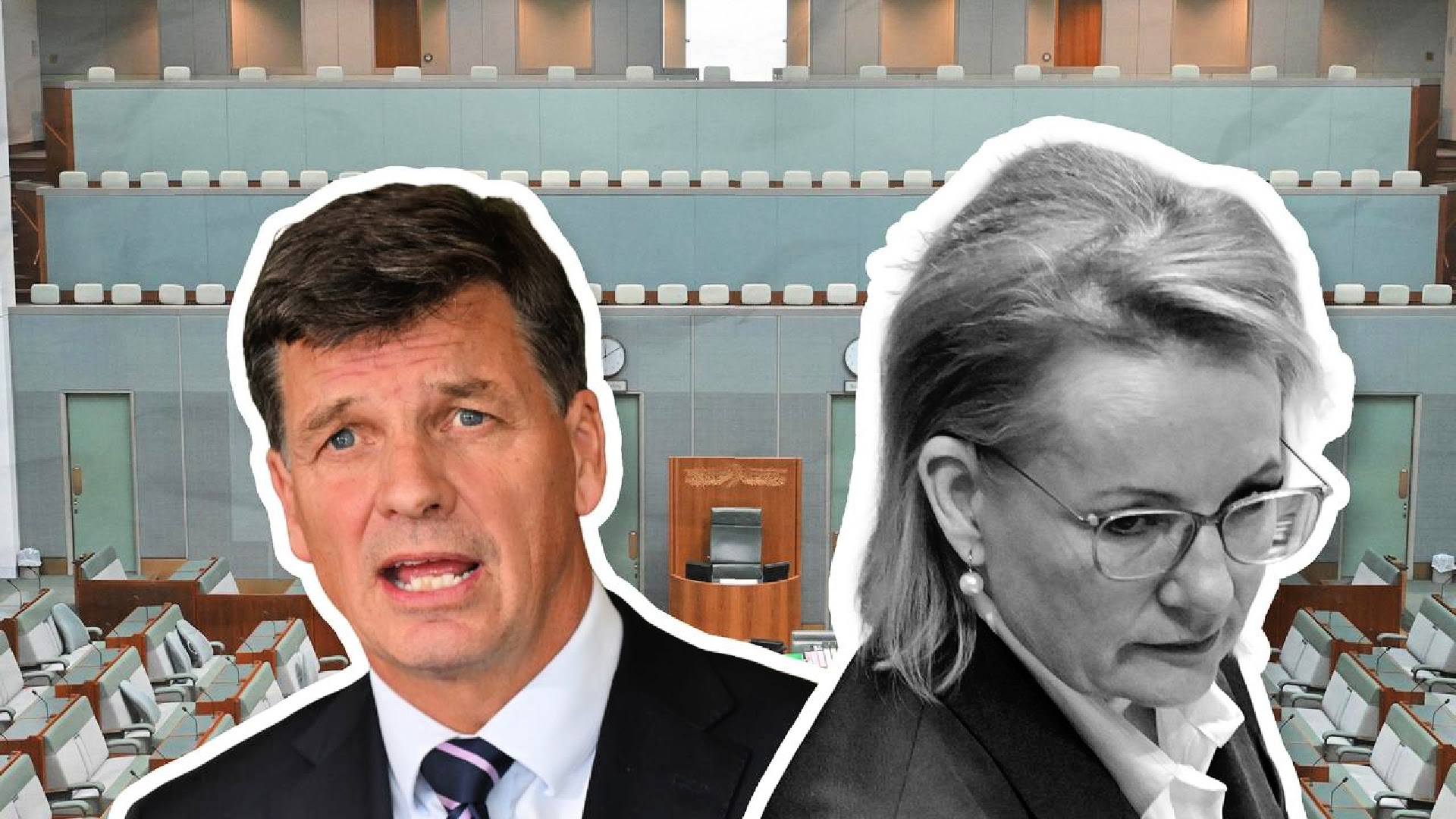
What it means for Angus Taylor
For the new Liberal leader, a One Nation win would be a catastrophe that arrives before he has barely unpacked his office.
Taylor took over from Sussan Ley – who resigned after losing the leadership 34 votes to 17 – and immediately faced a by-election in a seat the Liberals should hold in their sleep. The right faction of the Liberal Party took control of candidate preselection in a bid to stem the leakage of votes to One Nation. The result was the selection of Raissa Butkowski – a credible local candidate, a community lawyer and Albury councillor from a farming family – but a candidate with almost no profile in a race where her opponents have spent months on the ground.
If the Liberals finish third today – behind both One Nation and a teal-adjacent independent – Taylor will face the most urgent question in Australian centre-right politics: what does the Liberal Party actually stand for, and who does it represent? The party cannot simultaneously chase One Nation voters by adopting harder positions on immigration and energy, and hold its moderate metropolitan base. It is trying to be two things at once, and Farrer is where that contradiction gets its first serious examination.
The bigger picture: is this a new political landscape?
Since 2025, One Nation has been regularly polling ahead of the Coalition nationally. That is a sentence that would have seemed absurd five years ago. It does not seem absurd today.
What is happening in Australian politics is not unique to this country. The collapse of traditional conservative parties into the arms of populist right movements has happened in France, in the United States, in Italy and across Northern Europe. The pattern is consistent: a centre-right party that stops listening to its working-class and regional base, a populist movement that fills the vacuum, and a moment when the transfer of loyalty becomes permanent rather than tactical.
By preferencing and emulating One Nation, the Coalition is likely enhancing rather than limiting Hanson’s political influence. This is the central miscalculation of Taylor’s early leadership. You do not contain a political movement by legitimising it. You contain it by giving its voters a credible alternative. The Liberal Party has not done that. It has done the opposite.
The verdict
A One Nation win in Farrer would not be the end of the world. One lower house seat does not a governing party make. But it would be a threshold moment – the first foothold in the house that counts, the proof of concept that the party built by Pauline Hanson in 1997 and dismissed as a passing fever can win on the floor of the House of Representatives in 2026.
For the Liberals, the lesson of Farrer is not that One Nation is too strong. It is that the Liberal Party has been too weak – too cautious, too factional, too consumed by internal warfare to notice that the voters it took for granted in the regions had been making other plans.
The Farrer result will not determine the next election. But it may well determine whether the Liberal Party can ever win one.





 Proudly Australian owned and operated
Comments 0
Join the conversation. Comments are reviewed before they appear.
Be the first to comment.
Join the conversation
Tell us who you are to post a comment. We'll remember you next time.