
Nowhere to go: Australia’s aged-care bed crisis deepens


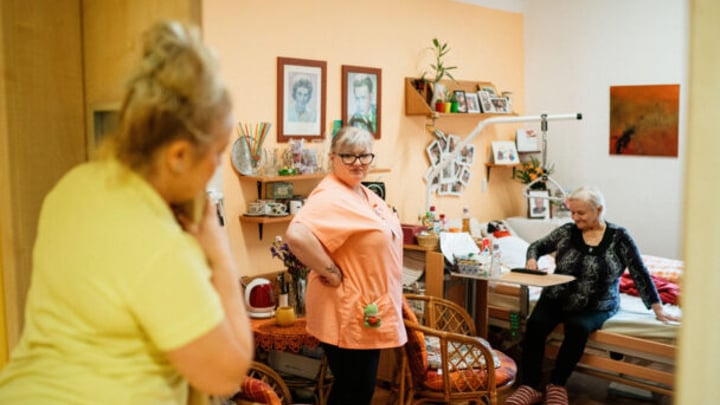
Thousands of older Australians are ready to leave hospital but cannot find a suitable aged-care place, and now providers say plans for more than 3,600 new beds have been shelved, raising fresh concerns about where the next wave of residents will go.
The Australian reports that Ageing Australia, the peak body representing providers, says developments covering those beds have been put aside following the latest federal funding decision. These are proposed beds, rather than existing places being closed, but the warning comes when Australia is already struggling to expand its capacity.
For families, the consequences can arrive suddenly: a parent has a fall, goes into hospital and is assessed as needing more care than can safely be provided at home, their medical treatment ends, and the search for somewhere to live continues.
A building shortfall years in the making
Ageing Australia estimates the country needs about 10,000 additional residential aged-care beds every year to meet demand.
Independent analysis by Grant Thornton puts the annual requirement at between 6,000 and 11,000 beds. Yet net supply grew by about 800 in the 2025 financial year.
Net growth is the telling measure. New homes may open, but beds lost through closures reduce the overall gain. Announcing a development does not guarantee more places will become available.
In September, Ageing Australia identified stalled or threatened projects including a proposed Whiddon home with 100 to 160 beds in NSW, Regis’s 99-bed Belrose development in Sydney and an 80-bed Abound home planned for Berwick in Victoria.
Thousands are already waiting
State and territory figures published by the NSW Government in September listed 3,732 patients waiting in hospitals for aged-care placements.
Queensland accounted for 1,272 and NSW for 1,027. South Australia had 476, Western Australia 423 and Victoria 302, with smaller numbers across the remaining jurisdictions.
Earlier this year, ABC News reported that older patients were unable to leave hospital because suitable residential care or support at home was unavailable. Its reporting also highlighted the difficulty of finding placements for people with complex dementia needs.
That makes the shortage more complicated than counting vacant rooms. The available place must be able to provide the care that particular person needs.
Government and providers disagree on funding
From October 1, the residential care base price increased from $295.64 to $303.19, approximately 2.55 per cent.
The federal health department says estimated average funding rose from $317 to $325 per resident per day. It says the increase incorporates support for wage decisions and other costs, based on independent pricing advice. Providers argue the funding remains inadequate.
The Commonwealth has also announced measures intended to deliver an additional 5,000 beds annually.
The test is whether those commitments produce staffed places where people need them, alongside enough suitable care at home.
Families need a clear account of what will open, where and when. For an older Australian waiting in a hospital ward, a future development offers little comfort until there is a room available and someone able to care for them.





 Proudly Australian owned and operated
Comments 4
Join the conversation. Comments are reviewed before they appear.
not enough ordinary housing, not enough aged care places, meanwhile family has to do for family while the government refuses to recognize what families do and continues to treat family carers like slaves (as one politician put it " we don't recognize family carers as workers because u do for family."). How much longer are we going to put up with all this?? It's obvious family have to do for family because the government won't. We have got to stop voting for any of them.
This is a disgrace. Our government can find money to give to the Palestinians and the Muslim brotherhood in Australia but cannot fund Australians who need care in their old age. These people have worked and payed taxes for most of their lives yet we can’t look after them. And they have to pay exorbitant fees for the privelage if they do find a spot. Our governments need to look at their priorities.
The situation is a disgrace that has been coming for decades. The so-called baby boomers generation plus migration has meant a steep increase in aged care beds required has been on the horizon for at least 50 years. Successive federal governments have failed to heed the warnings and the current lot are making us oldies stay in hospital until we die or stay home with limited support. Simply not good enough. It is also a clear example of the Federal Government passing the buck for aged care to the States who fund hospitals.
When I worked for the Commonwealth Health Dept in Aged Care, we had a target number of beds to be built for maximum demand in 2035. some were for charitable sector which built fairly quickly and some for private sector which built much slower. It appears that since the Abbot Govt time the number of beds allocated and built has dropped dramatically and may have been part of Abbot and successive governments' silent cost cutting. People forget that while STate's administer hospitals, the majority of funding comes from Commonwealth. Aged Care beds cost $397 per day to run whilst hospital beds are $2,934 per day. If states were to build interim care places modelled on aged care design and staffing, they would save the cost of construction in one year.
Join the conversation
Tell us who you are to post a comment. We'll remember you next time.