


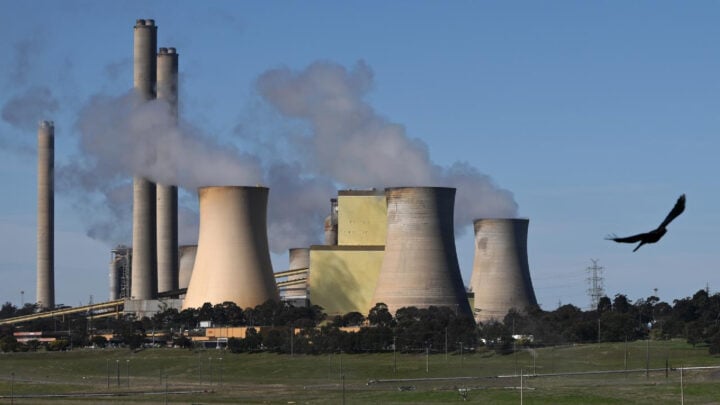
All coal-fired power stations should close and new petrol and diesel car sales end within a decade if Australia is to meet its climate commitments, a report has found.
Renewable energy investments would also need to accelerate, industrial emissions would face tougher limits, and Australia would have to plan for the end of fossil fuel exports.
Research institute Climate Analytics released the findings in a report on Monday that modelled a pathway for Australia to keep global warming as close to 1.5 degrees as possible.
The study comes less than two weeks after the United Nations warned the world would exceed the Paris Agreement’s limit within years, and should cut emissions swiftly to limit the overshoot.
The 183-page report, called A Fossil-Free Australia, compared emissions from the nation’s climate policies with a pathway designed to limit the duration of global warming above 1.5 degrees.
It found Australia could slash residual 2050 emissions by 71 per cent if it took immediate action to phase out fossil fuels, accelerate renewable energy projects, and introduce broad reforms.
Policies would need to end coal-fired power generation by 2034, the report found, halve oil demand by 2035, and cut domestic gas demand by 90 per cent by 2040.
Renewable energy generation would also need to reach 87 per cent nationwide by 2030, it said, rising to 96 per cent by 2035 and 100 per cent by 2050.
The report could help Australian decision-makers target the right sectors, Climate Analytics chief executive Bill Hare said, and set an example for the rest of the world.
“We’ve done the study for Australia as part of a global effort to look at what countries need to do to meet the Paris Agreement goals,” he said.
“We’ve seen many disasters around the world recently, including the catastrophe in Nepal, and all of these things are driven very much by the acceleration of global warming.”
While reforming Australia’s energy sector would make the biggest difference to greenhouse gas emissions, the report said transport would also require major reform.
New petrol and diesel vehicle sales would need to be phased out by 2035 at the latest, it found, while planes and ships switched from fossil fuel to sustainable aviation fuel and ammonia by 2045.
Additional policies should target heavy road freight, report author Thomas Houlie said, as diesel-powered trucks were a blind spot for state and federal governments.
“There is no policy to address emissions from road freight,” he said.
“Electrification of transport is critical … otherwise it will become the highest emitting sector within decades.”
Industrial emissions should also be addressed through Safeguard Mechanism reforms, the report said, while coal and gas exports would need to fall sharply by 2040.





 Proudly Australian owned and operated
Comments 5
Join the conversation. Comments are reviewed before they appear.
I can't see the logic behind all this, not by a far shot.
As long as tyres etc are going up in smoke all over the world, rockets are blowing their exhaust gas when they start and create lots of environmental damage when they either explode or come back as scrap, I can't see the positive side of it.
There are 2 big and many smaller wars going on at the time I write this comment, thou why should we kill off our and the world economy's just to make them happy?
Our "elites", and world elites are flying their planes whenever they want to go somewhere, or just for fun.
For me, it looks like we are living the movie: Mocking Bird, and we are the "slaves".
We should all around the world get up and show the elite what we think is the way to go.
Agree it’s one big controlling rort sending us broke our emissions are very low anyway
What crap LOL. Stupid Labor at it again.
You have got that right. The renewablesTsar, Chris Bowen, is just living in la la land and has the backing of Albo, both idiots,
All that action does is move emission to be created off shore, rather than here. Burning coal to produce EVs in China. Meeting our commitments will make no effective change. We only creat 1%. China, India and USA produce 50%. Don’t say lead by example. They won’t be looking at our actions.
Join the conversation
Tell us who you are to post a comment. We'll remember you next time.