
New AI Tool Predicts Hip Fracture Risk Better Than Current Screening – And It Doesn’t Even Need to See You


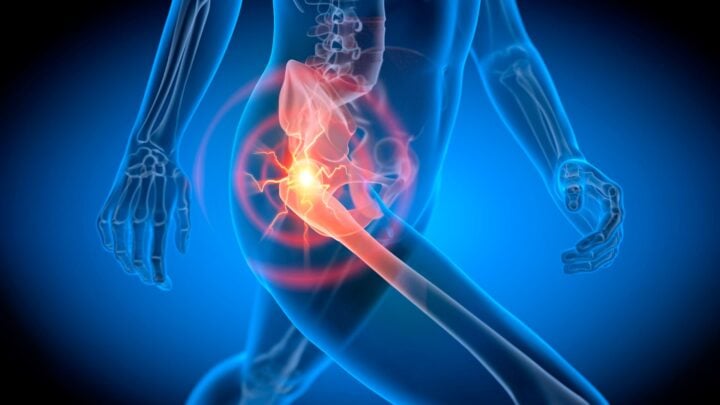
Hip fractures remain one of the most serious injuries facing older Australians, but a newly developed AI tool suggests we may soon be able to identify who’s most at risk long before a fall ever happens, without a single in-person appointment.
Why this matters for Australians
According to the Australian Institute of Health and Welfare, there were an estimated 18,746 new hip fractures recorded in Australia in a recent 12-month reporting period, a rate of around 199 per 100,000 people aged 45 and over. Age matters enormously here – the hospitalisation rate climbs from just 9 per 100,000 among people aged 45 to 49, to nearly 1,800 per 100,000 among those aged 85 and over. Around 87 per cent of these fractures result from a minimal trauma, low-impact fall, and women are hospitalised at close to twice the rate of men.
The AIHW also estimates that for Australians aged 50 and over, roughly 1 in 4 men and 2 in 5 women will experience a minimal trauma fracture at some point in their remaining lifetime, with hip fracture being one of the most serious possible outcomes given the disability, loss of independence and even increased mortality risk that can follow.
Despite this scale, current screening tools typically require an in-person clinical assessment, including measurements like body mass index and detailed lifestyle information, which makes broad, population-level screening genuinely difficult to deliver in practice.
The new tool
Published in the open-access journal PLOS Medicine, the new research, led by Kristian Axelsson and Mattias Lorentzon of the University of Gothenburg in Sweden, analysed nationwide health registry data from more than 3.5 million adults aged 50 and over, following them for up to ten years. During that period, 142,327 participants went on to sustain a hip fracture.
Using more than 100,000 variables drawn from medical diagnoses, medications, procedures, and demographic and socioeconomic data, the researchers built a deep-learning tool called FRACTURE-ML, capable of estimating an individual’s hip fracture risk directly from existing registry data, with no clinical appointment or physical assessment required at all.
How well does it actually work?
When tested against a separate group of people not used to build the original model, FRACTURE-ML showed strong accuracy, correctly distinguishing between people who went on to fracture their hip and those who didn’t with an area under the curve (AUC) of 0.89 when predicting one year ahead, and 0.85 when predicting five years ahead. A simplified version of the tool, using just 35 variables rather than the full 100,000, performed almost as well, suggesting a genuinely practical, interpretable version of this approach may be achievable.
Most strikingly, when compared against current screening methods used in Swedish clinical practice, FRACTURE-ML identified nearly seven times more people at genuine risk of a hip fracture within two years, correctly flagging 84 per cent of true cases compared to just 12 per cent under current screening, with only a modest trade-off in specificity.
What the researchers say
Lead author Kristian Axelsson said the findings demonstrate that predicting hip fracture risk at a population level, without any direct patient interaction, is genuinely achievable, and that this approach could help preventive measures be targeted far more efficiently, potentially reducing the overall number of hip fractures.
Co-author Mattias Lorentzon said the tool accurately identified high-risk individuals using routinely collected healthcare and population data alone, which could make large-scale screening considerably more efficient and help preventive care reach people before a fracture occurs, rather than only responding after one.
The authors noted that a tool capable of identifying high-risk individuals directly from existing data could support earlier intervention and help reduce the broader burden hip fractures place on independence, health and survival. They also pointed out that the strongest advance here may be less about the specific machine-learning algorithm itself, and more about making genuinely better use of the comprehensive, routinely collected data health systems already hold.
What’s next
The researchers are upfront that the model currently lacks information on lifestyle factors such as smoking and alcohol use, which can also influence fracture risk, and that validation in other countries, along with real-world implementation studies, is still needed before a tool like this could move from research into everyday clinical use.
For now, the message for Australians remains a familiar one: given how strongly age, falls and osteoporosis drive hip fracture risk, staying on top of bone health, discussing your individual risk factors with your GP, and taking falls prevention seriously remain the most immediately actionable steps available, while tools like FRACTURE-ML continue to be developed and tested.
This article reports on published research and is general in nature. It isn’t personalised medical advice — if you have concerns about your bone health or fracture risk, speak with your GP.





 Proudly Australian owned and operated
Comments 0
Join the conversation. Comments are reviewed before they appear.
Be the first to comment.
Join the conversation
Tell us who you are to post a comment. We'll remember you next time.