
Meet Kimberly Tang from Anchovy, and make her Tuna Tiradito


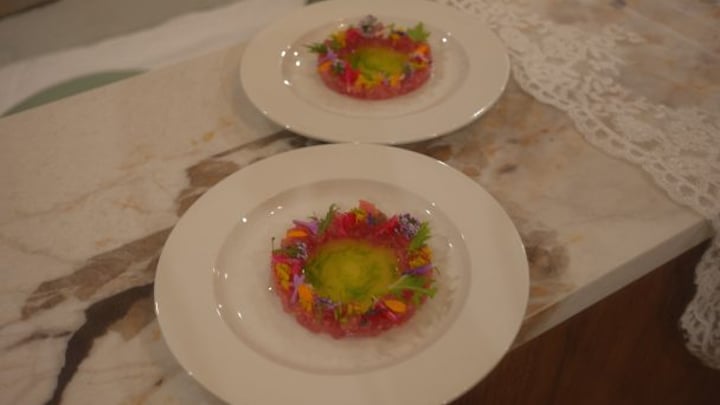
Kimberly Tang of Anchovy restaurant in Richmond, Melbourne, won the S.Pellegrino Young Chef Award at the Pacific Regional Final in Sydney, beating nine other finalists from Australia and New Zealand. Now, she will represent the region at the Grand Finale in Milan in 2027.
Her winning dish, Before Sustainability Was a Trend, draws on generations of Asian cooking traditions, where preserving ingredients and using the whole animal have long been everyday practice.
Behind the award is a story of a young woman finding confidence in her heritage and her cooking, supported by a mentor who recognised her potential before she fully believed in it herself.
The win also shines a light on the painstaking work at Anchovy, where the team makes everything from fish sauce to lap cheong sausages from scratch.
Learning the art of cooking from elders
As a child in Singapore, Kimberly Tang watched her aunties and grandmothers prepare Chinese New Year dishes, fascinated by the activity around her. Eventually, watching wasn’t enough, so she pulled up a stool and joined in, even when her contribution was simply washing dishes.
Those early experiences shaped an understanding of food that still guides her today.
“What I remember most during those years wasn’t the elaborate cooking techniques or complex ingredients, but the time spent together listening to stories and knowledge shared by strong women who carried their traditions and their families through food,” she says.
Now cooking at Anchovy, Tang has earned recognition including Good Food Young Chef of the Year and victory at the S.Pellegrino Young Chef Academy Pacific Regional Final.
Yet her approach remains grounded in the lessons she absorbed long before beginning an apprenticeship. After her family moved to Australia, her mother ran a cafe. Tang spent weekends mixing milkshakes and serving pies and cakes, discovering that hospitality could be as simple as remembering someone’s regular order.
At home, with her mother working hard, Tang and her brothers often cooked for themselves. Her familiar stool became a perch beside the stove, where she experimented with omelettes and whatever ingredients the fridge offered.
“Even though cooking techniques, environments and public tastes have shifted throughout my career, what has stayed with me from those early memories on that plastic stool is how food is ultimately an expression of love shared with me and passed on to others.”
That respect for home cooking carries into her professional kitchen, where Tang draws on Asian traditions of preservation, fermentation and using whole ingredients, working with fresh Australian produce.
She believes every component should earn its place on the plate. “The simplest dishes are often the hardest to get right because there is no place to hide,” she says.
While she enjoys the artistry of presentation, flavour comes first. She also values the knowledge of earlier generations, approaching established traditions with curiosity and respect.
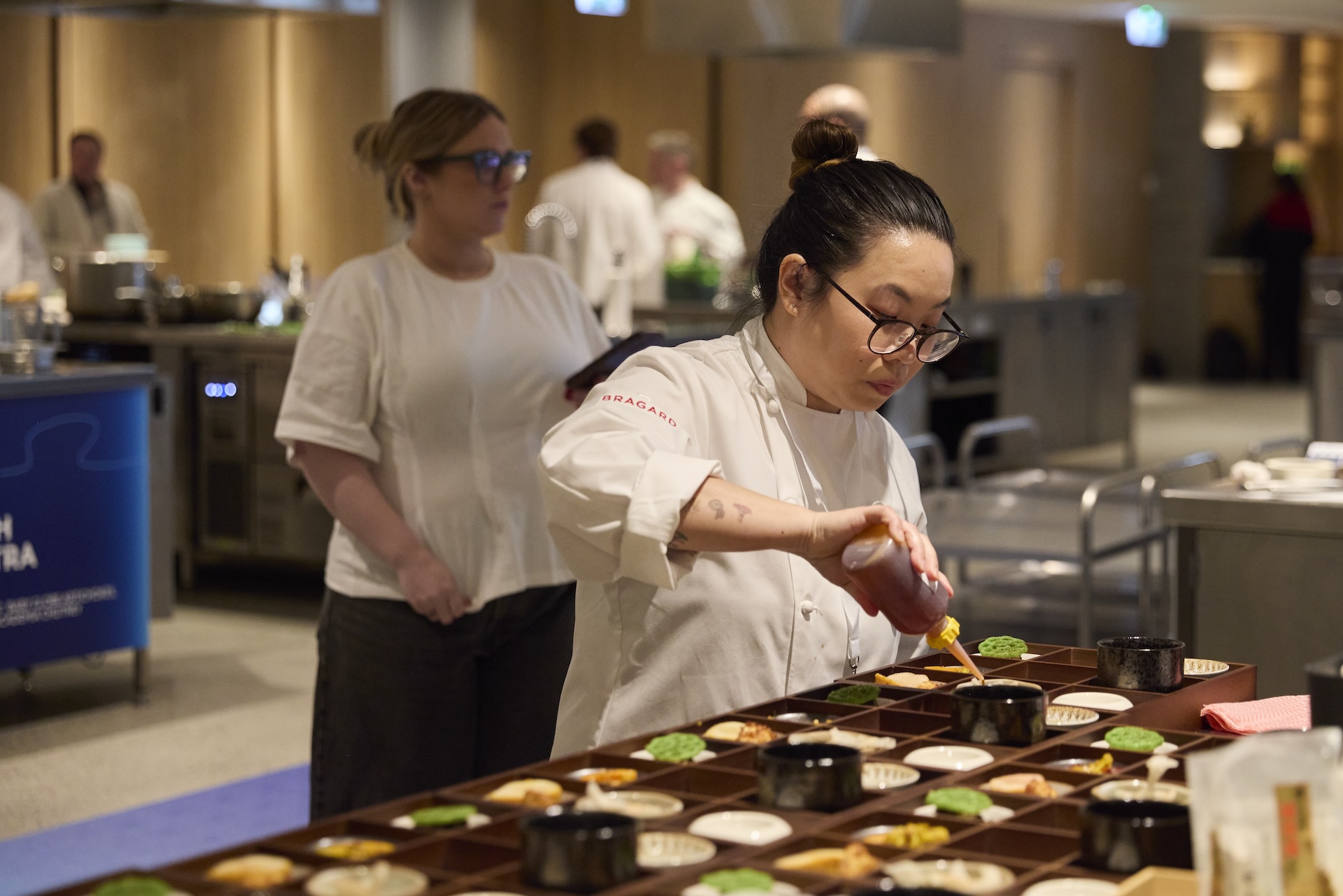
Behind the scenes at Richmond’s Anchovy restaurant
At Anchovy, that philosophy involves considerable work behind the scenes. The team butchers whole animals, makes fish sauce and curry pastes from scratch, and produces its own lap cheong sausages.
Tang hopes diners recognise the skill and time involved, and questions the expectation that Asian food should always be inexpensive.
Someone happy to spend $20 on a sandwich, she observes, may hesitate over a $17 banh mi, even when its bread, sauces, pâté and fillings are made in-house.
For Tang, conversations about authenticity can overlook the ways cuisines evolve through migration and available ingredients. She wants greater attention paid to the flavours, skills and stories behind the food.
Her mentor, chef Thi Le, has helped her develop confidence in that perspective. “One of the most important things I have learnt from her is having confidence in my heritage and the ways my past experiences have shaped me,” she says.
When Tang developed her competition dish, Le offered honest feedback while giving her room to make decisions. After an early version was served for staff meal, Le’s enthusiasm helped Tang believe in its potential. “Le had a lot of confidence that I could win the competition well before I believed I could myself.”
Tang hopes to provide that encouragement to younger chefs as her career progresses, as she is conscious of the challenges women continue to face in professional kitchens, particularly the competing expectations around confidence and leadership.
“You have to be confident and assertive but not too assertive,” she says. “You need to deeply care about your work but not be viewed as overly emotional.”
While proud of her achievements, she hopes the industry reaches a point where successful women are celebrated simply for their cooking.
Twelve years into her career, Tang remains aware of how much there is to learn, and grateful to those who have guided her.
“I hope that my work can speak for itself and that I can be recognised simply as a good chef instead of always being defined as a female chef,” she says.
Make Kinberly Tang’s Tuna Tiradito
Serves 4
Ingredients
400g Tuna
100g Chives
Coriander or any other green herbs
200g Grapeseed Oil
Edible flowers
Herbs or foraged greens
Crackers or baguette croutes
Dressing
20g Microplaned Galangal
10g Microplaned garlic
2 Lime Zest
150g Fresh Lime Juice
20g Aji Amarillo Paste
10g Coriander Roots
Finely Chopped
35g Chardonnay Vinegar
25g Raw Sugar 200g Olive Oil
10g Fish Sauce
3g Salt
Method
1. Slice or dice the tuna (or any other fish of your choice) and lay on paper towel to dry excess moisture.
2. Mix dressing ingredients except olive oil together with a whisk or a blender, slowly drizzle in the olive oil to emulsify and taste to adjust seasoning.
3. Blanch green herbs in boiling water and refresh in ice water, squeeze excess moisture well.
4. Blend with a neutral oil until smooth and strain over a coffee filter or cheese cloth.
5. Place a ring mould on the plate of your choice. 6. Season the tuna with some olive oil and flake salt and place against the ring mould, ensure theres no gaps or the dressing will leak through
7. Garnish the top of the tuna with some garden herbs
8. Pour some dressing in the middle and finish with a drizzle of the green oil.
9. Serve with some baguettes or crackers





 Proudly Australian owned and operated
Comments 0
Join the conversation. Comments are reviewed before they appear.
Be the first to comment.
Join the conversation
Tell us who you are to post a comment. We'll remember you next time.