
Lest we forget: the quiet power of Anzac Day — and why no date on the calendar asks more of us


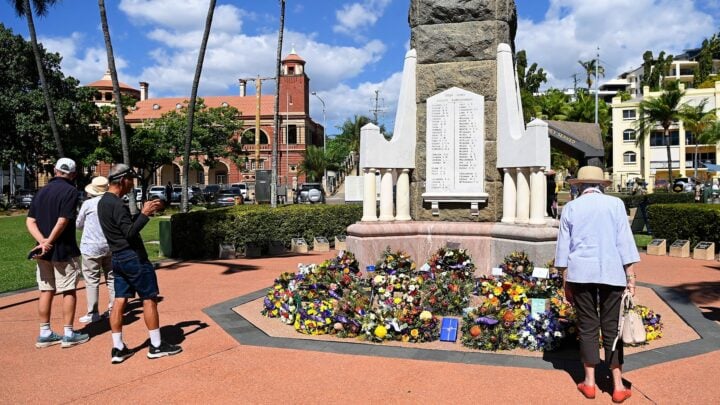
No date on the national calendar gives us more pause for collective contemplation than does ANZAC Day.
It remains the one day in which everybody has a stake, our sense of community fortified as we reflect on the values that bind us: Remembrance. Service. Sacrifice. Love of country. Love for the lost.
Thousands gather at large city shrines for the Dawn Service, falling silent as The Last Post sounds.
Marches follow, veterans alongside descendants of those who have passed, proudly bearing their medals and decorations as a mark of continuing respect.
In regional and remote towns, locals assemble around century-old memorials, erected in the wake of the First World War to commemorate the huge cost exacted.
It is a time of communal grieving, a time when we set aside cynicism and politics to honour those who served, the violence and horror of battle countered by reverential stillness of the mind and heart.
To be part of an ANZAC Day event is a powerful, unifying experience.
Equally solemn is paying tribute without ceremony or company, to visit a shrine late at night and walk about its columns and statues in solitary homage.
The emptiness of the courtyards and steps take on renewed meaning; plaques and inscriptions gleam; statues gaze silently into infinity; the fluttering of the Eternal Flame testament to our duty to remember.
Cities are dotted with localised memorials bearing the names of those lost from the same area, community, workplace. To encounter one of these during an evening stroll can be sobering.
With sombre inevitability the same surnames appear, a stinging reminder of how members of the same family, social circle and company often enlisted and served together.
In England they were known as Buddy Battalions, a very effective recruitment policy that urged men to enlist in groups on the understanding they would serve as one.
Australia had no official policy yet much the same occurred as friends and relatives banded together to answer the call.
The consequences were as tragic as they were unavoidable.
Over the course of a murderous morning, entire towns and districts could lose all their young men. The devastation of such an event remains difficult to comprehend.
The practice was soon abandoned.
Of all the ways to commemorate ANZAC Day perhaps the most poignant is to simply look into the faces of the fallen.
As they stare back, so youthful and full of promise, the mind resonates with potent questions: Who did we lose? What future was sacrificed? How would the world be different had he survived?
The depth of that loss will forever be incalculable – an inconsolable sorrow ANZAC Day honours.





 Proudly Australian owned and operated
Comments 0
Join the conversation. Comments are reviewed before they appear.
Be the first to comment.
Join the conversation
Tell us who you are to post a comment. We'll remember you next time.