
Kangaroos and Jillaroos seal historic World Cup double


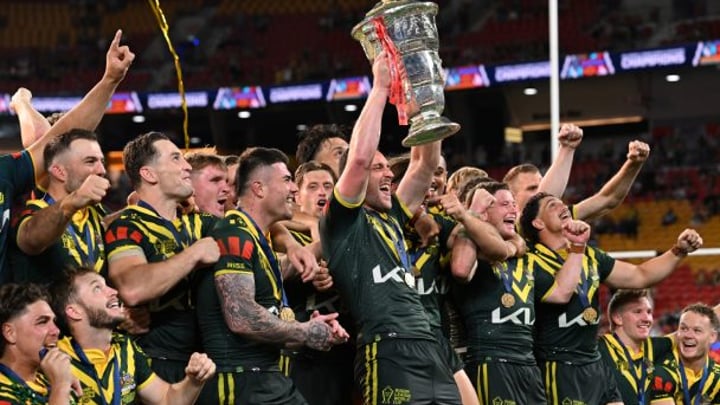
Australia has celebrated a Rugby League World Cup double, with the Kangaroos and Jillaroos defeating New Zealand in Brisbane to claim their fourth consecutive world titles and reinforce the nation’s extraordinary dominance of international rugby league.
In front of a passionate crowd at Suncorp Stadium on Sunday, the Kangaroos claimed their 13th men’s world championship with a convincing 32-12 victory over the Kiwis, while the Jillaroos delivered a devastating first-half performance to overwhelm the Kiwi Ferns 34-10.
It was a memorable afternoon and evening for Australian sport, with both teams producing outstanding performances against their traditional trans-Tasman rivals and adding another chapter to the country’s proud rugby league history.
For the Kangaroos, victory came through a combination of relentless defensive pressure, clever attacking football and an ability to capitalise on New Zealand’s mistakes. The Jillaroos, meanwhile, were virtually unstoppable in the opening half of their final, running in six tries before the break.
Kangaroos produce their best when it matters
The Kangaroos entered the men’s decider knowing they would need to lift their performance against a New Zealand side boasting some of the game’s most dangerous attacking players.
Coach Kevin Walters could hardly have asked for a better start when Kiwi winger Jamayne Isaako sent the opening kick-off dead on the full, gifting Australia an immediate opportunity.
Liam Martin made New Zealand pay, crashing over after just 80 seconds following a clever pass from Harry Grant.
The Kiwis responded through Casey McLean to level the scores, but Australia gradually took control as its forwards began winning the physical battle and its attacking combinations found their rhythm.
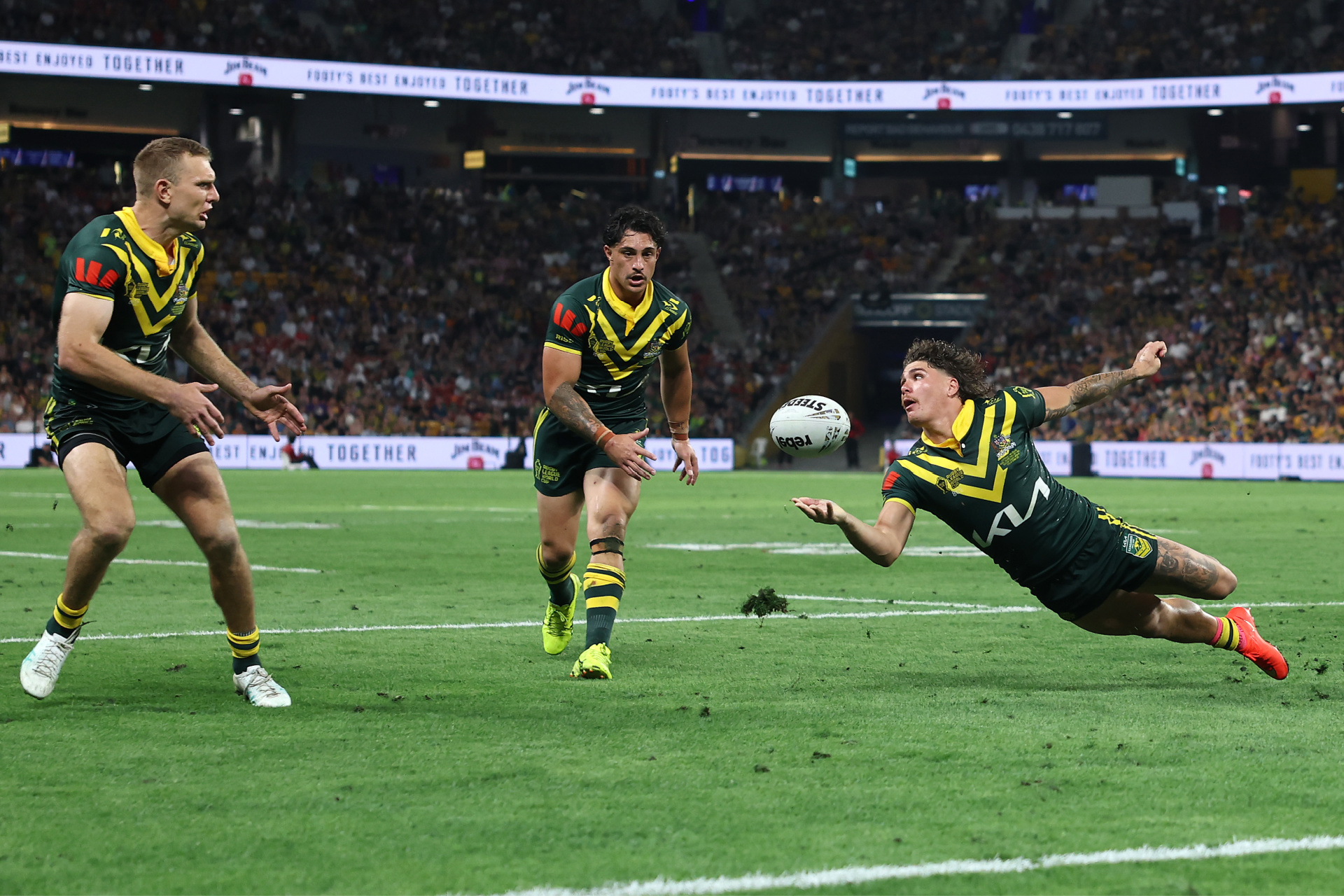
Jack Bostock crossed for the first of his two tries before Cameron Munster extended Australia’s advantage with a penalty goal. Bradman Best then added another try and Martin completed his double before halftime, sending the Kangaroos into the sheds with a commanding 24-6 lead.
New Zealand continued to threaten, but Australia’s defence repeatedly frustrated the Kiwis, who struggled to convert promising attacking positions into points.
Early in the second half, Reece Walsh produced one of the outstanding moments of the final, slicing through New Zealand’s defence before setting up Tom Trbojevic for a try that effectively ended any hopes of a comeback.
Isaiah Papali’i scored for New Zealand midway through the second half, but Bostock completed his double late in the contest to seal Australia’s 32-12 victory.
Bostock was named Player of the Final after an impressive performance, while Martin’s two tries and tireless work through the middle were crucial to Australia’s success.
The result extended the Kangaroos’ extraordinary winning streak at men’s World Cups to 23 matches, with Australia having now claimed every men’s title since New Zealand’s breakthrough triumph in 2008.
Jillaroos deliver a devastating first-half display
Earlier in the day, the Jillaroos had set the standard with a remarkable attacking performance against the Kiwi Ferns, establishing a commanding 34-6 halftime advantage in Brisbane’s oppressive heat.
Winger Jaime Chapman was the standout, completing a sensational first-half hat-trick that included an acrobatic finish in the corner and a spectacular 70-metre solo effort.
Chapman opened the scoring after just two minutes and five seconds, setting the tone for an Australian performance that left New Zealand struggling to contain the speed and skill of the defending champions.
Her three tries took her tournament tally to 13, equalling the record for the most tries scored by an individual player in a single Rugby League World Cup campaign.
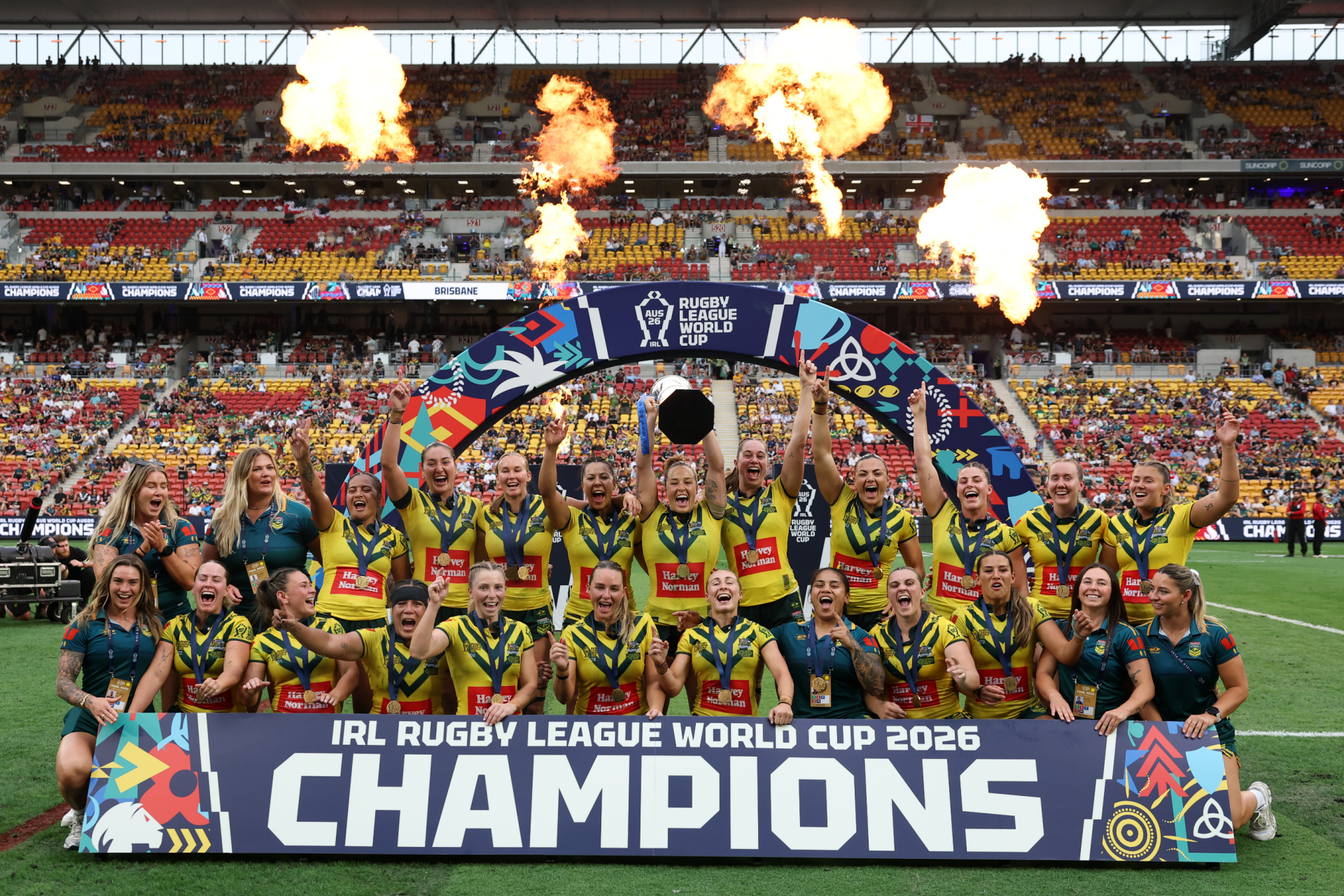
Shaylee Bent, Jess Sergis and Tamika Upton also crossed for Australia, while Jesse Southwell contributed five conversions.
New Zealand’s Shannon Mato managed a first-half try and Mackenzie Wiki added another late in the contest, but the Kiwi Ferns were unable to recover from Australia’s blistering opening.
To their credit, New Zealand showed considerable determination after halftime, preventing the Jillaroos from adding to their score. Remarkably, the Kiwi Ferns completed the tournament without conceding a single second-half point.
Chapman was named Player of the Final after finishing with 151 running metres and three line breaks, capping an extraordinary individual tournament.
The victory was also an emotional occasion for veteran forward Millie Elliott, who brought down the curtain on her distinguished rugby league career with another World Cup triumph.
Australia’s latest success continued a remarkable reversal of fortunes in the women’s international game. New Zealand won the first three women’s World Cups in 2000, 2003 and 2008, but the Jillaroos have now claimed the past four titles to become the competition’s most successful nation.
Australian rugby league celebrates another golden moment
While Australia’s double triumph highlighted the country’s remarkable depth, the tournament also demonstrated the growing strength of international rugby league.
Samoa and Tonga reached the men’s semi-finals, continuing the emergence of Pacific nations as serious challengers, while Fiji’s women pushed the Jillaroos in their semi-final before Australia recovered to win 30-14.
For Kangaroos coach Kevin Walters, the victory was particularly satisfying after questions surrounding Australia’s performances earlier in the tournament. His side responded with its most convincing display when the World Cup was on the line.
The Jillaroos’ continued dominance also presents a challenge for the women’s international game, with rival nations facing the task of closing the gap on an Australian team blessed with exceptional talent across the field.
Attention will eventually turn to the 2030 Rugby League World Cup, which is planned to be staged across the Pacific and United States, with expanded men’s and women’s competitions.
For now, however, Australian rugby league has plenty to celebrate. Two teams, two World Cup trophies and another proud moment for the green and gold.





 Proudly Australian owned and operated
Comments 0
Join the conversation. Comments are reviewed before they appear.
Be the first to comment.
Join the conversation
Tell us who you are to post a comment. We'll remember you next time.