


By Zac de Silva
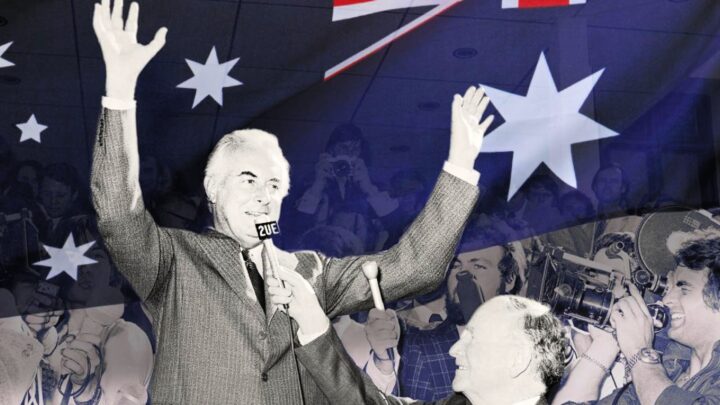
Gough Whitlam made a “terrible mistake” by assuming the governor-general would allow him to continue leading the nation, former prime minister John Howard says, 50 years on from the dismissal that defined Australian politics for decades.
Mr Whitlam was dismissed on the front steps of Old Parliament House on November 11, 1975, over a deadlock which could have seen Australia run out of money for crucial services.
Liberal leader Malcolm Fraser had refused to pass Mr Whitlam’s budget, leading to a constitutional crisis Governor-General Sir John Kerr resolved by firing the prime minister and appointing Mr Fraser to the role.
Mr Howard, who was a junior member of the Fraser opposition in the lead-up to the dismissal, said Mr Whitlam didn’t handle the politics of the saga well.
“I think he just assumed that Kerr was his man and would do his bidding, and that was a terrible mistake,” he said.
“He should have worked out for himself that Kerr might exercise the reserve power and dismiss him.”
Shortly after the Whitlam government was sacked, Australians went to the polls and elected the coalition in a landslide.
“People didn’t vote according to their feelings about the dismissal,” Mr Howard said, arguing that public sentiment had turned against Mr Whitlam well before his sacking.
The former Liberal prime minister, who will be interviewed at Old Parliament House on Tuesday to relive the saga, said Labor had appeared to be in a hurry to introduce major reforms because it had been in opposition for more than two decades before returning to power.
“He was very much in a rush,” Mr Howard said.
“But you can be in a rush towards the wrong objective,” he added, claiming increased spending and a larger public service were some of the Whitlam government’s flawed plans.
Prime Minister Anthony Albanese gave a different assessment, describing the dismissal as a brutal political play that brought down a fairly elected government.
“Make no mistake: November 11th 1975, was not a constitutional crisis, it was a partisan political ambush,” he said in a speech at Old Parliament House on Monday evening.
“There was no real precedent, and no legitimate pretext.”
Mr Albanese announced plans to erect a statue of Mr Whitlam at Old Parliament House, honouring his predecessor’s achievements as prime minister.
“Australians will be able to stand with Gough, put an arm around the great man’s shoulders, and remind ourselves that if we maintain our enthusiasm, it’s always time,” he said.
Mr Albanese said the statue would welcome Australians to the building where Mr Whitlam served as prime minister and on whose steps he was ultimately dismissed.
Labor figures see Mr Whitlam as a reforming hero who introduced the precursor to Medicare, took the first steps towards Indigenous land rights and abolished the white Australia policy.
But his legacy is deeply contested: many on the conservative side of politics believe the then-Labor government failed to properly manage the economy and was too hasty in introducing its landmark reforms.
“The dismissal was a calculated plot, hatched by conservative forces which sacrificed conventions and institutions in the pursuit of power,” Mr Albanese said.
But Mr Albanese said the election result should not be seen as an endorsement of Kerr’s actions.
“Behind all the various schemes and subplots … lies an overt refusal to respect the mandate, or even acknowledge the legitimacy, of a Labor government that had secured a majority in two consecutive federal elections inside three years,” he said.





 Proudly Australian owned and operated