
Healing in the heart of crisis


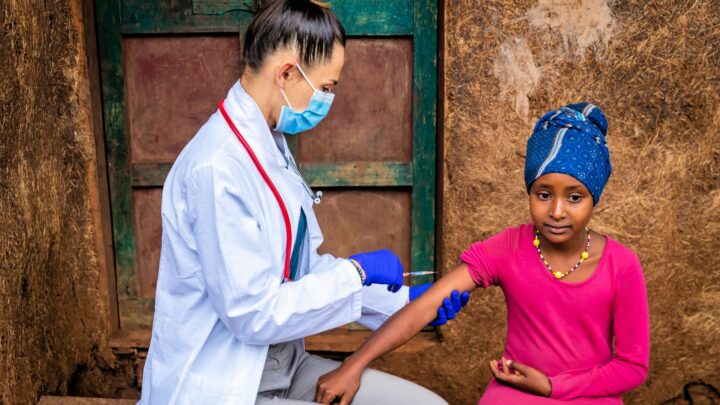
Today, Tuesday 19th August is World Humanitarian Day. A day that honours individuals who risk their lives in the service of others during crises. Among the most courageous and dedicated of these are the members of Doctors Without Borders, known globally by their French name, Médecins Sans Frontières (MSF). In the world’s most dangerous conflict zones, disaster-stricken regions, and disease-ravaged communities, MSF’s doctors, nurses, logisticians, and support staff bring not just medical care – but also hope.
MSF has paid witness to countless conflicts across the globe since its founding in Paris in 1971 by a group of French doctors and journalists who had served in Biafra during the Nigerian Civil War. Witnessing firsthand the brutality of war and the silence surrounding it, they believed that medical aid should be free of political agendas and that bearing witness, testimony – was as vital as providing care. This dual commitment to impartial medical care and speaking out against injustices remains central to MSF’s identity.
Today, MSF operates in over 70 countries, from war-torn Gaza and South Sudan to earthquake-stricken Haiti and the Rohingya refugee camps in Bangladesh. Whether responding to cholera outbreaks in Yemen, malnutrition in the Sahel, or Ebola in the Democratic Republic of Congo, MSF goes where few others dare to tread.
MSF’s international humanitarian workforce reflects global solidarity: more than 65,000 staff members of diverse nationalities, including many Australians, form the backbone of its operations. The majority are hired locally in the countries where MSF works, ensuring understanding and community trust. The teams include doctors, nurses, mental health specialists, epidemiologists, water and sanitation experts, and logisticians.
Despite working under extreme conditions, their mission is simple: provide emergency medical care to people regardless of race, religion, gender, or political affiliation. That mission is powered by extraordinary people, showing extraordinary bravery.
One of the most heart-warming aspects of MSF is its independence. Over 90 percent of its funding comes from private donors, enabling the organisation to remain impartial and make rapid decisions in emergencies. This financial model means MSF is not beholden to governments or political powers, allowing it to prioritise humanitarian need above other agendas.
This independence helps MSF’s credibility and integrity in the field. In conflict zones, neutrality can mean the difference between life and death – both for the patients and for the staff.
Over the decades, MSF has attracted some of the most passionate and skilled medical professionals. One of the most well-known is Dr James Orbinski, former international president and recipient of the Nobel Peace Prize on behalf of MSF in 1999. Dr Orbinski was instrumental during the Rwandan genocide and later co-founded Dignitas International, an organisation dedicated to improving access to lifesaving treatment and care.
Another notable name is Dr Joanne Liu, who served as MSF’s International President from 2013 to 2019. She led MSF during the 2014–2016 West Africa Ebola crisis and was an outspoken critic of the international community’s delayed response.
These individuals are just two among thousands who have committed themselves to MSF’s cause – not for fame or fortune, but out of a deep conviction in the right to health care for all.
MSF’s impact is both immediate and enduring. In the aftermath of natural disasters, its teams are often the first on the ground, setting up mobile clinics, distributing clean water, and performing life-saving surgeries. In war zones, MSF hospitals treat trauma victims regardless of which side they belong to – often making the organisation a target itself.
During the Syrian Civil War, MSF operated clandestine clinics in besieged areas. In Afghanistan, MSF continues to provide maternal health care despite increasing restrictions. In the Central African Republic, where health systems have collapsed, MSF often is the only available medical aid.
This work saves lives daily – but it also shines a light on forgotten crises, mobilises global attention, and calls out systemic failures. Such commitment comes with a heavy cost. Since its founding, over 180 MSF staff members have lost their lives in the line of duty. From ambushes in South Sudan to bombings in Syria and Afghanistan, this organisation has suffered deeply. One of the darkest moments came in 2015, when a U.S. airstrike destroyed an MSF hospital in Kunduz, Afghanistan, killing 42 people, including 14 staff members. In Gaza, the organisation is mourning the death of more than 12 colleagues.
Yet, despite the ongoing dangers, these courageous doctors, nurses, and support staff continue their work. According to MSF website, the organisation has lost more 12 staff in the current Gaza conflict.
What drives a doctor to leave the safety of their home and operate in a tent in a warzone, you might ask? Why would a nurse risk abduction to treat a child with measles in a remote jungle?
The answer lies in the core belief of this organisation, that access to health care is a human right. Their volunteers are driven not by heroism, but by empathy, their need to make a difference in this chaotic world.
On this World Humanitarian Day, lets take a moment to remember and honour these selfless individuals of Doctors Without Borders. Their courage does not lie in grand gestures, but in the everyday act of choosing compassion over comfort and bearing witness in times of conflict and natural disasters. In a time of global uncertainty, conflict, and division, MSF reminds us of what humanity looks like at its best.
For more information or donations visit doctorswithoutborders.org





 Proudly Australian owned and operated