


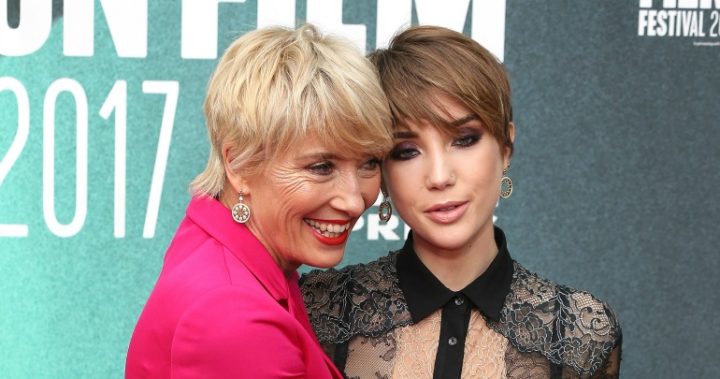
She’s been one of the strongest voices in Hollywood in support of the ‘Me Too’ and ‘Time’s Up’ campaigns against sexual violence, but the causes are much closer to actress Emma Thompson’s heart than many people may realise.
The 59-year-old movie star has now revealed her horror after discovering her teenage daughter was sexually assaulted last year as she rode the busy London Underground, in an exclusive interview with Radio 4 Women’s Hour.
Gaia, then 17, was left nervous to take the tube after the assault and even admitted to her mother that she now regrets not trying to do more at the time to stop it.
“My daughter had the experience of being felt up on the Tube and felt very nervous about going out on the tube for a long time afterwards,” Thompson told the radio show.
Revealing Gaia struggled with the assault afterwards, like many other women do, the actress explained: “She [Gaia] said the thing that upset her most was not the act itself but the fact that she felt cowed enough by it not to call him out.
“And I think that what we suffer as women most from our shame at not being able to say ‘Why are you doing this’?”
Thompson added that many women, like her daughter, feel “shocked and undermined” when it happens and their reaction at the time then sticks with them long afterwards.
Gaia has begun following in her mother’s footsteps with her own acting career and previously starred in 2015 movie A Walk in the Woods with her mother, Nick Nolte and Robert Redford, as well as 2008 film Last Chance Harvey, also starring her mother and Dustin Hoffman.
She’s also a powerful activist and has campaigned against climate change in the past.
Meanwhile, Thomspon has previously spoken out about sexual violence against women in passionate speeches following the Harvey Weinstein scandal – describing the disgraced former producer as a “predator”.
“I think there are probably about a million missed opportunities to call this man out on his disgusting behaviour,” Thompson told BBC Newsnight previously.
“I don’t think you can describe him as a sex addict, he’s a predator. That’s different. He’s at the top of, as it were the ladder of, a system of harassment and belittlement and bullying and interference. This has been part of our world, women’s world, since time immemorial.
“So what we need to start talking about is the crisis in masculinity, the crisis of extreme masculinity which is this sort of behaviour.”





 Proudly Australian owned and operated