

By Jennifer Dudley-Nicholson
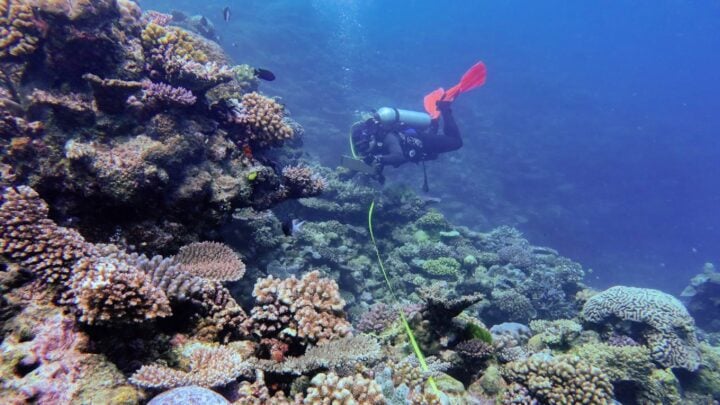
Australia’s Great Barrier Reef is showing signs of recovery from a mass-bleaching event, with coral cover increasing in one out of every four reefs surveyed.
But scientists studying the natural wonder warn it remains under intense environmental pressure, with less time to recover between threatening events.
The Australian Institute of Marine Science released the findings on Tuesday from its 40th annual report into the Great Barrier Reef’s condition, which surveyed the health of coral and marine life in 192 areas.
It comes one month after the UNESCO World Heritage Committee stopped short of listing the reef off Queensland’s coast as “in danger” due to efforts to protect the landmark.
The 2026 Coral Reef Condition report assessed its overall health using detailed surveys of fish and coral in 71 fixed locations, and manta tow surveys of 121 reefs ranging from Cape York to Gladstone.
These surveys involved towing a reef specialist behind a boat to cover 200 metres of reef within two minutes.
The study found hard coral cover had increased in many parts of the Great Barrier Reef since 2025, rising by 16.7 per cent in the northern region and 10.2 per cent in the central reef.
Only the southern region of the reef saw coral growth decrease during the period, falling by two per cent.
As a whole, coral cover grew in more than a quarter of the areas surveyed (28 per cent), and remained unchanged in more than half the reef (56 per cent).
A late summer monsoon that lowered water temperatures helped to keep coral cover in most areas above historic norms, according to the institute’s reef fish ecologist Daniela Ceccarelli.
”We have some good news this year,” she said.
”What we’re seeing is that coral cover sits above the long-term average in the northern and central Great Barrier Reef, and slightly below it in the southern Great Barrier Reef.”
Most reefs surveyed showed coral cover between 10 and 30 per cent, while a third had between 30 and 50 per cent coverage.
The damaging crown-of-thorns starfish also showed signs of an outbreak in the northern reef, although it would take several years to migrate south, Dr Ceccarelli said.
The study showed the reef was recovering from a severe mass bleaching event in 2024 but was subject to volatile conditions, the marine institute’s long-term monitoring program leader Mike Emslie said.
”Despite the good news, the Great Barrier Reef is still a system under intense pressure and is getting impacted year after year by these disturbances, particularly climatic driven heat stress and coral bleaching,” he said.
”It’s shown time and time again it can recover if we give it a chance but … the real worry here is just the frequency of these disturbance events that are happening.”







 Proudly Australian owned and operated
Comments 1
Join the conversation. Comments are reviewed before they appear.
The crown of thorns should be killed. That would help the coral. I believe that some scientists were trying to produce heat resistant coral. Does anyone know if that is a success?
Join the conversation
Tell us who you are to post a comment. We'll remember you next time.