
Coalition in tatters: if this is the alternative, Australia isn’t buying


Crisp on Saturday
Brian Crisp is Start’s at 60’s editor-in-chief
If politics is theatre, then the Liberal–National coalition this week delivered a farce – doors slamming, egos bruised, and not a skerrick of leadership in sight. The only thing missing was the Benny Hill theme.
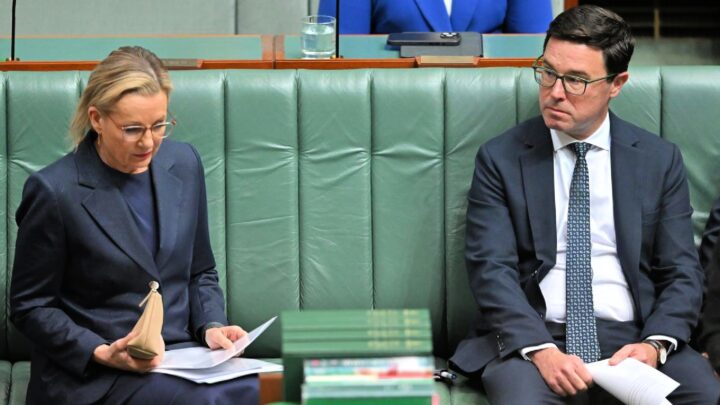
The Coalition didn’t just split again. It imploded. And in doing so, Sussan Ley and David Littleproud managed the rare political feat of making Anthony Albanese look decisive – a man who, only days earlier, had been dragged reluctantly into calling a royal commission he clearly didn’t want.
Labor came into the week on the back foot. The government had been cornered by public opinion over hate crimes, forced into a humiliating retreat in Parliament, and looked momentarily rattled. Then the Coalition folded like a deck of cards left out in a stiff Canberra breeze.
Opposition is supposed to be about pressure. Instead, this lot relieved it.
Let’s start with the fundamentals. Australians watching this circus are asking a brutally simple question: Are these really the best leaders the conservative movement can offer? The answer, delivered loudly by events this week, appears to be no.
Sussan Ley may be the first woman to lead the Liberal Party, but history will not be kind if this is where it stops. Leadership isn’t symbolism. It’s authority. And right now, she doesn’t appear to have it – not over the Nationals, not over her own party room, and certainly not over the national conversation.
David Littleproud, meanwhile, has once again mistaken brinkmanship for strategy. Walking away from the Coalition for the second time since the 2025 election is not a show of strength. It’s a tantrum with a press release.
His demand that Ley immediately reinstate three Nationals senators who broke cabinet solidarity was not just improper – it was amateurish. Shadow cabinet solidarity is not optional. If it is, then cabinet itself is meaningless. Yet Littleproud behaved as though party discipline was a courtesy, not a requirement.
When Ley accepted the resignations, she did exactly what any leader is meant to do. The fact that this triggered another Nationals walkout says more about the Nationals’ culture than her competence.
Behind the scenes, Liberal frustration has curdled into fury. One insider described the Nationals as “acting like terrorists”. That may be hyperbolic – but it captures the mood. The Nationals want influence without responsibility, power without consequence. That might work in regional town halls. It doesn’t work in a national opposition.
What we are witnessing is not a disagreement over policy. It’s a vacuum of authority on both sides.
The truth is uncomfortable but unavoidable: neither Ley nor Littleproud has convinced Australians they are prime ministerial material. Not by tone, not by conduct, and certainly not by vision.
And vision is the real absence here. What does the Coalition stand for? Beyond procedural squabbles and internal power plays, there is no compelling answer. No economic narrative. No social compact. No sense of where Australia should be heading in a world that is more dangerous, divided and uncertain by the month.
Instead, we get leadership speculation. Angus Taylor, competent but uninspiring. Andrew Hastie, principled but polarising. The very fact the party is already gaming out a spill tells you everything you need to know about confidence levels.
Ley insists she’s backed. Perhaps. But leadership backed only by process, not momentum, is leadership on borrowed time.
Littleproud says there is “no pathway” to reunification under Ley. Ley says the door is not closed. Australians hear this and translate it accurately: nobody is in charge.
Anthony Albanese, never one to miss an opportunity, crowed that Labor is “extraordinarily united”. He’s right – but only by comparison. Unity alone isn’t competence, but when the opposition is tearing itself apart in public, it’s enough.
And this is where any reasonable voice intrudes, tapping the microphone impatiently: What on earth are you people doing?
While households worry about mortgages, migration pressures, energy costs and national security, the conservative parties are arguing about phone calls, resignations and who shouted at whom. It’s politics as performance art – inward-looking, self-absorbed and utterly detached from the lives of voters.
Australians are not ideological hostages. They are practical, sceptical, and increasingly impatient. They want leadership that sounds like it understands the country it seeks to govern.
Right now, the Coalition doesn’t sound angry. It sounds irrelevant.
If there is to be any hope of recovery, it won’t come from patching up this latest break-up. It will require what insiders are now whispering about openly: a hard reset. New leadership. New discipline. And above all, a new seriousness about what opposition is actually for.
Because until the Liberals and Nationals stop fighting each other and start speaking to Australia, the question voters are asking won’t go away:
Where is the leadership? Where is the vision? And why should we trust this mob with the country?
At the moment, there is no answer.





 Proudly Australian owned and operated
Comments 0
Join the conversation. Comments are reviewed before they appear.
Be the first to comment.
Join the conversation
Tell us who you are to post a comment. We'll remember you next time.