
Census 2026: Everything you need to know


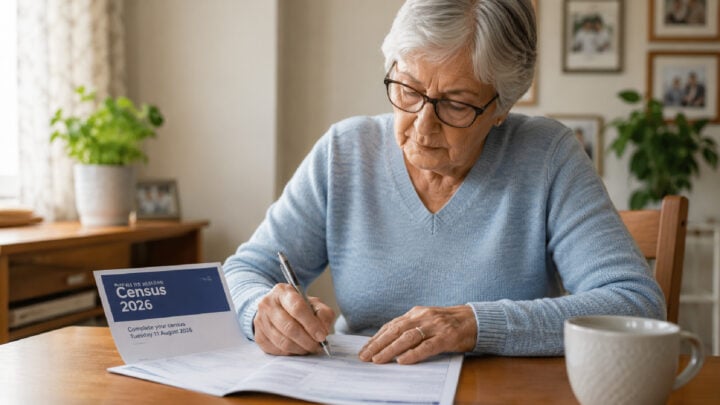
Australia will be counted again tomorrow (Tuesday, August 11). From paper forms and privacy to pensions, getting help and what to do if you’re away from home, here’s what you need to know about the 2026 Census.
Every five years, Australia takes an enormous national snapshot: where we live, how old we are, whether we work or have retired, our income, health, housing, family circumstances and, ultimately, what Australia looks like at that particular moment in time.
Census night for 2026 is Tuesday, August 11, (tomorrow) and the Australian Bureau of Statistics (ABS) is preparing to count every person in Australia tomorrow night.
For many people it will mean sitting down with a laptop or phone and getting through the form in half an hour or so. The ABS expects about 85 per cent of forms to be completed online this year – you can complete your Census form online here.
For others, particularly some older Australians living independently at home, it may not be quite so simple.
Aakriti Khadka has spent 16 years working in aged care and, in her role as a My Guardian carer, has been helping older clients work through their Census forms.
“It’s been a really positive experience,” Khadka said.
“The people I’ve helped have been very grateful because sometimes they find the form difficult to read or aren’t sure how to answer some of the questions.
“By sitting with them, reading each question and explaining it, they tell me it makes the whole process much easier and less stressful.”
When do I need to do it?
Census night is tomorrow, (Tuesday, August 11) but you don’t necessarily have to wait and can do it today or tonight.
The ABS says people can complete their Census early if they know where everyone in their household will be on Census night.
Most households are receiving a letter containing a Census number and temporary password for completing the form online. Some households will receive a paper form instead, and anyone who would prefer paper can request one.
The Census is compulsory. Everyone in Australia on Census night must be included on a Census form, including visitors and visa holders.
If someone who normally lives in your household will be somewhere else in Australia on August 11, they should complete a Census form where they are staying that night. Your household form also asks for some information about people who usually live there but are temporarily away.
Yes, you can still use paper
Despite the digital-first approach, nobody is being forced to complete the Census online.
Paper forms remain available and will automatically be delivered in some parts of Australia where the ABS expects greater demand for them.
That may be welcome news for older Australians who aren’t comfortable using computers, smartphones or online forms, but if you haven’t already ordered them it may be too late.
The ABS is also offering large-print and Braille forms, Easy Read information, Auslan video guides and support for people using screen readers or speech-recognition software.
Help is available through Census Pop-up Hubs around Australia, while the Census Contact Centre can be reached on 1800 181 227.
Can somebody help me fill it out?
Yes. Generally, one person completes the Census form for everyone in the household. People who need assistance can also seek help, including through ABS support services.
For Khadka, sometimes the most valuable assistance is simply sitting beside somebody and taking the form one question at a time.
“It depends on the person, but it can certainly be harder if they don’t have someone to ask for help,” she said.
“For many older people, just having someone sit beside them, explain the questions and take things one step at a time makes a big difference.”
Memory loss or communication difficulties can make the process more complicated.
“Sometimes people can’t remember information the Census asks for, such as where they’ve lived in previous years, or they may have difficulty communicating,” Khadka said.
“In those situations, it’s important to be patient and work with their family or other people who know their history.”
Don’t forget your pension when answering income
One question Khadka has found can cause confusion involves income.
“Some people aren’t sure whether they should include things like the Age Pension, disability payments or other government support,” she said.
The answer is yes.
For the Census income question, the ABS says people should include income from all sources before tax and other automatic deductions.
That includes the Age Pension and other government pensions, benefits and allowances, as well as superannuation income, wages, investment income and other applicable sources.
Having that information handy before starting may save some head-scratching halfway through the form.
What about the more personal questions?
There are some changes this time around.
For the first time, the Census will collect information about gender and sexual orientation from people aged 16 and over. Both questions include a “prefer not to answer” option.
The question about religion also remains optional.
Anyone who wants to complete their Census separately from other members of their household for privacy reasons can request a separate form.
Khadka said explaining why information is being collected often helps put worried clients at ease.
“Once I explain why the Census is being done and how the information is used, people are generally very comfortable completing it,” she said.

Is my information private?
The ABS says information supplied through the Census is confidential and protected by law.
It says identifiable Census information is not shared with other government departments or direct marketing companies, and Census information isn’t used for compliance or enforcement.
Names will be retained for up to 18 months after the Census and addresses for up to three years before being destroyed in accordance with records requirements.
People can also voluntarily choose to have their Census information preserved by the National Archives of Australia for 99 years as part of the Census Time Capsule. That information will not become available until 2125.
Why being counted matters
For older Australians, the Census is much more than a national head count.
Census data helps governments and organisations understand Australia’s changing population and plan health care, aged care, hospitals, housing, transport and other community services.
It also records information including long-term health conditions, whether people need assistance with core activities and unpaid caring.
“If people aren’t counted properly, the information the government relies on won’t be accurate,” Khadka said.
“That could make it harder to understand how many older people need support and what services should be planned for the future.”
Her advice for anyone staring at the form and wondering where to begin is straightforward: ask for help, don’t rush, read each question carefully and have important information handy.
And if you don’t understand something, don’t guess.
“Don’t be afraid to ask questions,” Khadka said.
“There is support available, and it’s always better to ask than to guess.”
Need help? The 2026 Census is on Tuesday, August 11. You can complete it online or on paper, and assistance is available through the official Census website or by calling the Census Contact Centre on 1800 181 227.





 Proudly Australian owned and operated
Comments 2
Join the conversation. Comments are reviewed before they appear.
Pathetic survey based on ethnicity only
Never recirved the original mail out yet others in our unit block did
Luckily I was able to submit via the internet but do know of others who were left out now with a threat of a fine
I am 81 years old and am disgusted with the whole excercise especially the range of questions and the limited data it will provide
Richard
Email if you dare. [email protected]
I acted as a census collector for Lorne, Victoria in 2006. Very interesting! On my first tour there were a lot of empty homes - presumably holiday homes. There was also a home with the front door open and music playing but no response from anyone - that was the same for the next 4 visits. And I came across an area with around 6 container stylel dwellings, all too small to pass building regulations, and all occupied on my first visit. None occupied on other 4 visits. Asked the property owner about the situation. He advised the people involved did not want to be recorded in the census. And most of the holiday homes had the census papers moved inside, presumably by cleaners/ gardeners/ etc
Join the conversation
Tell us who you are to post a comment. We'll remember you next time.