
Bogong moths are back in their millions: why they’re in your house, and what to do about it


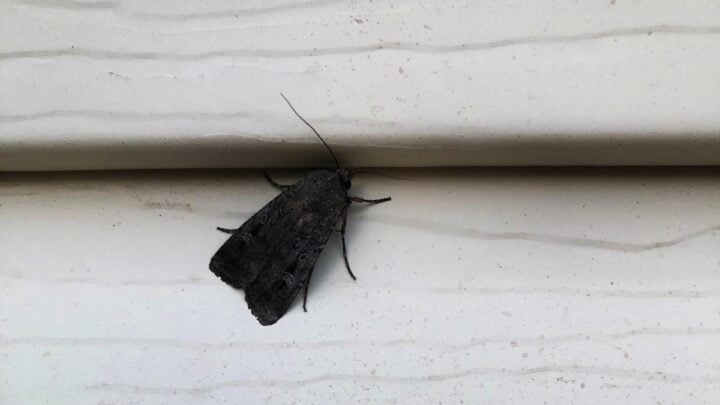
If you’ve opened your back door this week to a flurry of brown wings, you’re not alone. Bogong moths are swarming across NSW and the ACT in numbers experts say haven’t been seen in nearly a decade. They’re turning up from Gunnedah to Balmain, and all along the coast.
For Emily Darlow, who lives in Kiama on the NSW South Coast, the moths have become part of the morning routine.
“When we walk out our back door every morning there are hundreds that fall out of the screens and door,” she says. “When we wash our clothes they are in all the black clothes. They poo everywhere and wee.”
It’s messy, it’s annoying, and for anyone who’s ever had one flutter into their face at night, it’s a little bit alarming. But scientists say this year’s invasion is actually good news.
Why are there so many Bogong moths this year?
Every spring, Bogong moths make a remarkable journey of around 1,000 kilometres. They fly from breeding grounds in southern Queensland, western NSW and Victoria to cool caves and rock crevices in the Australian Alps, where they shelter through the summer.
They navigate at night using the stars. That’s where the trouble starts. Dr Caitlyn Forster, a lecturer in entomology at the University of Sydney, told the ABC that city lights can throw the moths off course. Strong winds can also blow them east towards the coast, which is why towns and suburbs that rarely see them are suddenly overrun.
This year there are simply more moths to go astray. Dr Marissa Parrott, a senior conservation biologist at Zoos Victoria, says good rain and plenty of food in NSW and the ACT have produced numbers that “haven’t been seen for a long time.” She called it the best year for the species in nearly a decade. Sightings logged with her Moth Tracker project in a single month this season beat the previous record year, 2024.
From billions to almost none
For anyone who grew up in Canberra or Sydney in the 1980s, swarms like this might bring back memories. The moths famously invaded Parliament House and once disrupted the Sydney Olympics.
But the population then collapsed. Around four billion moths are estimated to have reached the Alps in 2016. After the drought years that followed, they became almost impossible to find. Some estimates suggest around 99.5 per cent of the population disappeared. Habitat loss, pesticides, introduced predators and artificial light have also taken a toll over the long term.
In 2021, the Bogong moth was listed as endangered on the International Union for Conservation of Nature (IUCN) Red List.
That’s why researchers are so excited by this year’s numbers, even if homeowners are less thrilled. The moths are a vital food source for alpine wildlife, including the endangered mountain pygmy-possum, which relies on them to fatten up after winter hibernation. Bogong moths have also been an important food and cultural resource for First Nations peoples for thousands of years.
How long will they stay?
The short answer is that nobody knows for sure. Dr Forster says the moths could move on from urban areas within days or weeks, but researchers are still watching. Most will continue their journey south to the mountains. Some will die along the way, which is why you may be sweeping up a few more than usual.
What you can do
Bogong moths are harmless. They don’t bite or sting, and they won’t eat your clothes. Experts and councils are asking people not to kill them or spray them with insecticide. Here’s how to keep them out, and to get them out gently.
Turn off the lights. This is the most important step. Switch off outdoor lights at night, and close curtains and blinds so indoor light doesn’t spill outside. If moths are already inside, Sydney’s Northern Beaches Council suggests turning off indoor lights and leaving one outdoor light on to draw them back out.
Check screens and doors. Moths rest by day in dark, sheltered spots like door frames, window tracks and screen edges. Give screens a gentle tap before opening the door in the morning.
Catch and release. Put a glass or jar over a moth, slide a piece of thin card underneath and carry it outside.
Bring the washing in before dusk. Moths look for dark places to hide, so they love dark clothing on the line and in laundry baskets. Shake clothes outside before bringing them in.
Deal with the mess quickly. Moth droppings can leave brown or orange marks on walls, windows and fabric. Wipe surfaces with warm soapy water, and rinse marked clothing in cold water before washing as normal. Hot water can set stains.
Keep cats indoors. This protects the moths, and saves you finding half-eaten ones on the floor.
Help the researchers. Photograph the moths you see and log sightings with Zoos Victoria’s Moth Tracker or Western Sydney University’s Bogong Watch. Keep an eye out for moths with a small blue dot. They’re part of a tracking study of 14,000 moths tagged at Mount Kosciuszko, and researchers want to know where they end up.
As Emily and plenty of other NSW residents can attest, living with millions of moths isn’t always fun. But for a species that nearly vanished, this year’s swarms are a welcome sign of recovery.
Have Bogong moths invaded your home this spring? Tell us how you’re coping in the comments.





 Proudly Australian owned and operated
Comments 0
Join the conversation. Comments are reviewed before they appear.
Be the first to comment.
Join the conversation
Tell us who you are to post a comment. We'll remember you next time.